New Delhi: As the FIFA World Cup enters its decisive knockout stages, football has once again captured the imagination of Delhi. Across the city, fans are staying up late to watch matches, gathering in cafés and homes, and engaging in spirited debates over tactics, refereeing decisions, and standout performances. Social media timelines are flooded with discussions about the tournament, reflecting the deep passion that international football continues to inspire in the capital.
Yet amid the excitement surrounding the world’s biggest football event, a quieter story remains largely overlooked—the gradual fading of Delhi’s once-vibrant local football culture.

A City Passionate About Global Football
Delhi’s football enthusiasts are among the most informed and passionate in the country. Supporters closely follow top European leagues and international competitions, passionately backing clubs and national teams from across the globe.
Icons such as Lionel Messi, Kylian Mbappé, and Jude Bellingham dominate football conversations during major tournaments, while matches from England, Spain, Germany, and other footballing nations attract significant viewership.
However, this enthusiasm for the global game often contrasts with the limited attention given to football played closer to home. Many younger fans remain unfamiliar with the clubs, competitions, and rivalries that once formed the backbone of Delhi’s sporting identity.
The Glory Days of Delhi Football
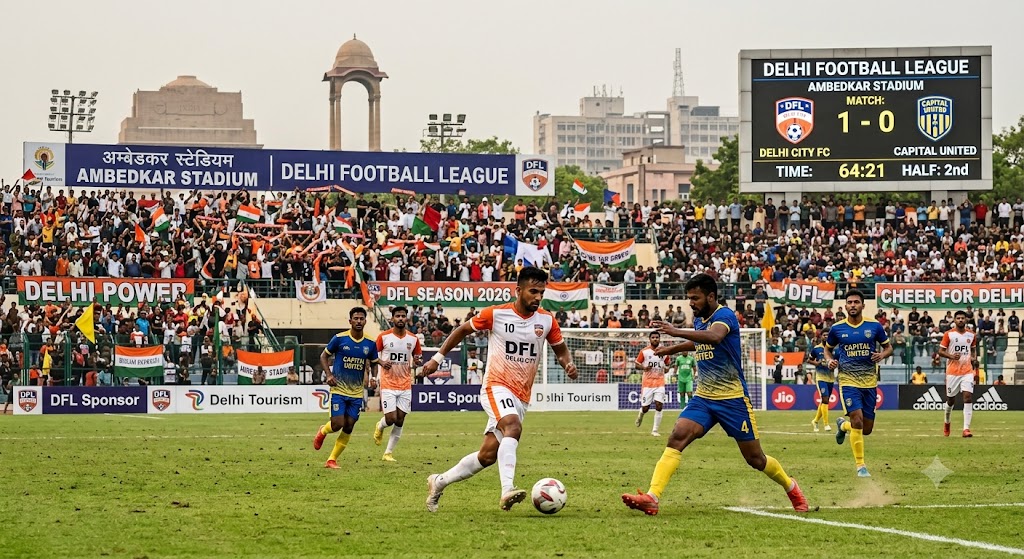
There was a time when the Delhi Football League enjoyed a strong following and occupied a prominent place in the city’s sporting landscape. Historic clubs such as Garhwal Heroes FC, Moonlight FC, and City Club Delhi represented more than just football teams—they embodied community pride, local identity, and neighborhood rivalries.
Supporters knew the players personally, followed every fixture closely, and viewed league matches as social and cultural events. Football was deeply woven into the fabric of local communities, creating a sense of belonging that extended far beyond the pitch.
The Heartbeat of the Game: Ambedkar Stadium
At the center of this football tradition stood Ambedkar Stadium, one of the city’s most iconic football venues. Located near Delhi Gate, the stadium regularly attracted enthusiastic crowds long before satellite television and digital streaming transformed sports consumption.
Fans from Old Delhi and neighboring areas packed the stands to witness intense local rivalries and memorable league encounters. The stadium became synonymous with Delhi football, serving as a gathering place for generations of supporters.
Situated close to the historic Arun Jaitley Stadium—formerly known as Feroze Shah Kotla—the venue shared a sporting neighborhood with cricket. Over time, however, the fortunes of the two sports began to diverge dramatically.

How Urban Growth Changed the Landscape
Delhi’s rapid urban expansion during the 1990s and early 2000s reshaped the city’s social and geographical structure. As residential hubs spread across Dwarka, Rohini, Noida, Ghaziabad, and Gurugram, the close-knit communities that once supported local football became more dispersed.
Longer commutes, changing lifestyles, and evolving entertainment habits made it increasingly difficult for fans to attend local matches regularly. As neighborhood connections weakened, many traditional clubs found it harder to maintain the grassroots support that had sustained them for decades.
Cricket’s Commercial Rise
While local football struggled to adapt to changing realities, cricket experienced unprecedented growth. Massive broadcasting deals, corporate sponsorships, international fixtures, and the emergence of franchise-based leagues transformed cricket into a year-round commercial powerhouse.
The redevelopment of Feroze Shah Kotla into Arun Jaitley Stadium symbolized this shift. Today, matches involving Delhi Capitals and international cricket teams attract packed stadiums, extensive media coverage, and substantial investment.
Football, despite its rich local history, has not benefited from the same level of financial backing, marketing, or institutional support. As a result, many local fixtures are attended primarily by dedicated followers and football purists rather than large mainstream audiences.
An Opportunity for Renewal
The popularity of international football in Delhi demonstrates that interest in the sport remains strong. The challenge lies in converting that passion into support for local clubs, youth academies, and domestic competitions.
Delhi’s football legacy is far from forgotten. It lives on through historic clubs, committed administrators, lifelong supporters, and young players dreaming of representing their city. The foundations still exist; what is needed is renewed visibility, investment, and community engagement.
As the FIFA World Cup continues to captivate audiences around the globe, it also offers an opportunity for Delhi to rediscover its own football roots. Greater attention to local leagues and historic venues such as Ambedkar Stadium could help bridge the gap between global fandom and grassroots football.
The city’s love for the game is undeniable. The next step is ensuring that the passion witnessed during every World Cup also helps nurture and celebrate the football tradition that has long been a part of Delhi’s sporting heritage.