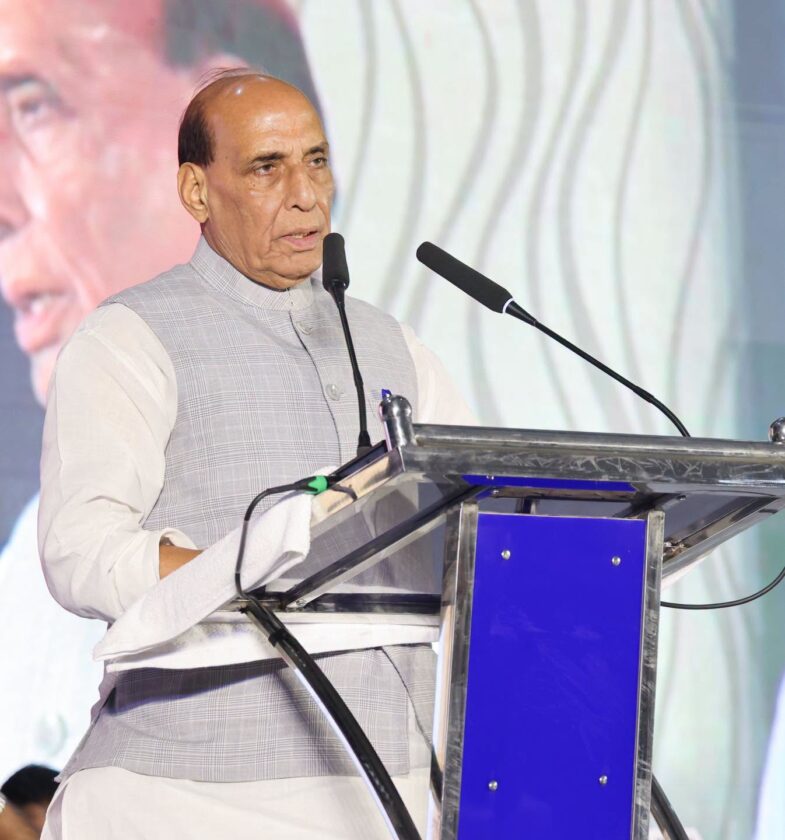
Lucknow: Uttar Pradesh Governor and Chancellor of the state universities Anandiben Patel called upon universities to move beyond treating Artificial Intelligence (AI) as a standalone subject and instead integrate its possibilities across every discipline, research area and administrative function.
She was addressing the valedictory session of the two-day ‘AI Manthan 2.0’ workshop, jointly organised by Raj Bhavan, Uttar Pradesh, and Chhatrapati Shahu Ji Maharaj University (CSJMU), Kanpur. The concluding ceremony was held at the Veerangana Rani Lakshmibai Auditorium on the CSJMU campus.

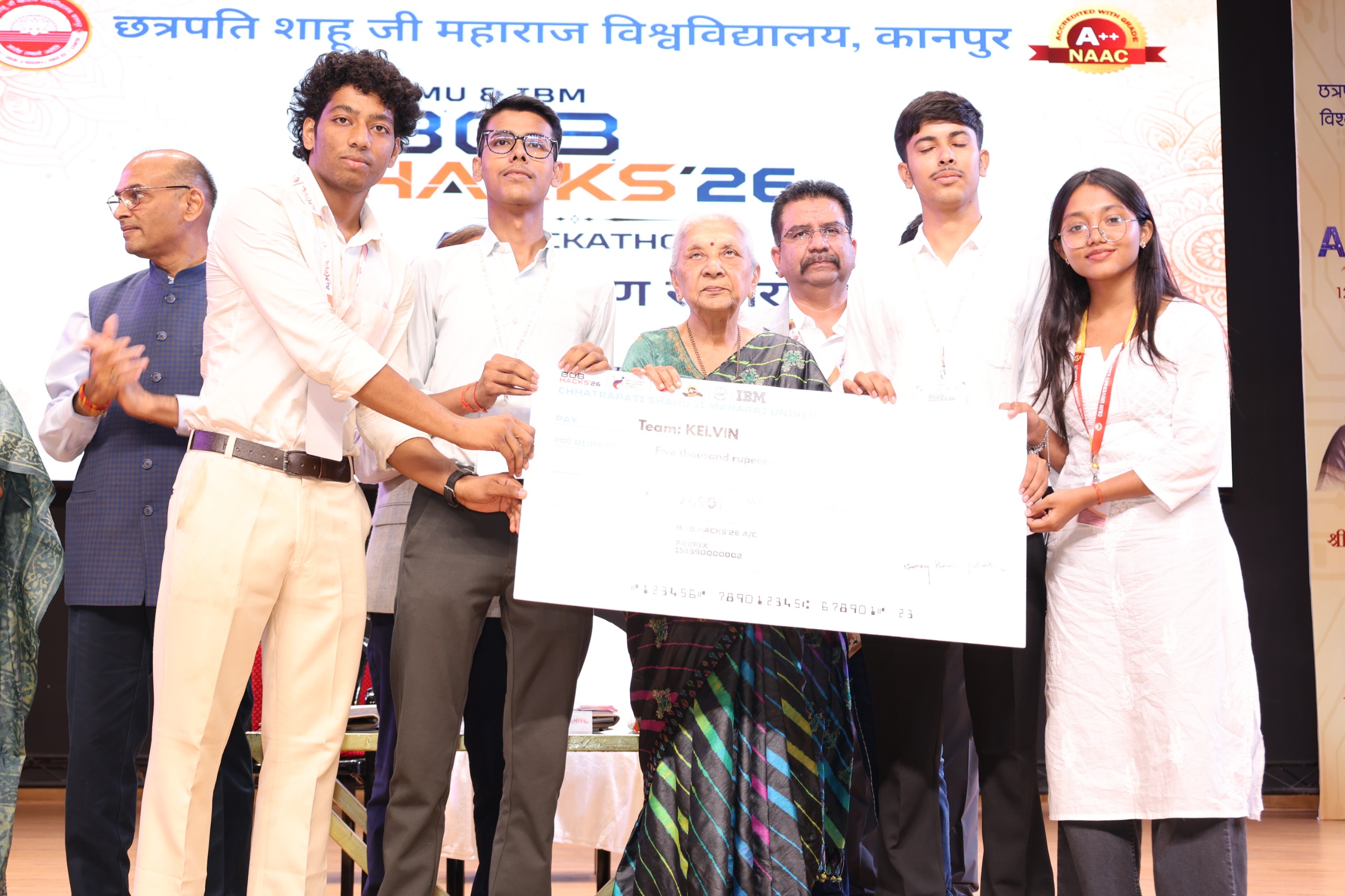
The Governor also felicitated the winning teams of the CSJMU x IBM BOB AI Hackathon 2026 and presented certificates of appreciation to nodal centres that made significant contributions to the successful conduct of the hackathon.
Addressing the gathering, Patel said the two-day deliberations had made a meaningful effort to understand AI through its applications in education, research, healthcare, agriculture, robotics, environment, urban development, governance and employment. She said the enthusiastic participation of experts and students was one of the major achievements of the programme.
“AI is one of the most powerful and transformative forces of our changing times,” she said, adding that it was reshaping how people study, learn and conduct research, while also changing administrative processes and opening new avenues for addressing social challenges.
The Governor stressed that higher education institutions in Uttar Pradesh should not remain spectators to the AI revolution. “Universities must become leaders of this transformation,” she said, pointing to the journey from AI Manthan 1.0, organised at Dr APJ Abdul Kalam Technical University in Lucknow in January, to the second edition at CSJMU.
According to Patel, more than 700,000 undergraduate students in state universities have completed foundational AI courses, while more than 300,000 students have received cybersecurity training in Hindi. Technology-assisted evaluation has also been used in the assessment of more than 300,000 answer sheets, demonstrating the growing practical use of technology in higher education.
Referring to India’s expanding role in the global AI ecosystem, Patel said initiatives such as the IndiaAI Mission were helping extend AI beyond laboratories and technology institutions to benefit wider sections of society. She described AI as both a present reality and an inevitable component of the future.
She said merely teaching AI as a separate subject would not be enough. AI should be linked to every discipline. Mathematics could use AI-based problem-solving, science could benefit from data analysis, agriculture from smart farming and weather forecasting, medicine from early disease detection, environmental studies from pollution and biodiversity monitoring, engineering from robotics, and language education from natural language processing.
Patel emphasised that future-ready education must focus not merely on information but on the ability to ask the right questions, identify reliable information and use it responsibly for social benefit. She called for AI literacy, data literacy, digital literacy and computational thinking to become important components of curricula.
Advocating “learning by doing”, she urged students to use AI to develop solutions for real-world problems, including those related to farming, water conservation, traffic management, malnutrition, preservation of languages and dialects, and assistive technologies for persons with disabilities.
The Governor also highlighted the potential of AI to connect modern technology with India’s traditional knowledge systems. She cited mathematics, Ayurveda, astronomy, philosophy, literature, yoga and agriculture as areas where India possesses a rich knowledge heritage. AI, she said, could help digitise ancient manuscripts, preserve endangered languages and dialects, digitally reconstruct archaeological heritage, and document folk arts and cultural traditions.
Referring to the Sushruta Samhita, she highlighted the contributions of Maharshi Sushruta to surgery and plastic surgery, noting that his work described more than 300 surgical procedures and over 120 surgical instruments. She said the presence of a statue of Sushruta at the Royal College of Surgeons of Edinburgh was a matter of pride for India’s knowledge tradition.
Patel called for the development of indigenous AI suited to India’s requirements, based on Indian talent, Indian data and secure digital infrastructure. Such an approach, she said, would strengthen technological sovereignty and data security. She also pointed to semiconductor manufacturing, data centres, cloud and computing capacity and green hydrogen as future-oriented areas that could provide a strong foundation for the coming decade.
On employment, she said young people should possess not merely certificates but demonstrable skills. “Our youth should not only seek jobs; they should have the capacity to create employment,” she said, urging universities to promote research, innovation and entrepreneurship.
She suggested that students identify local problems and develop AI-based solutions, while universities provide laboratories, mentorship and resources and industry connect promising ideas with markets. This, she said, would create a pathway from education to entrepreneurship, from ideas to products and from students to nation-builders.
The Governor called for students to be trained in prompt engineering, data analysis, responsible use of AI tools, cybersecurity and data privacy. She also stressed the need for regular AI training programmes to make faculty members AI-ready, emphasising that teachers and AI should work in partnership rather than in competition.
Agriculture, she said, offered enormous scope for AI applications. Weather, soil, crop, irrigation, satellite and market data could be scientifically analysed to provide farmers with timely and accurate information. AI could help address challenges arising from climate change, irregular rainfall, changing temperatures, soil quality, pests, diseases and market uncertainty.
In healthcare, Patel highlighted AI’s potential in disease detection, treatment, research, digital health and medical education. Integrated analysis of diagnostic reports, medical histories, medical images and biological indicators could assist doctors in disease identification and risk assessment.
She said discussions during AI Manthan had covered cancer detection, radiology, laboratory medicine, clinical decision support and digital health, as well as crop-data analysis, climate-smart agriculture, agricultural forecasting, crop management and precision farming. Universities should now launch selected pilot projects in these areas and scientifically evaluate their outcomes, she said.
Patel cautioned that AI was not merely a technological issue. It was influencing society, employment, social relationships and democratic discourse while raising questions about privacy, equality and ethics. She called for dialogue between technology and disciplines such as sociology, economics, psychology, political science, philosophy and law.
She stressed that students must understand data privacy, cybersecurity, fairness, transparency and the importance of human judgement. “Safe and trusted AI” should form the foundation of the AI journey, she said.
The Governor also called for greater use of AI in university administration, including admissions, examinations, attendance, scholarships, certificates, grievance redressal, libraries and resource management. Digital platforms such as the Samarth portal, she said, had already created a foundation for transparent and organised higher education processes, which could now be further strengthened through AI.
While AI-assisted evaluation could make assessment faster and more consistent, she stressed that the teacher’s judgement must remain paramount. AI should assist evaluation but should not become the final decision-maker.
Patel further called for stronger university-industry partnerships, saying industry problems should reach university laboratories while solutions developed by universities should reach industry and society. Joint research, internships, live industry projects, startup incubation and technology transfer could help bridge the gap.
She urged students: “Do not be afraid of AI; understand it. Do not remain merely its users; become its innovators.” She said creativity, curiosity and human sensitivity would remain the greatest strengths of young people.
The Governor said the Industrial Revolution increased the power of machines, the Information Revolution connected the world, and AI was now expanding human intellectual capabilities. Universities, she stressed, could not remain outside this transformation.
“Universities should not merely provide degrees, but vision; not merely provide employment, but develop the capacity to create employment; not merely conduct research, but take research to society; and not merely teach technology, but develop an understanding of its responsible use,” she said.
She described the formal conclusion of AI Manthan 2.0 as the beginning of a new phase. Each university, she directed, should establish clear goals, identify priority projects, assign responsibilities and conduct regular reviews.

“The churning is ending, but the mission is beginning,” she said, expressing confidence that the energy generated by AI Manthan 2.0 would provide a new direction to Uttar Pradesh’s universities and play an important role in making the state a leader in AI.
New AI Policy and Implementation Groups
At the concluding ceremony, Governor’s Officer on Special Duty, at the level of Additional Chief Secretary, Dr Sudhir M. Bobde announced a dedicated mechanism for policy formulation and implementation of AI across the state’s universities.
A five-member AI Policy Advisory Group and a five-member AI Implementation Group will be constituted. The Policy Advisory Group will be chaired by Prof P.P. Chakraborty of IIT Kharagpur, with Prof V. Ramgopal Rao, V.M. Hasnana, Dr Preetika Rangarajan and Prof Vinay Kumar Pathak as members.
The Implementation Group will include Dr J.P. Pandey for technical education, the Vice-Chancellor of KGMU for medical education, Dr Bijendra Singh, Vice-Chancellor of Avadh University, for agricultural education, and the Vice-Chancellor of Meerut University for general universities, with Prof K.P. Singh serving in a supporting role. Other universities from relevant sectors will also be associated with the framework.
Bobde said healthy competition would be promoted among universities based on their region and age. Universities more than 50 years old would digitise legacy data, including archives, documents and photographs, for potential use in AI model training.
He said 14 major ideas emerged from AI Manthan 2.0, including AI Manthan 1.0, research, multidisciplinary and multimodal data, innovation, translational laboratories, LLMs, local and sector-specific or small language models, scale, 5.0, human-in-the-loop and sovereign AI.
He stressed that AI should be adopted as an assistant rather than a master, with “human in the loop” remaining essential. The process of constituting both groups, he said, would begin immediately.
Universities Present Their AI Roadmaps
Dr Priyanka Pandey of Bundelkhand University said a six-month strategy was being developed to improve student employability, innovation and academic outcomes through capacity building, ministry-supported proposals and curriculum expansion. In collaboration with ABPL International, the university was also working to reduce the academic-industry gap. An AI-based ‘Dron’ system for universities was launched in Jhansi to support students, teachers and university-level operations.
Prof Alok Kumar of CSJMU said the university was expanding AI use in education, research and administration through its AI Promotion Cell. Fifteen students had been appointed as AI interns at ₹15,000 per month and assigned to 22 AI projects, six of which had already been completed. The university is also running one-year major and six-month minor research projects under ‘CamAI Research’.
Over the past six months, CSJMU has established robotics, drone, idea, supercomputing, cybersecurity and IoT laboratories. Hackathons such as Hackshore and Gigneti Without Code have provided non-computer science and non-engineering students opportunities to present innovations without writing code.
AI-based conferences and faculty development programmes have been made mandatory across departments, while two AI chatbots are active on the university website. The ‘Narad Admission Portal’ assists students in selecting courses based on eligibility and preferences.
Prof Deepak Nagaria, Controller of Examinations at AKTU Lucknow, said the university planned to introduce a two-credit AI course across all branches from the 2026-27 academic session and add an AI unit to every subject. AI-enabled examination systems are also being developed, including 3D mapping of examination centres, QR-code-based admit cards and biometric attendance.
Prof Vandana Dixit Kaushik of Harcourt Butler Technical University said AI had been integrated into education, research, administration and capacity building. BTech in AIML, MTech in Signal Processing and Machine Learning and an AIML minor course have been introduced, with more than eight AI-based subjects added across different branches.
Since AI Manthan 1.0, the university has organised around 14 faculty development programmes, 23 expert lectures and summer and winter AI programmes for school students. It has also developed a smart hostel management system, branch transfer module and ‘AI Mitra’ chatbot.
The university has undertaken AI projects worth more than ₹1.01 crore, alongside 41 student projects, 33 AI research publications, 19 AI startups and 51 AI researchers. Under a 30-hour ‘AI for Everyone’ course, 720 students have been certified in prompt engineering, agentic AI, deep learning and ethical and responsible AI. Three-month AI and IoT courses have also been conducted under the Samsung Innovation Campus.
From KGMU Lucknow, Dr Durgesh Kumar Dwivedi said the institution aims to develop KGMU as an AI Centre of Excellence for healthcare in Uttar Pradesh. Clinical AI, outreach, education and training, and research will form its three major pillars.
AI-enabled chatbots, patient management and drug inventory systems are being developed, while more than 40 specialty and super-specialty OPDs are being operated through e-Sanjeevani 2.0. Work is underway on AI-enabled CT scans, high-end MRI, GPU clusters, virtual autopsy and virtual dissection tables.
Fourteen faculty-led research projects and 11 student projects are currently underway. A Government of India project worth around ₹10 crore will support development of brain networks, structural and functional connectomes and an AI-based atlas. A Data Science Centre is also being established in collaboration with the University of Manitoba. An AI Centre of Excellence is proposed with an estimated investment of around ₹13 crore.
Prof Anand K. Tyagi, Vice-Chancellor of Mahatma Gandhi Kashi Vidyapith, Varanasi, said the social-science-focused university had adopted human advancement, academic excellence and social welfare as the guiding principles for AI.
Following AI Manthan 1.0, the university organised foundation workshops, faculty development programmes and e-content development workshops. A seven-day MMTC programme on higher education has been proposed from September 17 to 23 following AI Manthan 2.0.
Skill-development courses have increased from 19 to 36, while AI has been incorporated into undergraduate and postgraduate programmes and PhD research methodology. Its applications are expanding across teaching, e-content, examinations, assessment, research, fieldwork, seminars, FDPs, admissions, student services, administration, documentation and media.
Prof Tyagi stressed academic integrity, originality and data privacy, saying AI should be used as an assisting technology while final decisions must remain with humans. Plans are also underway to use AI in the recruitment process for assistant professors.
In agriculture, Dr S.U.S. Raju, Vice-Chancellor, said AI would be used in teaching and research as well as agricultural extension and farmer outreach. He highlighted the concept of “farm to lab and lab to farm”, under which research-based technologies would be taken to farmers while improving traceability and accountability.
AI-enabled precision and smart farming could help farmers determine their requirements for water, fertilisers and other inputs more accurately, reducing resource wastage. AI could also support better identification and use of seeds, fertilisers and pesticides based on soil and weather conditions.
Major General Dr Amit Devgan, Vice-Chancellor of Atal Bihari Vajpayee Medical University, Lucknow, highlighted the wide-ranging possibilities of AI in medical education. He said students must be taught not only information but also how to use technology correctly.
He called for AI integration across medical, paramedical, nursing and dental education, covering curriculum, teaching and assessment. Students and teachers should also be trained to ask precise questions to obtain accurate and useful information from AI systems.
He stressed the need for collaboration between medical colleges and engineering institutions to develop better AI solutions for healthcare.
The concluding session thus transformed the central message of AI Manthan 2.0 into a roadmap: AI must move from discussion to implementation, from isolated experiments to institutional strategy, and from technology adoption to responsible, human-centred innovation.