Kabul | Afghanistan has intensified its diplomatic outreach across the region as overlapping geopolitical tensions—from the United States–Iran standoff to strained ties with Pakistan—continue to reshape the regional landscape.
Kabul Engages Iran on Regional Crisis
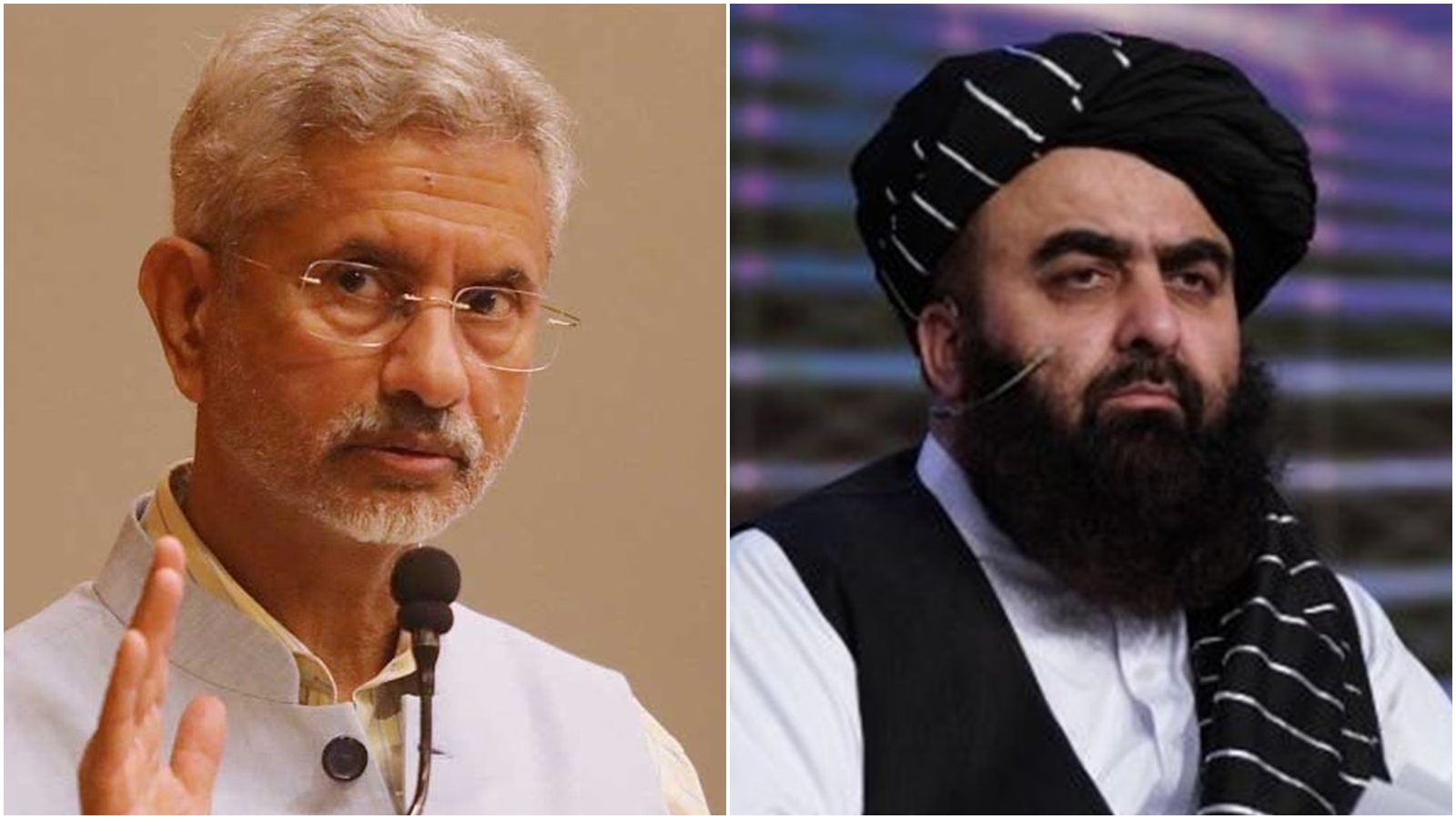
In Kabul, Afghanistan’s acting foreign minister Amir Khan Muttaqi held talks with Iran’s envoy to review bilateral ties and assess the evolving situation in West Asia. The Iranian side outlined its position on recent hostilities, attributing the escalation to external factors.

Muttaqi expressed concern over the intensifying conflict, warning that further escalation could destabilize not only the immediate region but also neighboring countries. He stressed that continued confrontation would have wide-ranging geopolitical and economic repercussions.
Focus on Dialogue with Pakistan
Alongside discussions on West Asia, Afghanistan also addressed its ongoing tensions with Pakistan. Kabul reiterated its preference for resolving disputes through constructive dialogue and mutual understanding.
Officials indicated that Afghanistan is committed to pursuing practical and peaceful solutions, particularly in light of the economic and humanitarian pressures facing the country. Iran, in turn, voiced support for diplomatic engagement between Kabul and Islamabad, emphasizing the importance of reducing friction through dialogue.
Trade Cooperation Remains Steady
Despite political challenges, economic cooperation continues to be a key pillar of Afghanistan’s regional policy. Officials from Afghanistan and Iran noted that bilateral trade has remained stable, underscoring the resilience of economic ties even amid uncertainty.
For Afghanistan, maintaining trade routes is critical due to its landlocked geography and limited access to global markets. Sustained regional cooperation is essential to ensure the flow of goods and support economic stability.

UAE Backs De-escalation Efforts
In a parallel development, Muttaqi held a telephonic conversation with a senior diplomat from the United Arab Emirates to discuss bilateral relations and regional developments. The talks covered Afghanistan’s ties with the United States, its relationship with Pakistan, and the broader security environment.
Afghanistan reaffirmed its commitment to ensuring that its territory is not used against any neighboring state. The UAE emphasized the need for de-escalation and supported diplomatic initiatives aimed at fostering regional stability.
Growing Role of Mediation
As multiple conflicts unfold simultaneously, the role of mediating countries has gained prominence. Nations such as the United Arab Emirates are actively engaging in diplomatic efforts to ease tensions and encourage dialogue.
Afghanistan has welcomed these initiatives, highlighting the importance of neutral intermediaries in addressing complex geopolitical disputes and facilitating communication between rival states.
Strategic Pressures Persist
Afghanistan’s geographic position continues to shape its foreign policy approach. Ongoing tensions along its western and southern borders have disrupted trade routes and supply chains, adding strain to an already fragile economy.
With limited access to seaports and continued reliance on neighboring countries for trade and humanitarian support, Kabul’s diplomatic push reflects both strategic necessity and a broader effort to navigate an increasingly volatile regional environment.