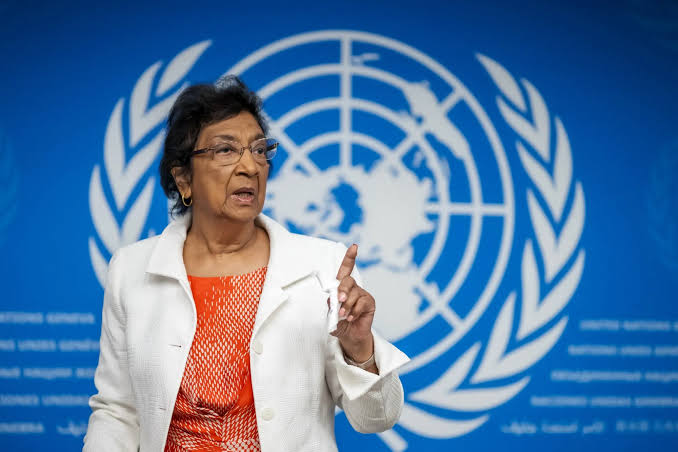
Oslo: Navi Pillay, the Indian-origin South African jurist and former United Nations High Commissioner for Human Rights, has been named the winner of the 2026 Nobel Peace Prize, drawing international attention to her decades-long work on human rights, international law and accountability for war crimes.
The announcement was made by the Norwegian Nobel Committee on October 9, amid speculation that US President Donald Trump could receive the prestigious award for his claims of helping secure ceasefires and resolve international conflicts.

Born Navanethem Pillay on September 23, 1941, in Durban, South Africa, to a family of Tamil Indian origin, Pillay experienced racial discrimination during the apartheid era. These experiences shaped her commitment to equality, justice and human dignity.
In 1967, she became the first woman to establish a legal practice in the Natal region. She subsequently became the first Black woman appointed to South Africa’s High Court. Her international career included serving as a judge at the International Criminal Tribunal for Rwanda and as UN High Commissioner for Human Rights from 2008 to 2014.
The Nobel Committee recognised her contribution to strengthening international law and promoting accountability for grave human rights violations. It emphasised that a lasting and peaceful world requires mechanisms capable of holding perpetrators of war crimes accountable and securing justice for victims.
Committee chair Jørgen Watne Frydnes described Pillay’s work as a source of hope and inspiration for those striving for a more peaceful world. The committee also highlighted the importance of peaceful dispute resolution and the rule of international law amid growing conflicts and political pressure on international institutions.

A total of 287 candidates, including individuals and organisations, were nominated for the 2026 prize.
Trump’s name had featured in public speculation because of his stated role in efforts to broker ceasefires and address international conflicts. However, the committee’s decision to honour Pillay should not automatically be interpreted as a direct rejection of Trump or as a political statement against him.
Pillay’s human rights record has also drawn attention in connection with the Israel-Palestine conflict. A UN commission of inquiry chaired by her concluded that genocide had occurred in Gaza, a finding rejected by Israel. The issue has added to international debate over accountability, the interpretation of international law and the role of global judicial institutions.
Pillay’s selection highlights a broader understanding of peace—one that extends beyond ceasefires and diplomatic agreements to include human rights, justice and accountability. The award places renewed emphasis on the principle that sustainable peace depends not only on ending hostilities but also on protecting human dignity and ensuring that violations of international law do not go unpunished.