Lucknow: A new study by the Indian Institute of Management Lucknow (IIM Lucknow) has endorsed the impact of the “Temple Economy Model,” highlighting a dramatic economic transformation in Ayodhya following the construction of the Ram Mandir.
The report, titled “Economic Renaissance of Ayodhya,” presents a comparative analysis of the city’s economic conditions before and after the temple’s development. It concludes that religious infrastructure, when supported by strong governance and long-term planning, can act as a powerful catalyst for regional economic growth.

According to the study, prior to the temple’s construction, Ayodhya’s economy was largely confined to its identity as a pilgrimage town, attracting around 1.7 lakh visitors annually. Local markets operated on a small scale, with shopkeepers earning an average of ₹400–₹500 per day. Hospitality infrastructure was minimal, national hotel chains were nearly absent, and limited rail connectivity coupled with the absence of an airport restricted tourism growth. Employment opportunities were scarce, leading to migration among youth.
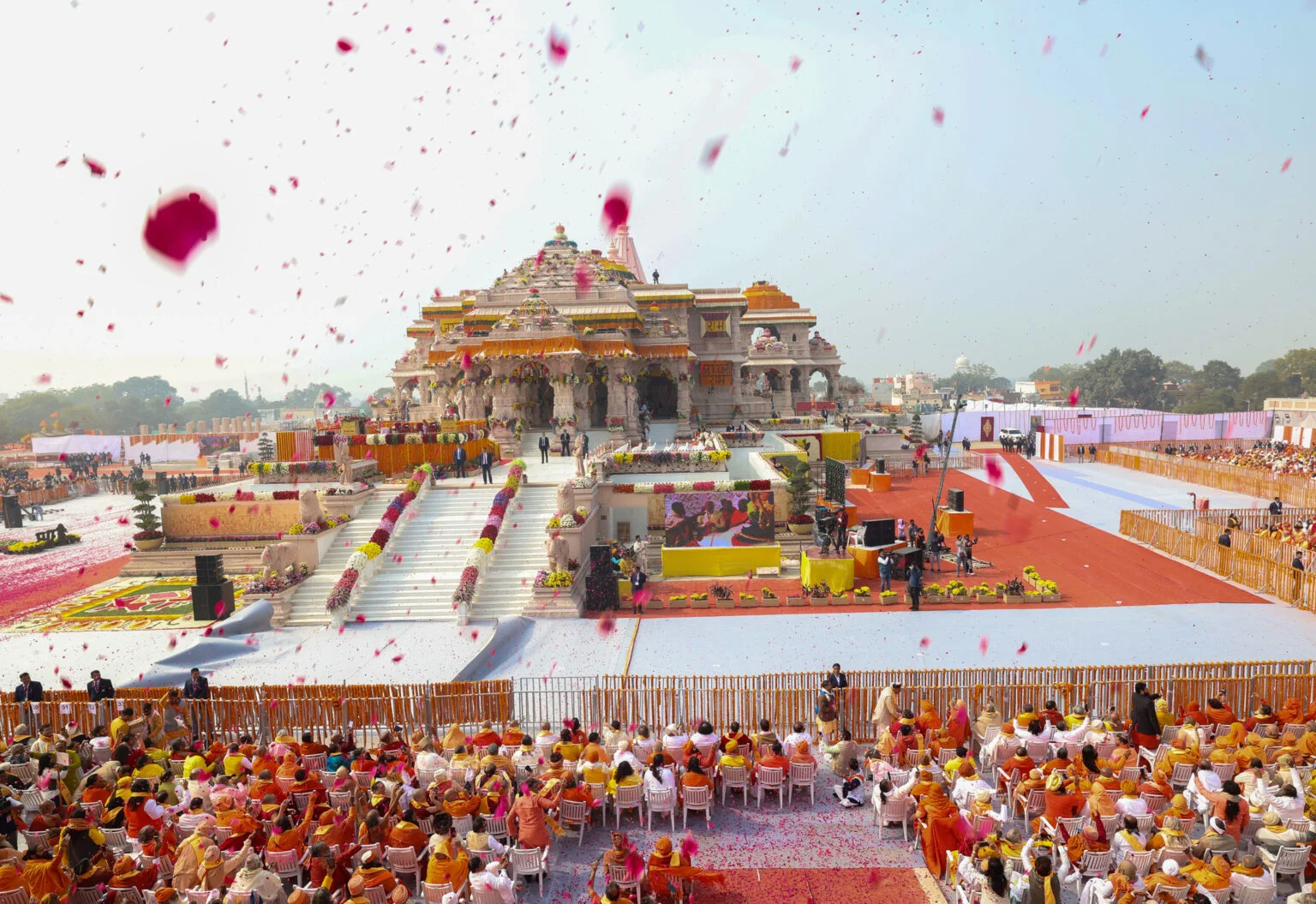
However, the economic landscape shifted significantly after the consecration ceremony of Ram Lalla in January 2024. Within the first six months alone, over 11 crore devotees reportedly visited Ayodhya, injecting new momentum into local trade, transport and hospitality sectors. The report projects annual footfall to stabilize between 5–6 crore visitors, placing Ayodhya among India’s leading religious tourism destinations.
Infrastructure investments worth approximately ₹85,000 crore are currently underway in multiple phases. These include an international airport, modernization of the railway station, expanded road networks and urban beautification projects. Sustainable initiatives such as electric mobility and solar energy are also being promoted, positioning Ayodhya as a potential “model solar city.”

The study estimates that by 2025, tourism expenditure in Uttar Pradesh could exceed ₹4 lakh crore, with Ayodhya playing a pivotal role. Tax revenues from tourism-driven activities are projected between ₹20,000–₹25,000 crore. Over 150 new hotels and homestays have been established, while leading hospitality brands have announced expansion plans in the city.
Entrepreneurship has also surged, with around 6,000 MSMEs either newly established or returning to Ayodhya. Daily earnings of small traders have reportedly risen to nearly ₹2,500, and real estate prices near the temple have increased five to tenfold.
The report underscores that Ayodhya’s evolution represents more than a religious revival—it marks the emergence of a globally recognized spiritual and economic hub reshaping Uttar Pradesh’s growth trajectory.