Melbourne/New Delhi: Renewed tensions between the United States and Iran following the reported breakdown of a ceasefire have reignited concerns over stability in West Asia, with potential implications for global energy markets, international trade, and geopolitical security.
The latest escalation has raised fears of prolonged conflict in a region that is central to the world’s oil supply. Analysts warn that any disruption to maritime routes, particularly the Strait of Hormuz, could affect global crude oil prices, supply chains, and economic growth, with energy-importing countries such as India likely to feel the impact.

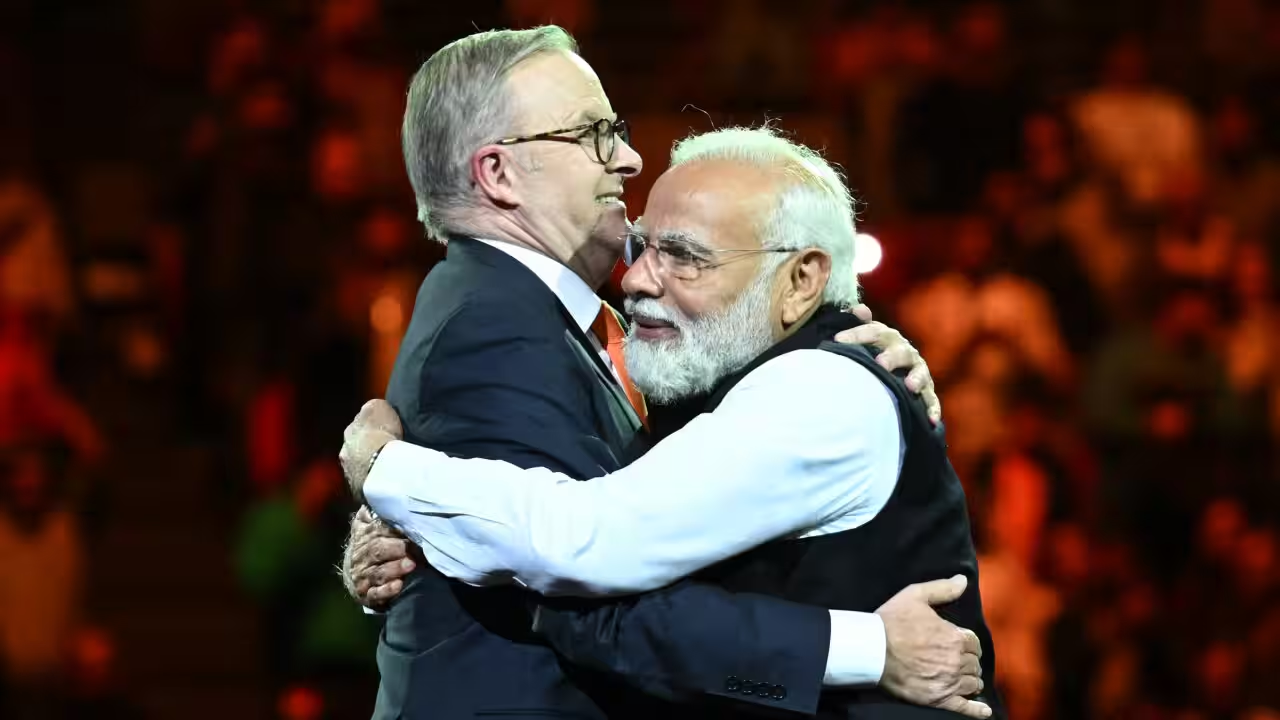
Against this backdrop, Prime Minister Narendra Modi, while addressing the Indian community in Melbourne during his visit to Australia, reiterated India’s long-standing commitment to peace, dialogue, and international cooperation. Emphasising India’s foreign policy philosophy, the Prime Minister said the country believes in development rather than expansion and remains guided by the principle of “Vasudhaiva Kutumbakam”—the world is one family.
Modi stressed that lasting peace can only be achieved through diplomacy and constructive engagement, underscoring India’s consistent position that dialogue, rather than conflict, offers the most sustainable path to resolving international disputes.
India has maintained a balanced diplomatic approach to major global conflicts, advocating peaceful negotiations while engaging with all stakeholders. Whether in Europe or West Asia, New Delhi has consistently called for restraint, respect for international law, and efforts to reduce tensions through diplomatic channels.


The renewed uncertainty in West Asia has also highlighted the vulnerability of global energy markets. India imports a significant share of its crude oil requirements from the region, making stability in West Asia crucial for the country’s energy security and economic outlook. A prolonged conflict could lead to higher fuel prices, increased transportation costs, inflationary pressures, and disruptions to international trade.
Foreign policy observers note that temporary ceasefires alone may not be sufficient to ensure lasting peace unless accompanied by sustained political dialogue, confidence-building measures, and meaningful efforts to address the underlying causes of conflict. They also point to the important role of multilateral institutions in supporting diplomatic initiatives and preventing further escalation.
With geopolitical tensions once again dominating international attention, India’s message of cooperation, development, and peaceful coexistence has gained renewed relevance. The Prime Minister’s remarks in Melbourne reflected New Delhi’s view that the 21st century should be defined by partnership, economic progress, and human welfare rather than prolonged conflict.
As the situation continues to evolve, the international community is closely watching developments, with hopes that diplomatic engagement will prevail over military confrontation and help restore stability in a region that remains vital to the global economy.












 https://www.youtube.com/watch?si=RtToJsBhYBatUrym&v=mOuYNSdhjHA&feature=youtu.be