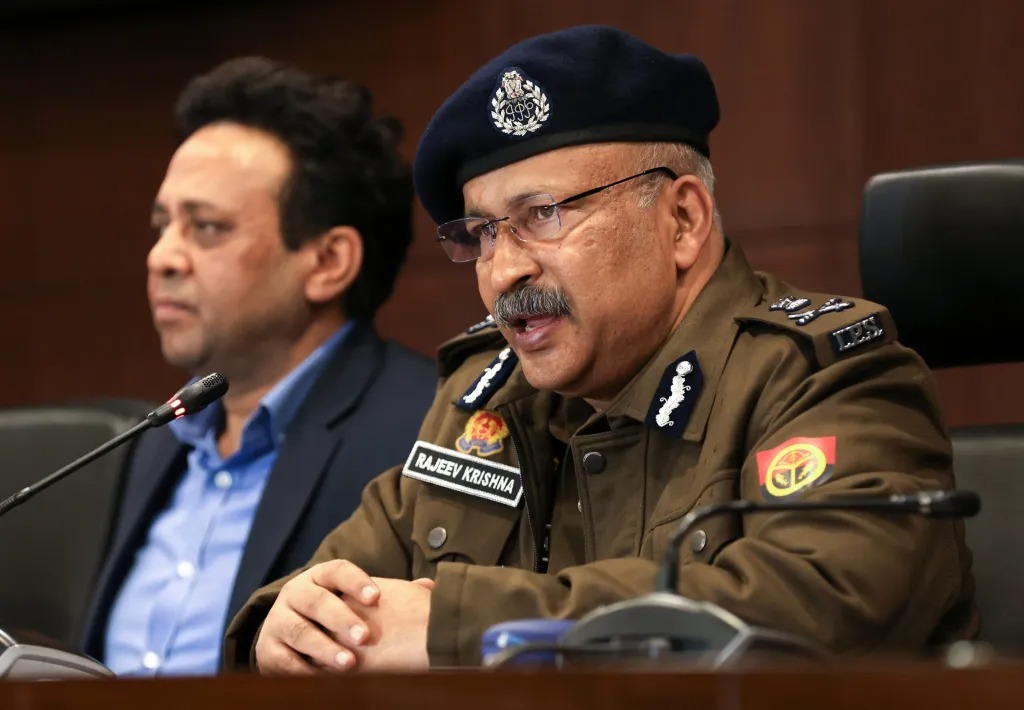
Lucknow: In a major push to strengthen counter-terror operations, Uttar Pradesh Director General of Police Rajeev Krishna conducted a comprehensive inspection of the Anti-Terrorism Squad headquarters, reviewing the state’s readiness to tackle emerging security threats.
During his visit to Lucknow, the DGP evaluated operational preparedness, infrastructure, and the use of advanced technology. He issued key directives to further enhance surveillance systems, intelligence mechanisms, and coordination among security agencies.
Focus on Technology and Intelligence
Emphasising the importance of tech-driven policing, the DGP directed officials to strengthen social media monitoring and data analytics capabilities. He noted that early detection of threats increasingly depends on digital intelligence and real-time data analysis.
He also reviewed systems for tracking terror-related activities and assessed coordination between intelligence units and other enforcement agencies.
Stress on Training and Preparedness
Highlighting the need for continuous readiness, the DGP instructed officials to conduct regular mock drills and specialised training programmes for ATS personnel. He said that constant practice and upskilling are critical to maintaining high operational standards.

The DGP inspected training facilities for ATS commandos and stressed collaboration with elite institutions such as the National Security Guard to ensure advanced-level training.
Strengthening Coordination and Capacity
Reiterating the need for a multi-pronged approach, the DGP said that tackling terrorism requires modern technology, seamless coordination, and highly trained manpower. He directed officials to continuously improve systems and refine operational methods to enhance effectiveness.
Senior officers, including Prem Gautam, were present during the inspection along with other ATS personnel.
Towards Stronger Security Framework
The review underscores the Uttar Pradesh Police’s proactive approach to strengthening internal security. With a focus on modernisation, intelligence-led policing, and capacity building, the state aims to develop a robust counter-terror framework capable of responding swiftly to evolving threats.