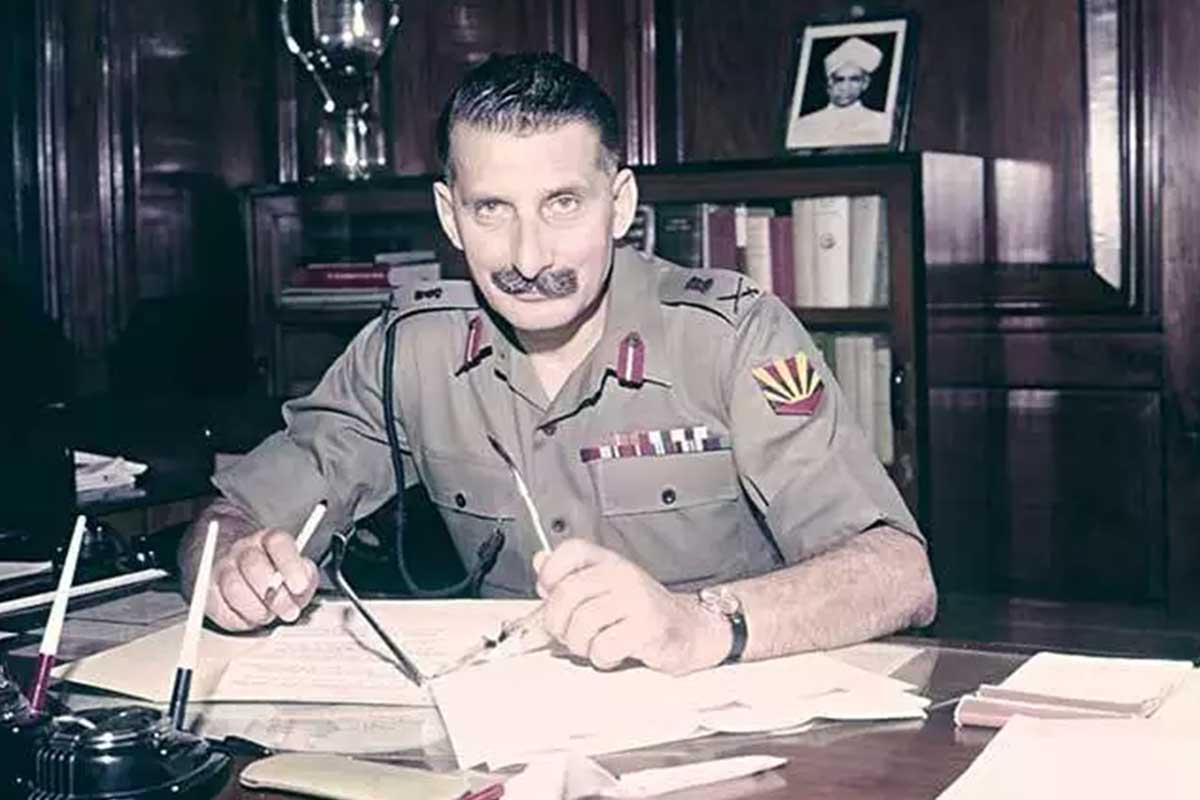
New Delhi, June 27, 2026: Few military leaders have left as profound a mark on India’s history as Field Marshal Sam Hormusji Framji Jamshedji Manekshaw. Revered for his exceptional leadership, strategic brilliance, and unwavering commitment to his soldiers, Manekshaw played a decisive role in India’s historic victory in the 1971 Indo-Pakistan War—a triumph that led to the birth of Bangladesh and reshaped the geopolitical landscape of South Asia.
Yet despite delivering one of the greatest military successes in modern Indian history, the celebrated soldier spent years after retirement waiting for benefits and recognition that were rightfully his.

From Aspiring Doctor to Legendary Soldier
Born on April 3, 1914, in Amritsar into a Parsi family, Sam Manekshaw was expected by his father to pursue a career in medicine. Instead, he chose the military path and joined the first batch of the Indian Military Academy in 1932, marking the beginning of a remarkable military career.
His courage, professionalism, and deep concern for the welfare of his troops earned him widespread admiration. The soldiers of the Gorkha regiments affectionately gave him the title “Sam Bahadur” (Brave Sam), a name that would become synonymous with his legacy.
The Decision That Changed History
As political and humanitarian conditions deteriorated in East Pakistan in 1971, pressure mounted on India to consider military intervention. Then Prime Minister Indira Gandhi explored the possibility of immediate action.
Manekshaw, then Chief of the Army Staff, advised caution. He argued that the armed forces required additional time to prepare adequately, citing military logistics, weather conditions, and operational readiness. His insistence on strategic preparation demonstrated not only military wisdom but also the courage to offer candid advice at the highest levels of government.
His assessment proved correct. When war finally broke out on December 3, 1971, the Indian Armed Forces executed a swift and decisive campaign. Within just 13 days, Indian troops surrounded Dhaka, leading to the surrender of approximately 90,000 Pakistani military personnel and the creation of the independent nation of Bangladesh.
A Field Marshal Without Full Benefits
Following his retirement on January 15, 1973, Manekshaw held the rank of Field Marshal, India’s highest military rank. Traditionally, the position carries lifetime status along with entitlement to full pay, allowances, and associated privileges.


However, due to administrative and bureaucratic complications, Manekshaw reportedly received only a portion of the benefits and pension to which he was entitled. For years, several financial dues remained unresolved, leaving one of India’s most decorated military leaders without the full recognition accorded to his rank.
President A.P.J. Abdul Kalam’s Intervention
The situation changed during the tenure of President A. P. J. Abdul Kalam, who took a personal interest in the matter. Following his intervention, the government moved to resolve the long-pending issues related to Manekshaw’s entitlements.
In April 2007, then Defence Secretary Shekhar Dutt visited Wellington in Tamil Nadu and formally handed over arrears amounting to ₹1.16 crore to the Field Marshal. The payment was widely viewed not merely as a financial settlement but as a long-overdue acknowledgment of the nation’s gratitude toward one of its greatest military heroes.
Final Years and Lasting Legacy
On June 27, 2008, Field Marshal Sam Manekshaw passed away at the age of 94 at a military hospital in Wellington, Tamil Nadu, following complications arising from a lung infection. His death marked the end of an extraordinary chapter in India’s military history.
Today, Manekshaw’s legacy extends far beyond the battlefield. His life remains a powerful example of leadership, integrity, strategic thinking, and the courage to make difficult decisions in the national interest. Military officers, policymakers, and citizens alike continue to draw inspiration from his example.
More than a military commander, Sam Bahadur became a symbol of professional excellence and principled leadership—qualities that continue to define his enduring place in India’s national memory.












 https://www.youtube.com/watch?si=RtToJsBhYBatUrym&v=mOuYNSdhjHA&feature=youtu.be