New Delhi: A newly emerged youth-driven movement known as the Cockroach Janata Party (CJP) has rapidly transformed from an online satirical campaign into a visible force on the ground, drawing significant attention across India. Founded in May 2026 by political communications strategist Abhijeet Dipke, the movement has gained traction among students and young professionals frustrated by unemployment, examination controversies, and governance-related concerns.
The group’s name, adopted as a symbol of resilience, has become central to its unconventional style of political expression. Through humor, social media campaigns, and satire, CJP has attracted a substantial online following within a short period, particularly among Gen-Z audiences.

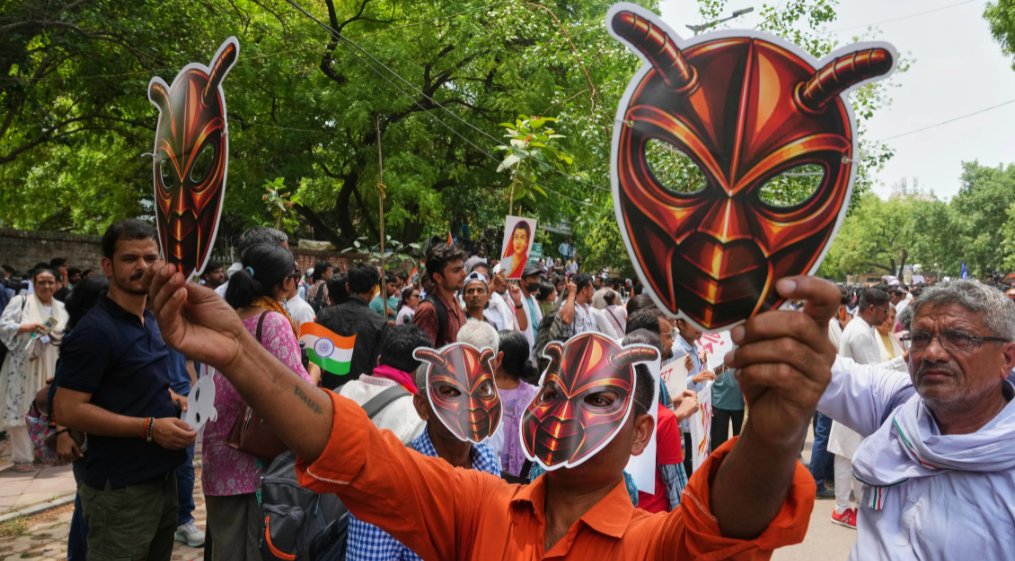
The movement’s first major public demonstration took place at Jantar Mantar in New Delhi on June 6. The gathering brought together large numbers of students, job aspirants, and young citizens who voiced concerns over alleged irregularities in competitive examinations, including recent controversies surrounding national entrance and recruitment tests.
Participants carried books, national flags, and symbolic props while raising demands for greater transparency, accountability, and reforms in the education and recruitment systems. The protest remained peaceful throughout the day, with organizers emphasizing non-violence and constructive engagement.
Founder Abhijeet Dipke addressed the crowd, urging participants to channel their frustrations into democratic action. The event also received support from several public figures and activists, helping amplify its visibility.

Security arrangements were extensive, with authorities deploying a large police presence to maintain order. While a small number of preventive detentions were reported following attempts by rival groups to disrupt the gathering, no major incidents of violence occurred.
Political observers view the protest as an important test of whether digitally mobilized youth movements can sustain momentum beyond social media platforms. While opinions remain divided on the group’s long-term prospects, the demonstration highlighted growing concerns among young Indians regarding employment opportunities, examination integrity, and institutional accountability.
Analysts believe the movement’s future will depend on its ability to convert online popularity into sustained organization, clear policy demands, and continued public engagement. Whether it evolves into a lasting political platform or remains a symbolic protest movement, the events at Jantar Mantar have underscored the increasing role of youth voices in shaping public discourse.