Colombo Dialogue Rekindles Debate on Informal Engagements Amid Continued Bilateral Tensions
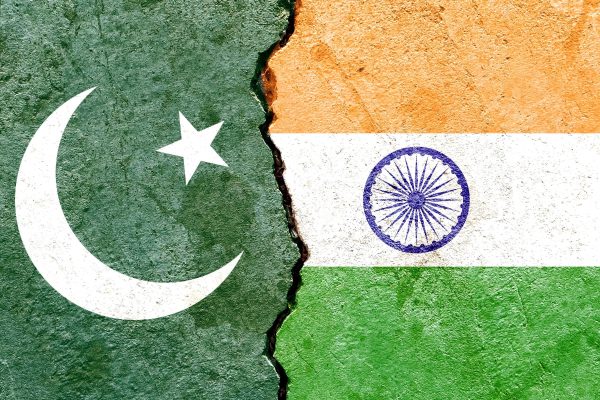
New Delhi: Recent discussions surrounding a regional security dialogue held in Colombo have once again drawn attention to the complex nature of India-Pakistan relations. While official ties between the two neighboring countries remain strained, the reported presence of Indian and Pakistani representatives at a common strategic forum has sparked debate over the role of informal diplomacy and backchannel communication in South Asia.
For decades, India-Pakistan relations have been shaped by a combination of public confrontation and discreet diplomatic engagement. Issues such as cross-border terrorism, Jammu and Kashmir, ceasefire violations, and political rhetoric have repeatedly strained bilateral ties. The situation became even more tense following the Pahalgam terror attack in 2025 and the subsequent military response by India.

Against this backdrop, any interaction involving representatives from both countries inevitably attracts public and political attention.
Understanding Track-2 and Informal Diplomacy
Foreign policy experts note that international relations are not driven solely by formal government negotiations. Alongside official diplomatic channels, countries often engage through what is known as Track-2 diplomacy, involving former diplomats, strategic experts, academics, and influential non-governmental figures.
A related format, known as Track-1.5 diplomacy, brings together both official and non-official participants to exchange views on regional and global issues.
The primary objective of such forums is not to negotiate agreements but to keep communication channels open, improve understanding of differing perspectives, and explore potential avenues for future engagement.
Analysts caution against automatically interpreting participation in these forums as evidence of policy changes or secret negotiations.
The Debate Over Informal Contacts
The controversy often arises when informal discussions are viewed through a political lens. In India, Track-2 engagements are sometimes portrayed as hidden diplomacy or unofficial negotiations, although experts point out that their purpose is fundamentally different from formal backchannel talks conducted under government authorization.
At the same time, strategic observers argue that no diplomatic engagement is entirely without value. History offers several examples where informal discussions laid the groundwork for future official agreements and confidence-building measures.
Supporters of continued engagement maintain that communication, even at non-governmental levels, can help reduce misunderstandings and prevent unnecessary escalation between two nuclear-armed neighbors.
Government’s Position Remains Unchanged
In response to reports related to the Colombo meeting, the Government of India clarified that the event did not constitute any form of official dialogue with Pakistan and that it had no direct role in the discussions.
The clarification was viewed by observers as a reaffirmation of India’s longstanding position that meaningful bilateral engagement cannot progress without credible action against terrorism.
New Delhi has consistently maintained that terrorism and formal dialogue cannot proceed simultaneously, and officials remain cautious about any perception that bilateral normalization is underway without substantive changes on the ground.
Diverging Views Within Strategic Circles
The debate over India-Pakistan engagement continues to reflect differing perspectives.

One school of thought argues that maintaining at least minimal communication channels is essential for regional stability, particularly given the security sensitivities of South Asia. Advocates believe that dialogue mechanisms can help manage crises and reduce the risk of miscalculation.
Another viewpoint emphasizes that any meaningful improvement in relations must be preceded by concrete and verifiable action against terrorism. According to this perspective, symbolic gestures or discussions alone cannot substitute for tangible changes in behavior and policy.
These contrasting views continue to shape public and political discourse whenever discussions on India-Pakistan engagement emerge.
Media and Public Perception
The role of media and social media has also transformed the way such events are perceived. Strategic conferences and regional forums that once received limited attention now become subjects of intense national debate.
Photographs, comments, or reports from such gatherings are often interpreted in multiple ways, sometimes creating a gap between actual diplomatic significance and public perception.
As a result, routine strategic interactions can quickly become headline issues in both countries.
A Complex Diplomatic Reality
Experts note that India-Pakistan relations today are influenced not only by bilateral concerns but also by broader regional and global factors, including South Asian stability, maritime security, international trade, counterterrorism efforts, and geopolitical competition.
Think tanks, universities, and international institutions regularly host forums where participants from both countries exchange views on these issues. Such engagements are generally intended to promote dialogue and understanding rather than negotiate policy outcomes.
India’s foreign policy in recent years has projected a more confident and assertive approach on the global stage, particularly regarding national security and terrorism. Observers believe that participation in Track-2 or Track-1.5 discussions is unlikely to alter New Delhi’s stated positions.
At the same time, most diplomatic experts agree that responsible statecraft rarely involves completely shutting down all avenues of communication.
The future of India-Pakistan relations will ultimately depend less on conferences, statements, or photographs and more on developments related to security, terrorism, border stability, and trust-building measures.
Until tangible progress is made on these issues, skepticism and cautious optimism are likely to coexist. Informal dialogues may continue to provide opportunities for discussion, but lasting peace will require deeper structural changes and sustained political commitment from both sides.
As many diplomats observe, the purpose of diplomacy is not always to produce immediate agreements but to preserve options for future engagement. In that sense, the continuing debate over informal India-Pakistan contacts reflects the enduring complexity of one of South Asia’s most challenging relationships.