Lucknow: Students of the Uttar Pradesh State Institute of Forensic Science (UPSIFS), Lucknow, presented innovative models demonstrating how quantum technology and advanced computing could help address traffic congestion, improve route optimisation and strengthen digital forensic security.
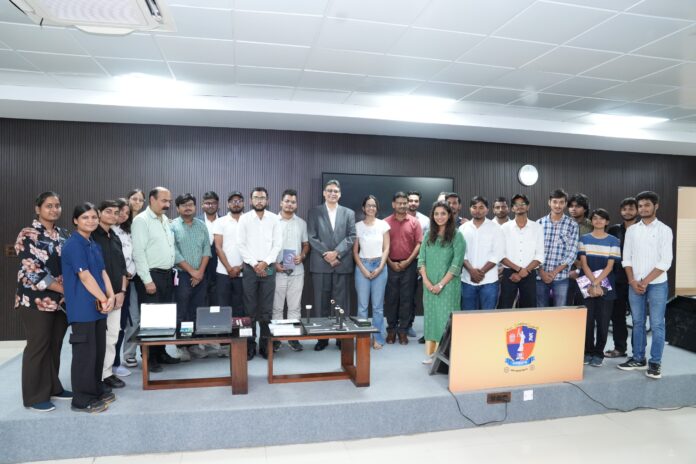
The stage presentation brought together students from the institute’s law, BTech and MTech programmes, who showcased their projects before subject experts Dr Pawan Sharma and Herald D’Costa.

One team demonstrated a smart route optimisation model using the G7 Summit as a case study. The project incorporated D-Wave annealing, AWS Cloud and the QUBO model to explore ways of improving traffic management. Another team, named ‘QuBee’, presented a project based on quantum random number generation.
Dr G.K. Goswami, founding director of UPSIFS, appreciated the students’ efforts and said such initiatives help them understand emerging technologies and their practical applications. He noted that the institute was working towards advancing quantum computing, which could have significant applications in forensic science, particularly quantum cryptography.
Quantum Computing for Smarter Traffic Management
The students explored how optimised traffic routing could reduce vehicle idling time, fuel consumption and carbon dioxide emissions while promoting greener mobility. Their proposed models also examined secure data management, incorporating TLS 1.3 encryption and compliance with General Data Protection Regulation (GDPR) requirements.
The technology could potentially support priority routing for ambulances, police vehicles and forensic service teams, helping them navigate congested roads more efficiently.
Quantum Technology for Digital Forensic Security
The ‘QuBee’ project demonstrated a model of a photonic-based quantum random number generator (QRNG), designed to generate random values using quantum principles. The presentation also discussed quantum key distribution (QKD) and its potential role in secure communications.

According to the students, quantum-based security tools could strengthen the encryption of forensic data, preserve data integrity and help protect digital evidence against unauthorised access or tampering.
Dr Pawan Sharma, an IT expert from the United States, praised the students’ technical understanding and presentations. He observed that the institute’s technology-oriented learning environment was reflected in the quality of their projects.
Dr Goswami highlighted the future potential of quantum technology in developing quantum chips for forensic science and other advanced applications. He also emphasised the need to explore quantum computing solutions for complex challenges such as urban traffic congestion.
Additional Director Sanjeev Suman, Deputy Director Chiranjiv Mukherjee, Atul Yadav, Dr Nimisha, Dr Senthil Sivasubramanian, Public Relations Officer Santosh Tiwari and other faculty members attended the programme.
The event highlighted the growing interest in quantum computing among students and its potential applications in traffic management, cybersecurity and forensic investigations.