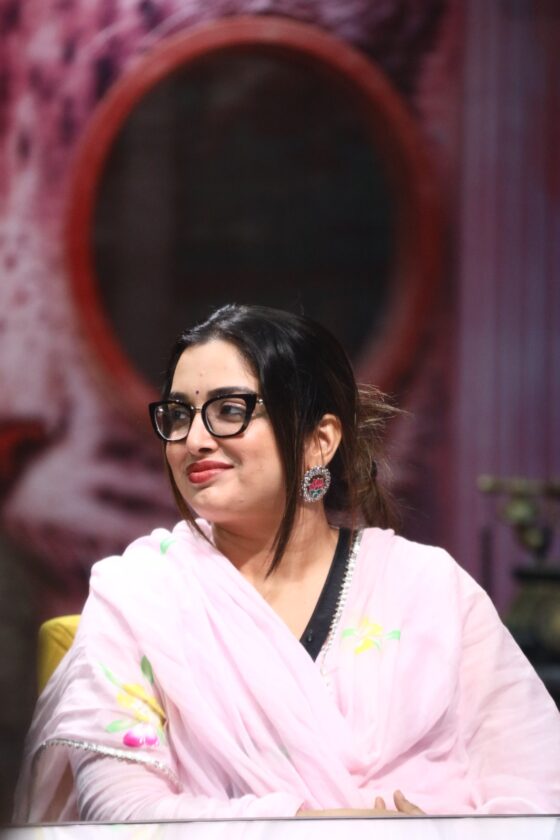
“When a video or the news goes viral, it’s us people who make the video viral. Talking about the platforms that publish these kinds of AI-generated videos, she said they are responsible for spreading these kinds of fake videos and ruining someone’s image. At the same time, she acknowledges that the sheer accessibility of information makes the issue more complicated. She believes viewers also need to take greater responsibility for what they choose to believe and share.

“But nowadays we can’t actually blame because everything is open to people. It’s the audience’s responsibility to verify that the video is authentic or AI generated,” she said. Her advice to audiences is straightforward: don’t form an opinion based solely on what appears on a screen. “As an audience, I would only say that we should not believe everything we see. We should first verify the content before setting a perspective in our mind,” she said. That caution also extends to the way people use AI in their own professional lives. “And we should use our brains while doing our work, rather than just giving the prompt to ChatGPT and asking AI to do your work,” she said.

She sees AI as a technology that can be useful for content creation when used responsibly. She doesn’t dismiss its creative potential but remains cautious about its wider impact. “Like I said, AI is a great tool for content creation. AI can be used for a lot of good purposes, other than its negative use,” she said. At the same time, she doesn’t see AI completely replacing human-created work. There is still a preference, in her view, for content that carries a human element.
“AI cannot completely replace humans, because we still like to see human-generated content rather than AI-generated. But yes, it has taken many jobs and will take more jobs in the future, leaving people jobless,” Paallavi ended.