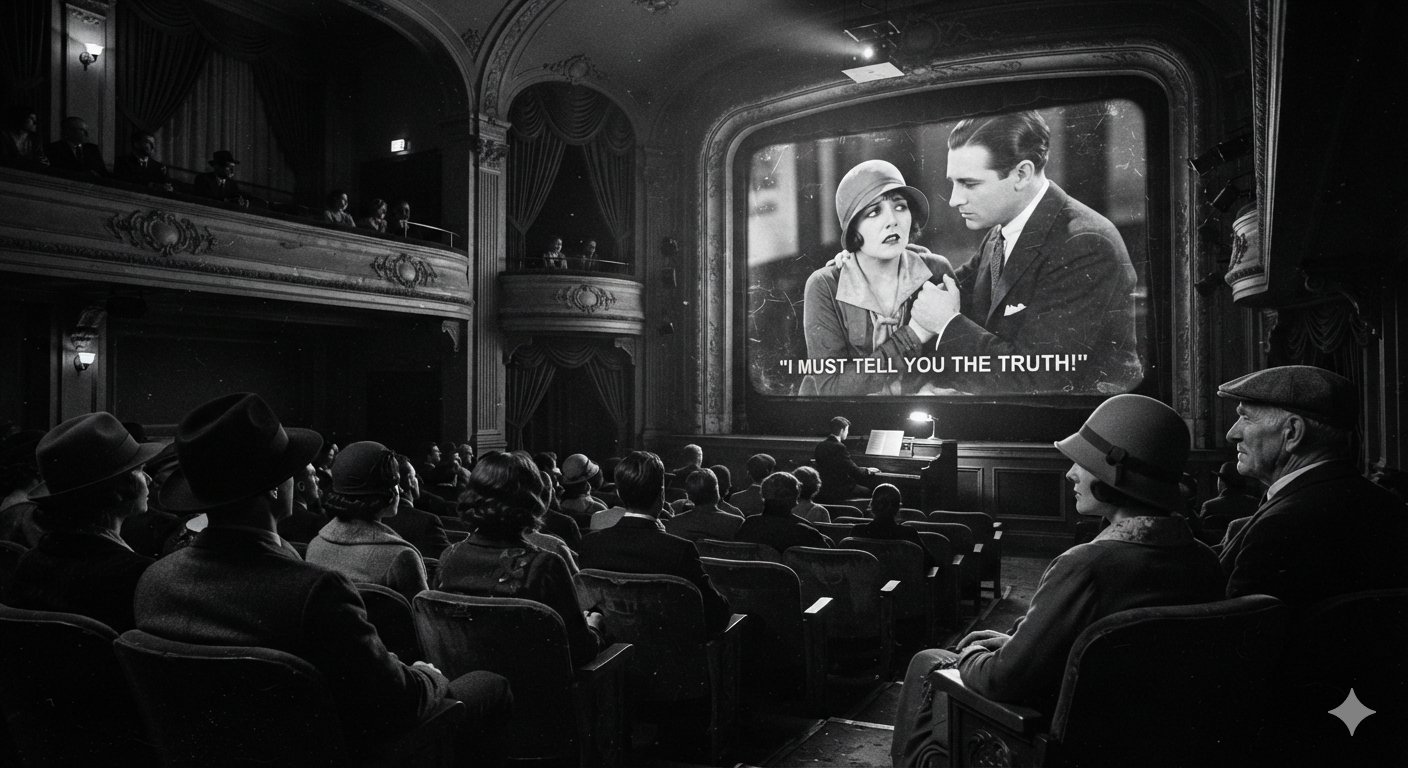
Mumbai: In an era dominated by advanced visual effects, Dolby sound, 4K imagery and increasingly elaborate digital production, silent cinema offers a reminder of a fundamental principle of filmmaking: powerful emotions do not always require dialogue.
World Silent Cinema Day, observed on September 29, provides an opportunity to revisit the distinctive language of early cinema, when stories were communicated largely through facial expressions, gestures, movement and visual composition. The form demonstrated how actors could convey complex emotions without spoken words.

Indian cinema has produced several memorable examples of expressive, dialogue-free performance. Gulzar’s Koshish, starring Sanjeev Kumar and Jaya Bachchan as a deaf and mute couple, is cited as an example of storytelling driven strongly by gesture, expression and visual communication. The performances showed how silence could become an integral part of a character’s emotional world.
The tradition of expressive acting can also be seen in the work of actors such as Dilip Kumar, Irrfan Khan, Naseeruddin Shah, Om Puri and Nawazuddin Siddiqui, whose screen performances have often relied on subtle changes in expression and body language. Among female performers, Meena Kumari, Shabana Azmi and Smita Patil demonstrated the ability to communicate emotional depth through their eyes and restrained performances.

Globally, Charlie Chaplin remains one of the defining figures of silent cinema. Through physical comedy, gestures and facial expressions, Chaplin created performances that communicated across linguistic and cultural boundaries. Actors including Marlon Brando, Al Pacino, Daniel Day-Lewis, Meryl Streep and Ingrid Bergman have likewise demonstrated the importance of physical expression and pauses in dramatic performance.
India’s silent-film legacy dates back to Dadasaheb Phalke’s Raja Harishchandra, released in 1913 and widely regarded as the country’s first full-length feature film.
While modern technology has transformed filmmaking, silent cinema continues to underline the importance of visual storytelling. Its enduring lesson is that when expressions, gestures and emotions connect with an audience, words become only one of many tools available to an actor and filmmaker.