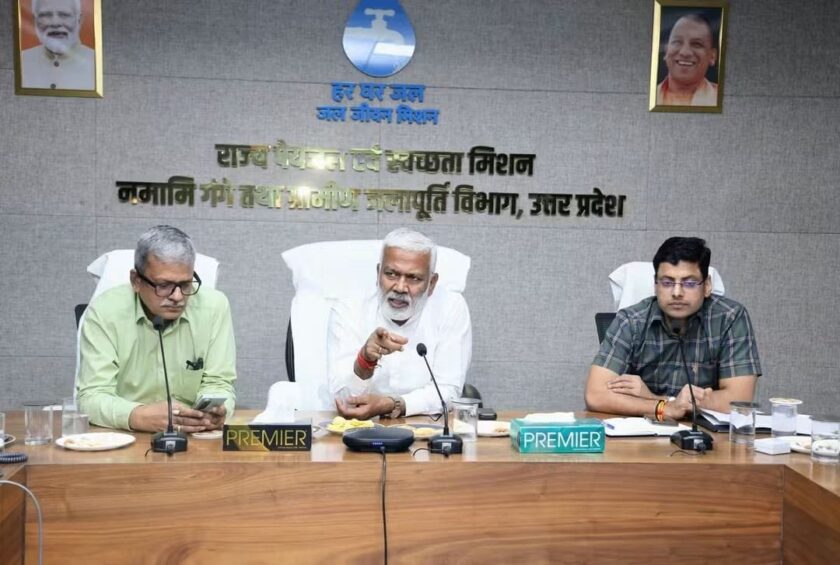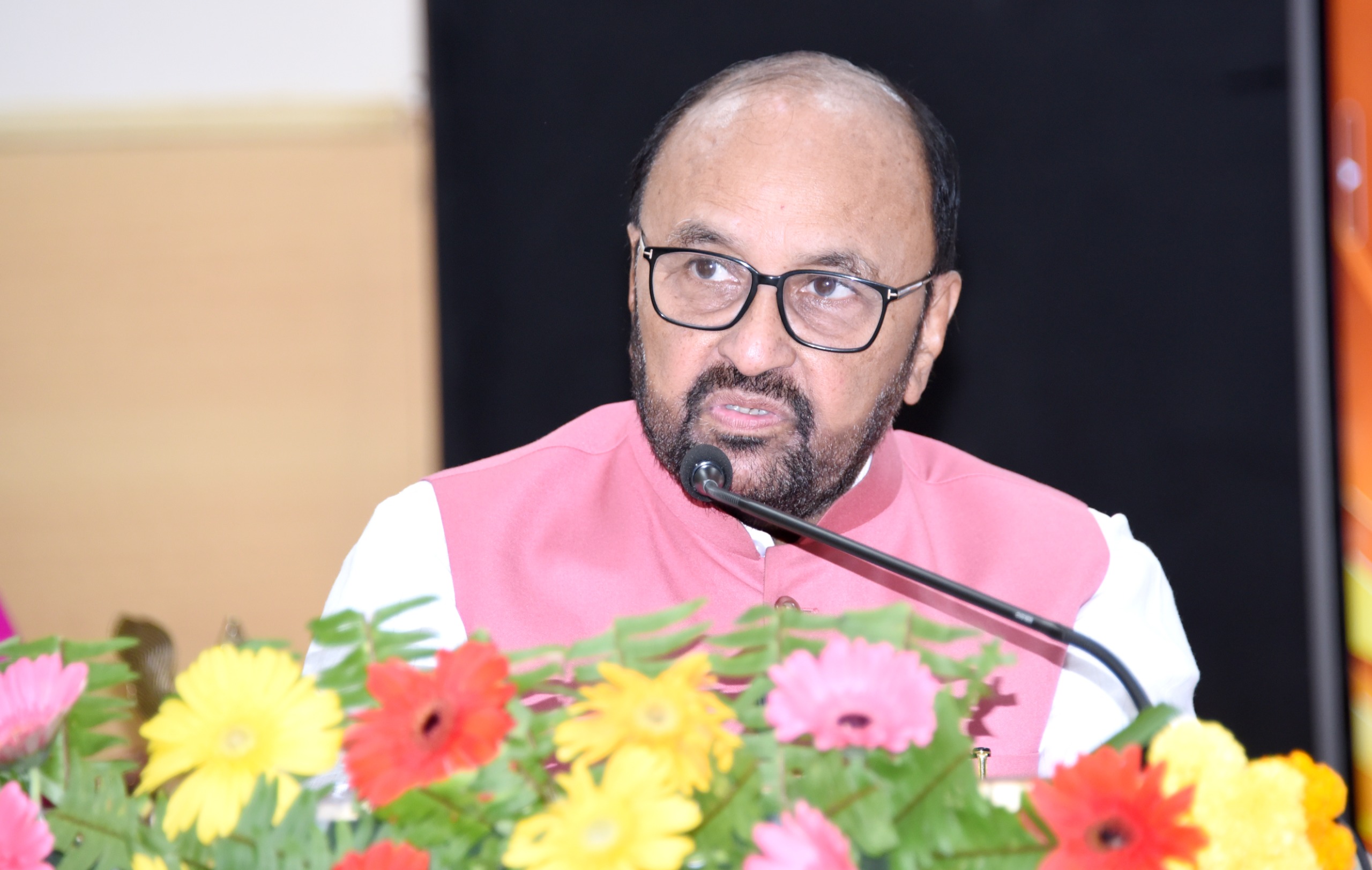
Lucknow: Higher Education Minister Yogendra Upadhyay said that correct, timely and verified data is far more than a collection of figures. It is the basis for making policy, designing schemes and understanding the real state of higher education. Data, he said, shows where new institutions are needed, where teachers and resources are short, and which areas need special attention for development.
He was addressing university nodal officers at a state-level workshop on the All India Survey on Higher Education (AISHE), held at Dr Ram Manohar Lohia National Law University in Lucknow. The Higher Education Department of Uttar Pradesh organised it in coordination with the Union Ministry of Education. Participants discussed data collection, verification, submission and analysis, and ways to strengthen institutional systems.

“Data is a mirror”
Upadhyay described data as a mirror of society and of the higher education system, noting that both the central and state governments base many important decisions on available figures. He urged officials to treat data collection as a responsibility tied to policy and planning, not a routine formality. “If the data is right, the schemes will also be more effective,” he said.
Regular updates and verification
The minister stressed that universities must regularly update AISHE data for their affiliated colleges and institutions. He pointed out that many institutions fail to submit data on time after receiving an AISHE code, which can turn their status inactive and hurt students.
He asked nodal officers to review progress regularly and not wait for the deadline once the portal opens. Information on enrolment, vacancies, courses, examinations, results and infrastructure should be entered only after it has been checked against original records. Filling in data is not enough, he said; it must also be accurate and authentic.
Nodal officers’ role should go beyond collection, Upadhyay said. Before final approval, they should cross-verify entries, carry out random checks where needed to test records against AISHE data, and give institutions technical and administrative support. The state should aim for zero pendency, so that no eligible, functioning institution is left out of the survey through administrative negligence.

In the digital age, he added, the right information must be available at the right time. Good data helps identify future needs and plan new institutions, faculty and departments.
Institutional responsibility
Additional Chief Secretary for Higher Education Amit Kumar Ghosh said AISHE data management is the responsibility of the whole institution, not just the nodal officer, since data comes from various sections including admissions and examinations. A standard operating procedure (SOP) will be drawn up from the workshop’s suggestions and sent for approval.
Ghosh called for uniformity between university records and AISHE records, reconciliation of affiliation lists, checks against authentic records to avoid wrong or double reporting, and close scrutiny of any unusual changes. Uploading data is only a process, he said, and analysing it and identifying gaps matters more.
Director of Higher Education Prof. Monica Singh spoke on the systematic compilation and quality of data.
Who attended
The workshop was attended by the vice-chancellor of the host university, Prof. Amar Pal Singh; AISHE Additional Director General Sangeeta Narmadeshwar; Registrar Keshav Kumar; State Nodal Officer for AISHE Prof. Dinesh Chandra Sharma; and Additional Secretary of the Higher Education Council, Dr Dinesh K. Rajput. Nodal officers from universities across the state also took part. Technical sessions covered the AISHE portal and other systems, and addressed problems specific to individual universities.