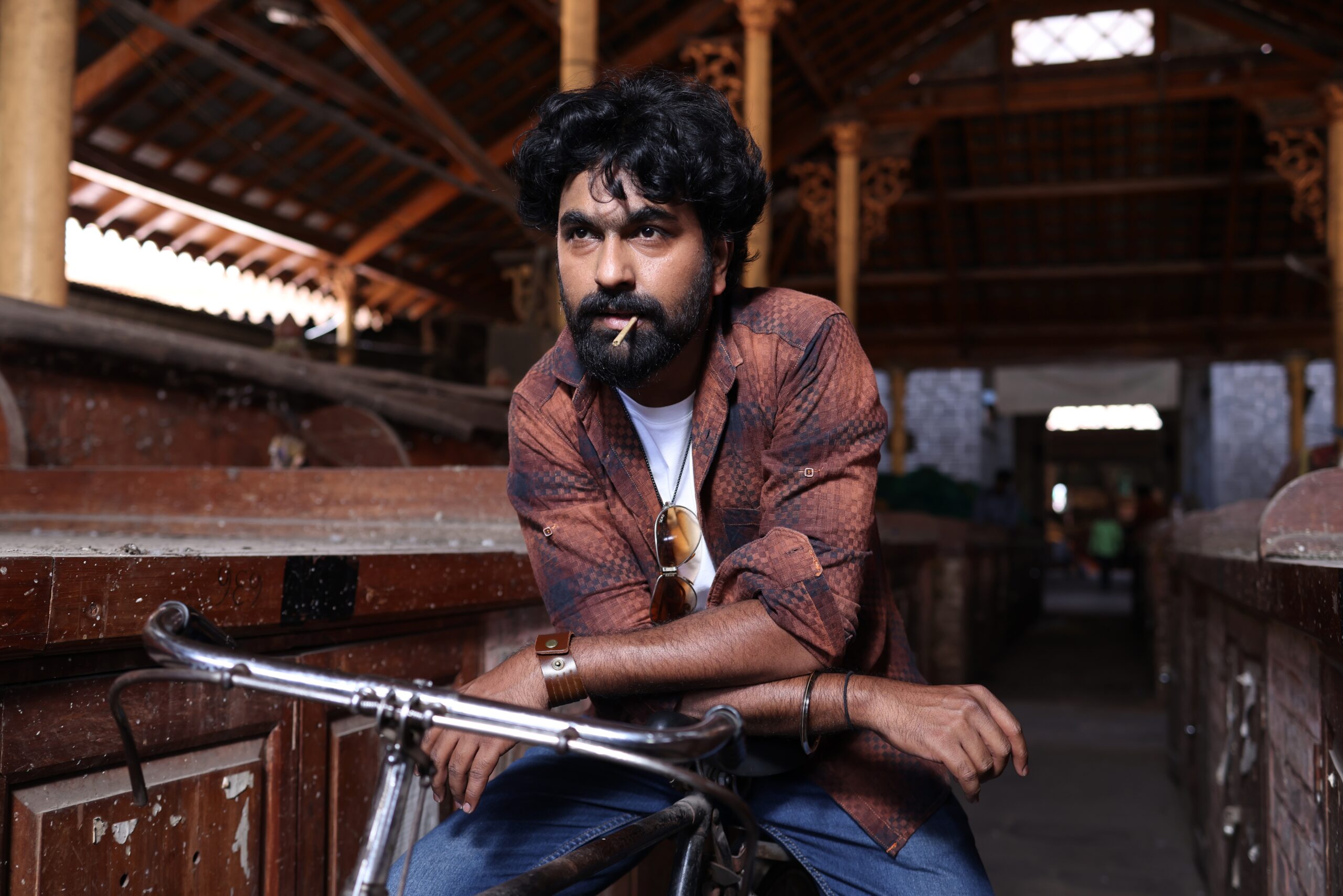
Mumbai: Actor Sambhaji Sasane has carved a niche for himself with his versatile performances across Hindi and Marathi cinema. From the acclaimed Hindi feature Love & Shukla (2017) to the 2026 romantic action drama Rubaab, Sasane has consistently explored diverse characters. His recent performance in the Marathi suspense thriller Bol Bol Rani (2026), where he portrayed three distinct and complex characters, further showcased his ability to transform himself on screen. With Rakhan and Madhuran lined up, the actor continues to explore unconventional and challenging stories.
For Sasane, however, the size of a role has never been the deciding factor. What matters to him is the story behind the character and the purpose that character serves within it. Drawn towards realistic, layered personalities, he believes the best roles are often the ones that challenge him emotionally and creatively.

Speaking about his approach to choosing characters, Sasane said, “I’m drawn to characters who intimidate me a little, who are grey, who are fighting something inside. But I’ve learned you can’t love a character without loving the world that made him, so the script matters as much as the part. I don’t fall for a character. I fall for the story that needs him.”
Having started his journey as a crowd artist before moving into character roles and eventually leading parts, Sasane has experienced different stages of an actor’s career. Those experiences have shaped his belief that screen time does not necessarily determine the impact of a performance.
“I began as a crowd artist with no lines, then moved to character roles, and now I get to play leads and even multiple roles in one film. Standing at every point on that ladder taught me that screen time isn’t the same as space. A character can be small and still have depth. One of my smallest roles earned me a call from a legendary theatre actor who was deeply moved by that performance. That meant more than any amount of screen time. Today, I don’t look for bigger roles. I look for characters with an arc, someone the story simply cannot finish without,” he shared.
The actor is particularly fascinated by flawed and contradictory personalities, believing they offer a more authentic reflection of human nature. According to him, imperfections often reveal more about a person than their polished exterior.
“I have always loved flawed, layered personas because life itself is a contradiction. Everyone carries a grey side, no matter how perfect they appear from the outside, and that’s the side I want to explore. Maybe it comes from who I am off-screen. I’m a detached person, I keep a small circle, and I enjoy disappearing from the noise. The clean version of a man is his photo. The contradictions are his face,” he said.

For Sasane, a certain amount of fear is also an important indicator when deciding whether to take on a project. If a character immediately makes him uncomfortable or pushes him beyond what he already knows, he sees that as a reason to pursue it rather than avoid it.
“For me, day one is when I first hear the script. A role should scare me, intimidate me and move something inside me immediately. The fear of entering a body I don’t yet understand or a world I don’t know is exactly what makes me want to step into it. Fear isn’t the obstacle. Fear is the invitation,” he explained.
While instinct continues to play a major role in his choices, Sasane says his understanding of what makes a project work has evolved over the years. Today, he looks beyond the script and considers the creative team equally important.
“My instinct hasn’t changed. I’ve always trusted it over practical considerations. What I have learned is that the script is only half the journey. The team is the other half. A great script and a great performance can still fail without the right director and collaborators who surrender to the same vision. That’s what pushed me towards projects like Love & Lavani, a folk-dance play I had never attempted before, and Bol Bol Rani, one of the bravest scripts I had ever read. I’d rather risk everything in an unknown space than play safe in a familiar one,” he said.
Looking ahead, Sasane hopes to be part of more stories that shine a light on ordinary people whose lives are filled with quiet resilience. He believes cinema often overlooks these everyday heroes, even though their experiences can be deeply moving.
“My father is a tailor. He lives a simple life, and I know with complete certainty that it’s an extraordinary one. I feel the same about everyone travelling in local trains, earning their daily bread and quietly fighting battles that nobody films. 12th Fail moved me because it was honest about that life. So did The Lunchbox and Masaan. I want to play a tailor, an auto driver, a hawker, and real superheroes. Cinema keeps looking up for its heroes. I keep looking around,” he concluded.