New Delhi: Hindustan Aeronautics Limited (HAL) appears to have found real momentum in its long and often criticised effort to build India’s first indigenous turbofan engine.
According to the company’s latest annual disclosures, the core of the HTFE-25 engine has now been put through rigorous testing — demonstrating reliable light-up, smooth acceleration, and reaching 99.5 percent of its maximum design speed. For a programme that has drawn nearly a decade of criticism over delays, hitting near-peak core speed is a strong signal that the underlying design is sound and that development is finally back on track.

What the HTFE-25 is meant to do
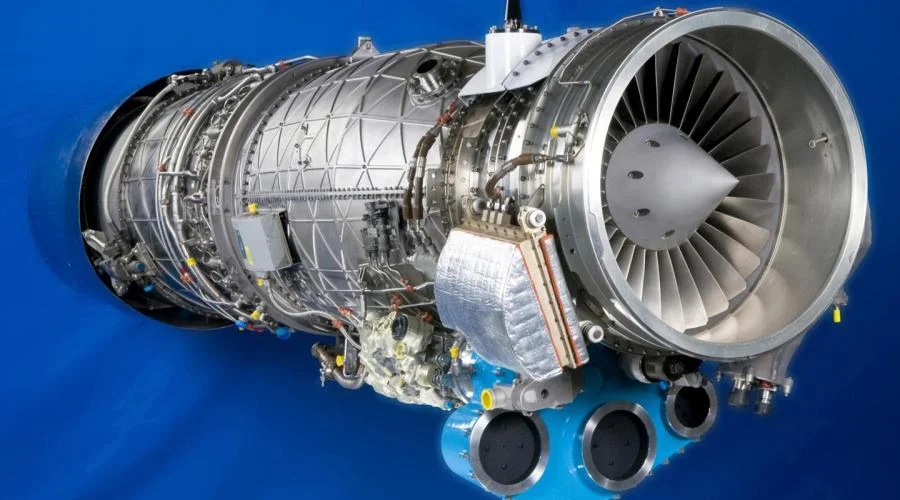
The Hindustan Turbo Fan Engine-25 (HTFE-25) is designed to produce 25 kilonewtons of thrust. Work on the engine began in 2013 at HAL’s Aero Engine Research and Development Centre in Bengaluru. It’s a low-bypass, twin-spool engine built around a three-stage low-pressure compressor, a five-stage high-pressure compressor, and air-cooled turbine blades.
Notably, the engine uses 3D-printed components made from a titanium-aluminium-vanadium alloy (Ti-6Al-4V) to keep it strong yet light, giving it a thrust-to-weight ratio of 5.56 and a service ceiling of 11 km.
That thrust class makes the HTFE-25 a good fit for basic and advanced military trainers, small business jets, and heavier unmanned aerial vehicles. It can power single-engine aircraft up to five tonnes, or twin-engine platforms up to nine tonnes. HAL estimates domestic and export demand of around 200-250 units, with platforms like the HJT-36 Sitara trainer and the Combat Air Teaming System (CATS) drones seen as likely candidates.
Self-funded, and what that’s meant
Notably, HAL has funded the entire HTFE-25 programme through its own internal resources, rather than relying on direct backing from the Indian Air Force or Ministry of Defence. That financial independence gave the company room to develop the technology at its own pace, without the pressure of externally imposed deadlines — but HAL has also acknowledged that the lack of outside programme oversight contributed to the delays the project has faced over the years.

A decade of slow, uneven progress
The engine’s development has had its share of both breakthroughs and long stalls. The core engine first ran successfully back in December 2015. By 2019, HAL had built two core engines that together logged over 300 test runs, reaching full core speed and clearing high-altitude cold-start trials.
Progress slowed sharply after that. By mid-2024, the full technology demonstrator engine had reached only 55 percent of its design speed in acceleration trials — a pace that drew pointed criticism from government watchdogs over unclear development milestones and inadequate testing infrastructure.
In response, HAL opened a new 10,000 square metre design and test facility in December 2023, with dedicated dual test beds for the HTFE-25 and its sister programme, the HTSE-1200. That investment has helped rebuild confidence that the engine can still be ready for production by its 2030 target, even accounting for the lengthy testing and certification process ahead.
Why 99.5 percent matters
Reaching 99.5 percent core speed marks a major leap from the 55 percent full-engine speed reported just a couple of years ago. The core engine — housing the high-pressure compressor, combustor, and high-pressure turbine — is the most demanding and technically critical part of any turbofan. Running it at near-maximum speed shows it can withstand extreme temperatures, high pressures, and heavy mechanical stress without structural failure.
In effect, this milestone suggests the hardest engineering problems on the HTFE-25 have now been cracked. Attention will next turn to integrating this proven core into the complete engine and pushing through the endurance testing needed for final production certification.