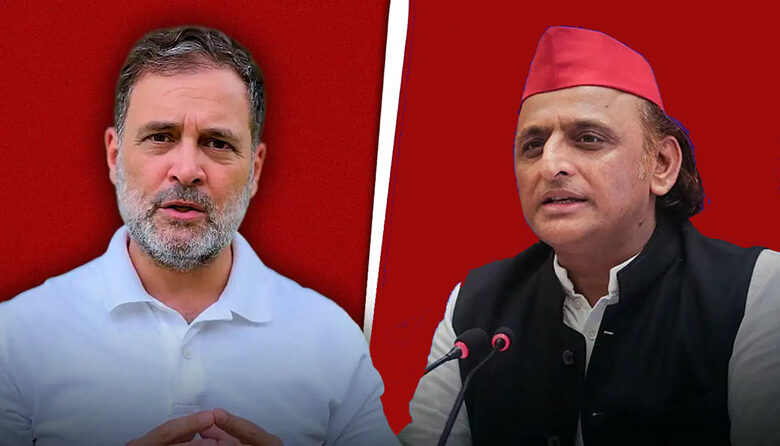
New Delhi: A closed-door meeting between Leader of the Opposition Rahul Gandhi, Samajwadi Party president Akhilesh Yadav and Congress General Secretary Priyanka Gandhi during the Monsoon Session of Parliament has sparked fresh political speculation over the future of the Congress-Samajwadi Party alliance ahead of the 2027 Uttar Pradesh Assembly elections.
The hour-long meeting, held in Rahul Gandhi’s office in Parliament, was officially described as a routine interaction. However, its timing and the presence of senior opposition leaders have led to widespread discussion about the alliance’s long-term electoral strategy.

When asked about the meeting, Akhilesh Yadav said it was natural for leaders to meet after parliamentary proceedings were adjourned. Nevertheless, political observers believe the discussions may have gone beyond routine parliamentary coordination, especially as both parties prepare for a crucial electoral battle in Uttar Pradesh.
The meeting took place amid protests in Parliament over issues including alleged examination paper leaks and questions surrounding temple offerings in Ayodhya. Several Samajwadi Party MPs were also involved in demonstrations on student-related issues during the session.
Political analysts believe the discussions may have centred on maintaining unity within the opposition alliance after recent public exchanges between leaders of both parties. Following the 2024 Lok Sabha elections, in which the Samajwadi Party won 37 seats in Uttar Pradesh and Congress secured six, both parties have highlighted their respective contributions to the alliance’s success. Those competing narratives have fuelled speculation about future seat-sharing negotiations.
Recent remarks by Congress MP Imran Masood crediting Rahul Gandhi for the alliance’s electoral gains drew criticism from Samajwadi Party leaders, who argued that the party’s organisational strength and grassroots network were decisive in Uttar Pradesh. Congress leaders, in turn, have emphasised Rahul Gandhi’s national campaign on constitutional values and social justice.

The question of seat sharing is widely expected to be one of the most challenging aspects of alliance negotiations before the 2027 Assembly elections. While some Congress leaders have argued for a larger share of seats as a national party, the Samajwadi Party is expected to rely on its stronger electoral performance and organisational base in the state to justify a dominant role.
Observers also believe the leaders may have discussed developing a coordinated campaign around issues such as employment, examination irregularities, social justice and caste-based representation. Akhilesh Yadav’s PDA (Backward Classes, Dalits and Minorities) social coalition and Congress’ emphasis on caste census and inclusive representation could provide common political ground if both parties are able to coordinate effectively.
Priyanka Gandhi’s participation in the meeting has further fuelled speculation that Congress may assign her a more prominent role in Uttar Pradesh ahead of the Assembly polls, particularly in outreach to women and young voters.
Neither Congress nor the Samajwadi Party has disclosed the details of the discussions. As a result, any conclusions about specific decisions or agreements remain speculative. However, the meeting has underscored the importance both parties place on preserving opposition unity while preparing for what is expected to be a closely watched contest in the 2027 Uttar Pradesh Assembly elections.