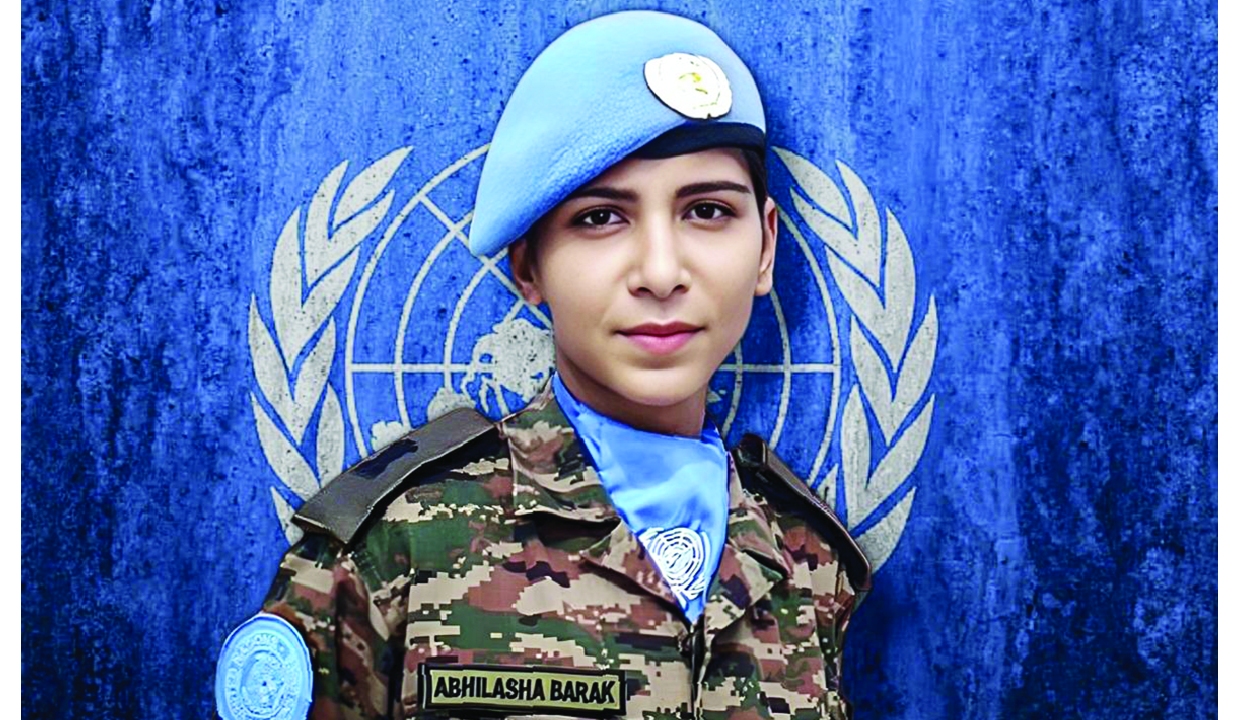
New Delhi / Lebanon: An Indian Army officer serving with the United Nations peacekeeping mission in Lebanon has called for sustained diplomatic engagement and coordinated international efforts to ensure long-term stability and reconstruction in the conflict-affected country.

Major Abhilasha Barak, who is deployed with the United Nations Interim Force in Lebanon (UNIFIL), emphasized that lasting peace in Lebanon will depend not only on maintaining the ceasefire but also on rebuilding trust, institutions, and communities affected by prolonged violence.
Focus on Long-Term Stability and Recovery
Speaking at a recent briefing, Major Barak said ongoing dialogue among concerned parties remains essential to preserve the fragile ceasefire in southern Lebanon. She noted that reconstruction must extend beyond physical infrastructure and address the psychological and social impact of years of conflict.
According to her, a sustainable recovery process requires coordinated efforts involving governments, local communities, and international peacekeeping forces. She stressed that rebuilding Lebanon will demand both humanitarian support and long-term development initiatives to help communities recover from trauma and displacement.
Recognition for Gender Advocacy Work
Earlier this year, Major Barak received the 2025 Military Gender Advocate of the Year Award from United Nations Secretary-General António Guterres in recognition of her contributions to advancing gender inclusion in peacekeeping environments.
The award highlights her work in promoting the welfare of women and girls in conflict zones through education, healthcare awareness, and vocational training initiatives. The United Nations commended her leadership in engaging local communities under challenging operational conditions.
Role in UN Peacekeeping Mission
Major Barak serves as Engagement Team Commander and Gender Focal Point with the Indian contingent deployed under UNIFIL, one of the United Nations’ longest-running and most sensitive peacekeeping missions.

The mission operates in southern Lebanon, a region that continues to face instability due to periodic tensions and violations of ceasefire arrangements. Peacekeepers have repeatedly faced security risks while monitoring and maintaining stability along the volatile border region.
Continuing Regional Instability
Despite efforts to maintain ceasefire arrangements, several violations have been reported, and large sections of infrastructure in Lebanon remain damaged. Broader regional tensions in the Middle East continue to influence the security environment and complicate peace-building efforts.
Observers note that instability in the region also has wider geopolitical and economic implications, particularly concerning energy routes and maritime security, which are closely monitored by several countries including India.
Community Engagement and Women’s Empowerment
Major Barak highlighted the importance of community outreach as part of peacekeeping operations, particularly her engagement with women and young girls in local communities who were initially reluctant to interact with security personnel.
Her team has implemented vocational training programmes, educational initiatives, and health awareness campaigns aimed at improving self-reliance and economic empowerment. Additional activities such as fitness sessions, cultural events, and recreational programmes have been introduced to foster community cohesion and trust-building.
Trailblazing Military Career
Beyond her peacekeeping role, Major Barak has achieved several milestones in her military career. She is recognised as the Indian Army’s first woman combat helicopter pilot, marking a significant achievement in the country’s aviation and defence history.
She has also served in roles such as air traffic controller, demonstrating a diverse operational background and expertise across multiple domains within the armed forces.