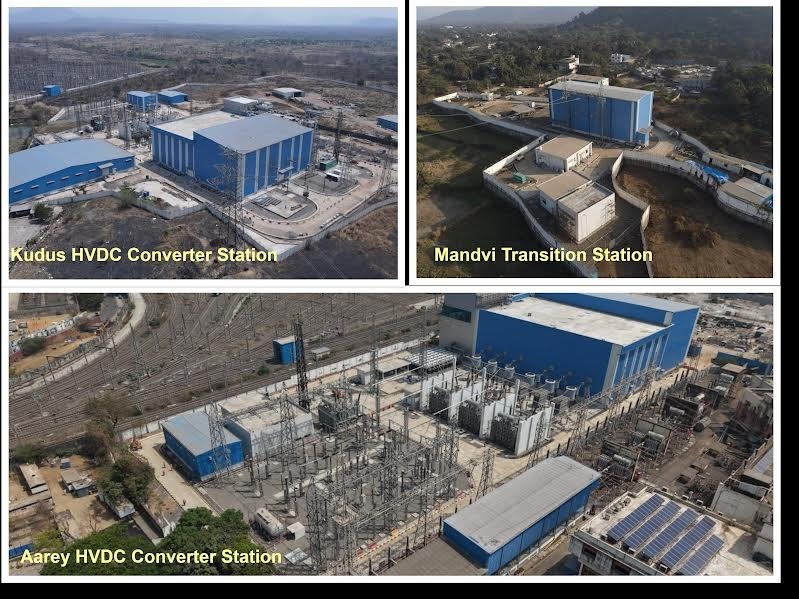
Mumbai: Adani Energy Solutions Limited has commissioned a major 1,000 MW high-voltage direct current (HVDC) transmission link between Kudus and Aarey, marking a significant step toward strengthening power infrastructure in Mumbai and the wider Mumbai Metropolitan Region (MMR).
The project, executed by its subsidiary Adani Electricity Mumbai Infrastructure Limited, comprises a 30-km overhead transmission line and a 50-km underground corridor, specially designed to suit the constraints of densely populated urban areas. Notably, the project also features the world’s first compact HVDC substation, making it highly suitable for megacities with space limitations.

The initiative was conceptualised following the Mumbai Blackout 2020, which exposed vulnerabilities in the city’s electricity grid. The new HVDC link is aimed at enhancing grid resilience, reliability, and capacity, enabling Mumbai to draw more power from outside the city, including renewable energy sources.
While Mumbai is already connected to the national grid, the new link significantly improves the efficiency and controllability of power flow. It allows seamless integration of renewable energy, ensuring stable voltage and reducing transmission losses over long distances.
The Mumbai Metropolitan Region, one of India’s highest power-consuming urban zones, stands to benefit greatly from this additional 1,000 MW capacity. The project is expected to reduce dependence on local generation, strengthen grid stability, and minimise the risk of large-scale outages.

Built using advanced Voltage Source Converter (VSC)-based HVDC technology, the system offers enhanced operational advantages, including rapid voltage stabilisation, improved energy efficiency, and black-start capability—allowing grid restoration without external power in case of complete shutdowns.
Describing the project as a milestone, CEO Kandarp Patel said the Aarey–Kudus transmission corridor will enable large-scale integration of renewable energy with high reliability. “This project enhances grid stability, reduces stress on existing networks, and strengthens Mumbai’s energy security, paving the way for a cleaner and more resilient energy future,” he said.
With rising urban energy demand, the project aligns with India’s broader goals of expanding renewable energy usage while ensuring reliable and sustainable power supply