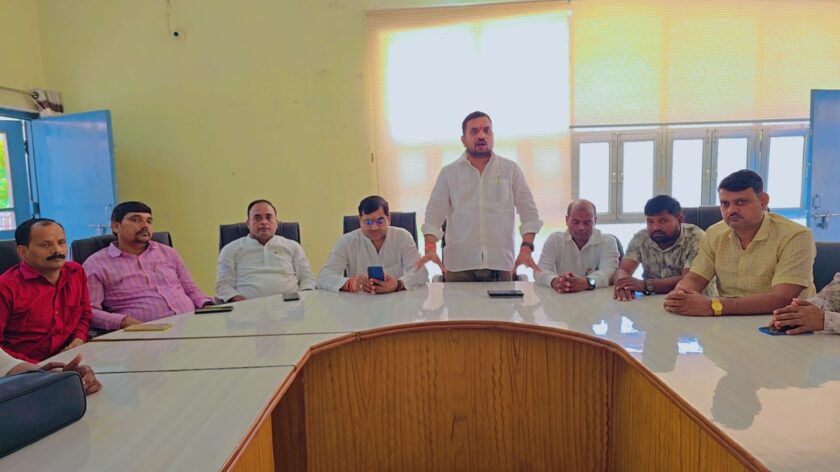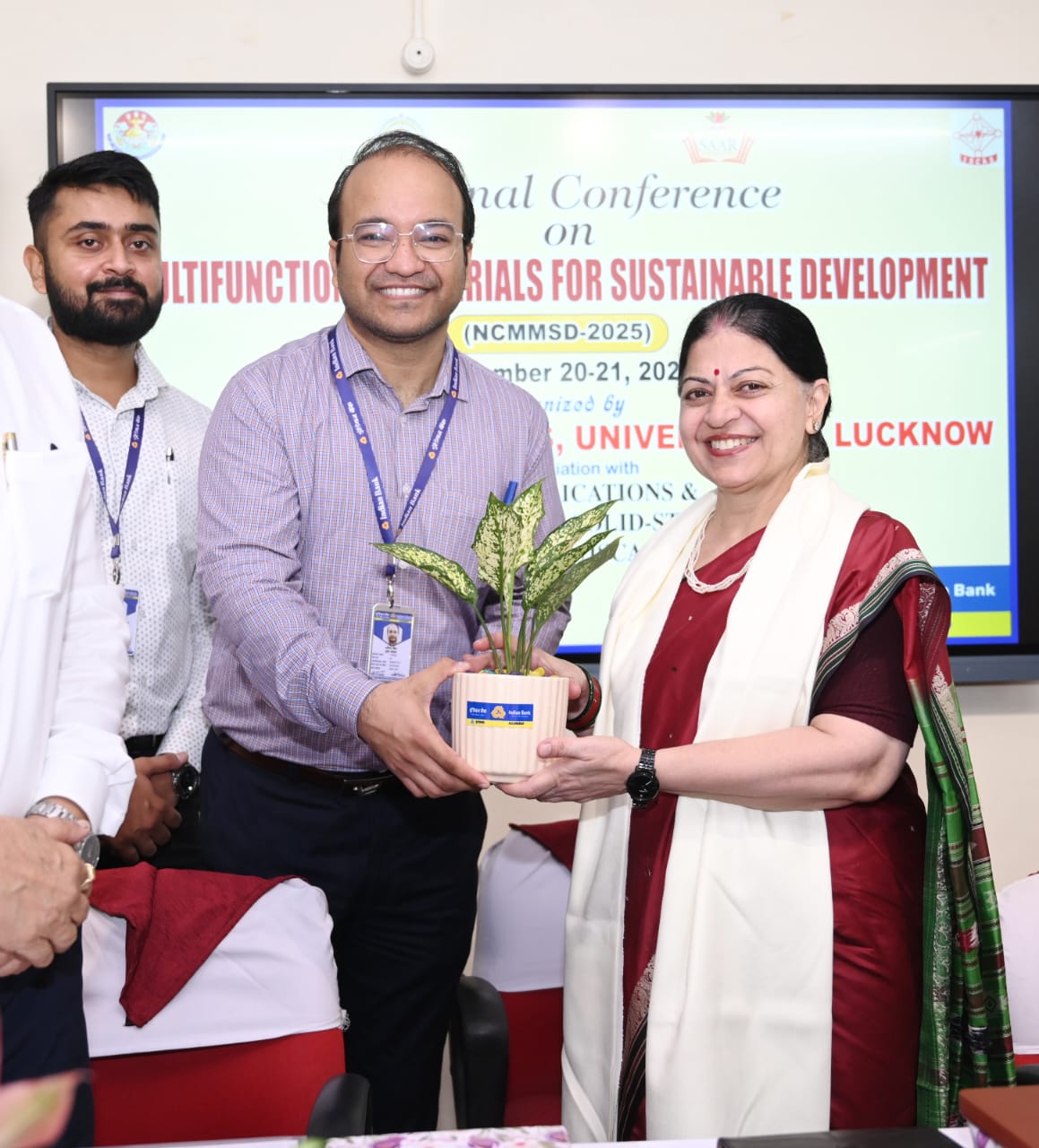
Lucknow: The National Conference on Multifunctional Materials for Sustainable Development (NCMMSD-2025), organized by the Department of Physics, University of Lucknow, in association with SAAR Publications and ISCAS Jammu, successfully entered its second day today, conducted in an online format.
The proceedings began at 10:00 AM with a technical session chaired by Prof. N. B. Singh. The session featured invited talks and paper presentations on a wide range of themes, including the One Health Perspective of Micro-Plastics Hazards, Ion Beam Irradiated ZnO:Ga Thin Films for Gas Sensing Applications, and Advancing Efficiency of Lead-Free Perovskite Solar Cells. Researchers from across the country showcased their latest findings on green synthesis, nanomaterials, quantum chemical studies, and innovations in sustainable technologies.
The conference continued with parallel sessions chaired by distinguished academicians, including Prof. Kavita Gour, Dr. Manisha Shukla, Dr. R. K. Shukla, Dr. Vishnu Dwivedi, Dr. K. C. Dubey, and Dr. Anchal Srivastava. These sessions highlighted cutting-edge research in areas such as:

- Perovskite solar cells, energy storage, and biosensors
- Nanostructures for environmental applications
- Molecular docking, quantum chemical modeling, and computational material science
- Sustainable approaches in agriculture, healthcare, and teaching practices
The valedictory session, held at 6:00 PM, brought together all participants. It featured feedback from attendees followed by a formal vote of thanks, marking the conclusion of this two-day conference. NCMMSD-2025 provided a vibrant platform for knowledge exchange and collaboration among scientists, academicians, and research scholars.
The conference has been a significant step toward fostering interdisciplinary research on multifunctional materials and their role in sustainable development, aligning with both national and global scientific priorities.

 ---------------------------------------------------------------------------------------------------