Lucknow: In the spring of 1936, the cultural heart of Awadh stirred with an unusual urgency. Inside the historic Rifa-e-Aam Hall on April 10, writers, thinkers, and reformers gathered under the presidency of Munshi Premchand for what would become a defining moment in South Asian literary history—the first conference of the Progressive Writers’ Association. It was not merely a literary congregation; it was a declaration that writing in India would no longer remain detached from social realities. For the women of Awadh, this moment marked the beginning of a powerful intellectual rebellion—one in which literature became both shield and sword against patriarchy.
The Progressive Writers’ Movement emerged in a decade marked by anti-colonial ferment, economic instability, and deep social inequalities. Rejecting the idea of “art for art’s sake,” it called for literature that confronted the lived realities of oppression—colonial domination, caste hierarchies, communal tensions, and above all, gender injustice. Women writers from Awadh seized this moment with remarkable clarity. They did not simply participate in the movement; they reshaped it by centering women’s experiences, bodies, and voices in ways that had rarely been seen before.

The intellectual spark for this transformation can be traced to the controversial 1932 anthology Angarey. Written by a group of young radicals, including Sajjad Zaheer, Ahmed Ali, Mahmuduz Zafar, and most significantly, Rasheed Jahan, the collection shattered social taboos. Its candid portrayal of religious hypocrisy, sexual repression, and the suffocating realities of women’s lives provoked outrage. The British colonial government banned the book in 1933, but its impact proved irreversible. It laid the ideological groundwork for the Progressive Writers’ Association and announced the arrival of a fearless new voice—especially that of women.
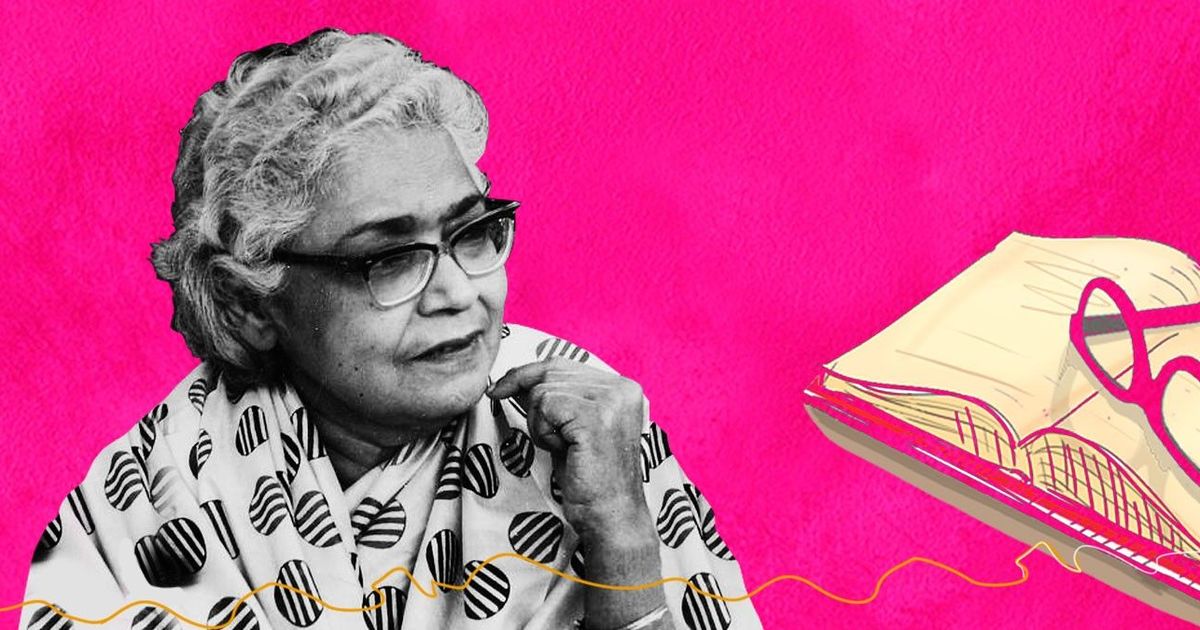
At the forefront stood Rasheed Jahan, often referred to as the “Angareywali.” Born in 1905, Jahan was both a medical professional and a literary revolutionary. Her works such as “Dilli ki Sair” and the play “Parde ke Peeche” stripped away the romanticized veneer of domestic life to reveal the harsh truths of purdah-bound existence. Writing with clinical precision informed by her practice as a gynecologist, she addressed issues that polite society preferred to ignore—forced marriages, reproductive health, domestic oppression, and the psychological toll of confinement.
Jahan’s writing was not merely descriptive; it was diagnostic. She approached patriarchy as a systemic illness, exposing its symptoms with unflinching honesty. Unsurprisingly, her work drew fierce backlash. Conservative critics labeled her immoral, and threats followed. Yet she refused to retreat. Instead, she deepened her engagement with the Progressive Writers’ Movement, helping shape its manifesto and mentoring younger writers. Through both her pen and her profession, she demonstrated that intellectual resistance and social reform could go hand in hand.
If Jahan lit the spark, Ismat Chughtai ensured that it became an enduring flame. Born in 1915 and deeply connected to the intellectual currents of Awadh, Chughtai attended the 1936 Lucknow conference as a young writer. She would go on to become one of the most fearless voices in Urdu literature. Her landmark short story Lihaaf (1942) remains a watershed moment in feminist writing. Through the innocent gaze of a young narrator, Chughtai explored female desire and same-sex intimacy with startling candor.
The reaction was swift and severe. Chughtai was charged with obscenity, but she refused to apologize or censor herself. Instead, she defended her work in court, turning the trial into a broader debate on artistic freedom and gendered double standards. Her stance was clear: if male writers could explore the human body and desire, women had an equal right to do so. This defiance not only secured her acquittal but also redefined the boundaries of acceptable discourse in Indian literature.
Her novel Terhi Lakeer (1947) further cemented her reputation. Following the life of its protagonist Shamman, the narrative examines the complexities of identity, education, and independence in a society struggling between tradition and modernity. Chughtai’s work stood out for its psychological depth, sharp wit, and refusal to romanticize either oppression or resistance. She presented women not as passive victims but as thinking, desiring individuals navigating deeply flawed systems.
Alongside these more overtly radical voices was Attia Hosain, whose work offered a quieter yet equally powerful critique. Born into an elite taluqdari family in Lucknow and educated at Isabella Thoburn College, Hosain occupied a unique position—both insider and observer of Awadh’s fading aristocratic world. A founding member of the Progressive Writers’ Association, she brought to the movement a nuanced, introspective voice.
Her celebrated novel Sunlight on a Broken Column (1961) captures the disintegration of feudal society against the backdrop of Partition. Through its protagonist Laila, Hosain explores the tensions between tradition and modernity, privilege and constraint, love and duty. Unlike the overtly confrontational tone of some contemporaries, her critique unfolds through subtle emotional and social conflicts. She questioned not only the limitations imposed on women but also the contradictions within elite culture itself.

Hosain’s work highlighted an important dimension of the feminist struggle in Awadh—the intersection of class, culture, and gender. Even privileged women, she showed, faced restrictions on education, inheritance, and personal choice. Her writing bridged worlds, bringing the inner lives of women in zenanas and drawing rooms into public literary consciousness.
Together, these writers formed a formidable intellectual front. Their work was deeply intertwined with the broader push for women’s education in Lucknow. Institutions such as Isabella Thoburn College and Karamat Husain Muslim Girls’ College provided the educational foundations that enabled women to write, think, and engage critically with society. Education, in their narratives, was not merely a theme—it was a prerequisite for liberation.
Their stories frequently addressed child marriage, lack of schooling, purdah restrictions, and economic dependency. By creating female characters who read, debated, and questioned, they offered readers alternative models of womanhood. Literature became both mirror and map—reflecting harsh realities while pointing toward new possibilities.
The movement was not without resistance. Conservative religious groups condemned the writers for immorality, while colonial authorities censored their work. Even within literary circles, there were tensions over ideology and representation. Yet, the persistence of these women ensured that their voices could not be easily dismissed. They expanded the scope of public discourse, making it possible to talk openly about issues that had long been suppressed.
Today, the legacy of these literary pioneers continues to resonate in Lucknow. Academic seminars, literary festivals, and curated exhibitions revisit their contributions, linking the Progressive Writers’ Movement to contemporary struggles for gender justice. Scholars emphasize how their work anticipated modern feminist concerns—bodily autonomy, consent, economic independence, and the politics of representation.
In an era shaped by digital media and global conversations, the relevance of these writers remains striking. Their insistence on confronting uncomfortable truths offers a powerful lesson for contemporary discourse, often constrained by polarization and censorship. Young writers and readers continue to draw inspiration from their courage, using new platforms to carry forward the same spirit of resistance.
The story of Awadh’s women writers ultimately underscores a simple yet profound truth: storytelling is an act of power. By narrating their experiences—of exclusion, desire, aspiration, and rebellion—they claimed a space that had long been denied to them. They transformed literature from a genteel pursuit into a tool of social change.
As India continues to grapple with persistent gender inequalities, the legacy of the 1936 conference serves as both reminder and inspiration. The women who wrote in its wake did more than produce great literature; they redefined what literature could do. They proved that the pen, when wielded with conviction, can challenge entrenched norms, reshape public consciousness, and inspire generations.
In the quiet corners of old Lucknow, where history lingers in architecture and memory, their voices still echo. In classrooms, in books, and in conversations, the revolution they began continues—one sentence at a time.