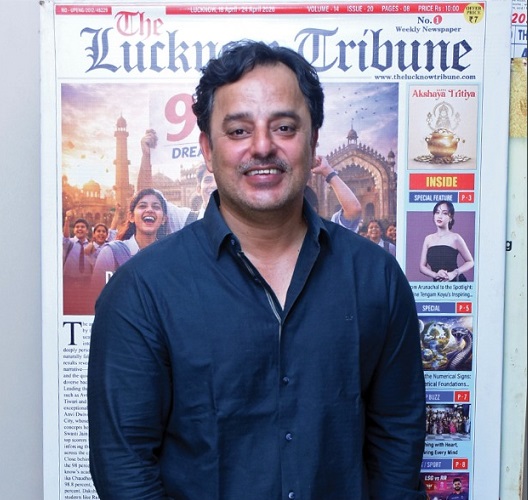
Lucknow: Few industry veterans have witnessed the evolution of Indian entertainment as closely as Ashiesh Chaturvedi. From the era of iconic television classics like Buniyaad and Hum Log to today’s high-octane digital spectacles such as Dhurandhar, Chaturvedi has witnessed every major transformation in the business. Having worked across commercials, films, television and now the rapidly expanding vertical-format space, he believes the industry stands at a crucial crossroads.
While optimistic about the future, Ashiesh is concerned about a growing lack of originality in content creation. According to him, fresh ideas are increasingly being replaced by adaptations, remakes and remixes.
“Stories today often feel repetitive. Audiences are smarter than ever, and they can easily distinguish between something original and something recycled,” he says.

His recent projects include Alpha Engineer, The Gangster King, Meri Maa Ki Kasam and Naam Ki Shaadi, showcasing his continued engagement with diverse storytelling formats. Yet, he feels that the explosion of OTT platforms, vertical television and multiple digital consumption channels has significantly altered audience habits, often at the expense of traditional television.
“Television operates differently from digital platforms. It doesn’t thrive on instant hits, views and viral numbers. TV requires patience, consistency and audience loyalty,” he explains.
Chaturvedi notes that many television shows are being taken off air prematurely because they fail to create an immediate impact. This, he believes, has created a sense of panic within the industry as ratings fluctuate and channels become increasingly risk-averse.
“Television must invest in new talent, innovative concepts and stronger storytelling. Good content still has the power to attract viewers if given time and support,” he says.

Reflecting on changing formats, he points out that short-form content is not entirely new. Experiments with two-minute storytelling formats began nearly a decade ago, yet most struggled to sustain audience engagement over time. Television, on the other hand, has historically demonstrated remarkable staying power when backed by compelling narratives.
He also highlights the success of season-based programming and longer-format episodes that once generated considerable excitement among viewers. However, he believes the industry’s tendency to stretch serials endlessly often weakens their impact.
“Many producers assume longer runtimes automatically mean better business, but audiences ultimately stay for the story,” he observes.
Discussing the popularity of Dhurandhar, Chaturvedi attributes its success to relatability. Despite its seven-hour cumulative runtime, audiences connected with its characters and situations because they reflected familiar realities.
For actors, he feels risk-taking remains the key to longevity.
“A successful actor is someone willing to step outside the comfort zone. Too many performers prefer playing safe,” he remarks, adding that even top-tier stars are increasingly turning towards reality television to remain visible.
While OTT platforms continue to generate an enormous volume of content, Chaturvedi believes only a handful of series achieve lasting recall value. He also emphasizes the rigorous discipline of acting, noting that performers often shoot up to 25 scenes in a single day—a process that sharpens skills and builds resilience.
Despite the industry’s challenges, Chaturvedi remains hopeful. He praises the growing support being extended by the Uttar Pradesh government to the entertainment sector and sees immense potential in emerging production hubs.
“Mumbai and Lucknow are moving forward with equal confidence and creativity,” he says. “The industry will continue to evolve, but storytelling will always remain at its heart.”