Synapse International Art Gallery and featuring five contemporary artists: Amarnath Sharma, Amitesh Verma, and Sambit Panda
from Vadodara; Uma Shankar Pathak and Satadru Sovan Banduri from Delhi. The display comprised
30 artworks—acrylics and oils on canvas—each infused with vital concepts that added depth to the
viewer’s perspective. Notably, this exhibition departed from traditional square or circular canvases,
adopting a unique approach to visualize and convey the artists’ thoughts.
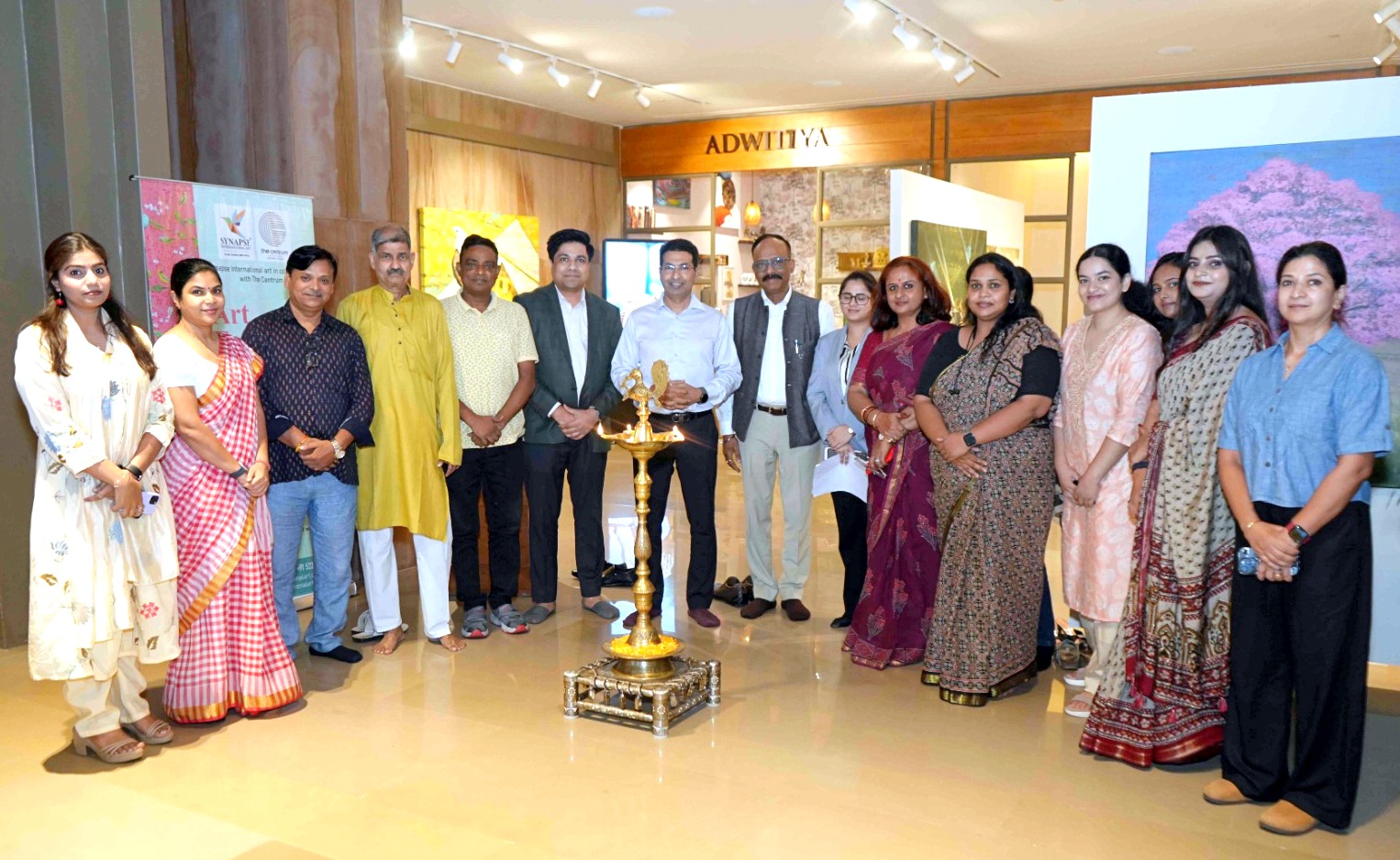
The Exhibition was inaugurated at 5 PM on Saturday, September 19, 2026, with a lamp-lighting
ceremony presided over by Chief Guest and the most distinguished senior architect of Lucknow, Shri
Ashesh Srivastava. The exhibition continues until September 27, 2026, daily from 11 AM to 7 PM.
Other dignitaries in attendance included entrepreneur and film producer Mr. Sarvesh Goel, Senior
Architect Savita Agrawal, Padma Bhushan recipient and editor Purnima Varman, Mr. Bhagwati Pant
General Manager of The Centrum Hotel.

Rakesh Kumar Maurya, owner of Synapse International Art Gallery, addressed the media to share
insights into the exhibition’s concept and vision.
Amarnath comes from a carpenter family. He grew up in a small village. He spent summers with his
grandfather. He learned about wood types. Wood feels alive to him. In Hindu tradition, wood is a
lifelong friend. It is used in homes and rituals.
Wood is renewable, reduces pollution, and connects
people to nature. It helps mental health. Millions depend on it. It is practical, familiar, and beautiful.
To Amarnath, wood symbolizes life. It links humans to nature and existence. Cutting wood shows
patterns. These become metaphors in his art. His work explores human life and nature. He uses
visuals to express emotions. Wood is central to his practice.
Amitesh Verma focuses on human experience. He is known for meticulous anatomical studies of
horses and humans. His oil and charcoal works on canvas demonstrate dedication. This stems from his
early passion for drawing. He studied at the Delhi College of Art from 1999 to 2008. He studied horse
anatomy at the Delhi Race Course. He even slept there to maximize learning. This resulted in
remarkable accuracy. Currently based in New Delhi, he enriches the contemporary art scene. He does
this through his practice and global exhibitions.

Sambit’s work focuses on environmental values and traditions. He reflects on urbanization and living
organisms. His series shows creatures without humans. It creates dialogue and redefines values. He
uses unusual images. His practice engages with ecological consciousness. It also considers inherited
values. His work examines the shifting relationship between nature and contemporary urban life. This
is informed by the cosmopolitan landscape.
Satadru Sovan Banduri merges memory, myth, ecology, and deep time in his paintings. He rejects
historical chronology. He depicts fossils dreaming with unborn species. He shows extinct creatures
returning as spectral witnesses. His work emerges from ecological loss. Specifically, it addresses
Hyderabad’s urban expansion. This expansion destroyed forests and displaced wildlife. Earthquakes,
tectonic fractures, and hybrid life forms serve as metaphors.
They represent survival and invisible
violence against nature. Banduri uses luminous, unsettling colors. These include electric pinks and
toxic blues. They create atmospheres where beauty and catastrophe coexist. Working across canvas
and paper, he treats drawing as visual poetry. Every mark forms a manuscript of speculative life.
Umashankar blends urban and rural scenes. He shows tension between city and village life.
Streetlights versus ploughshare equal “nothing in everything.” This reflects his migrant journey. He
went from farming to seeking dreams. In *Expecting the