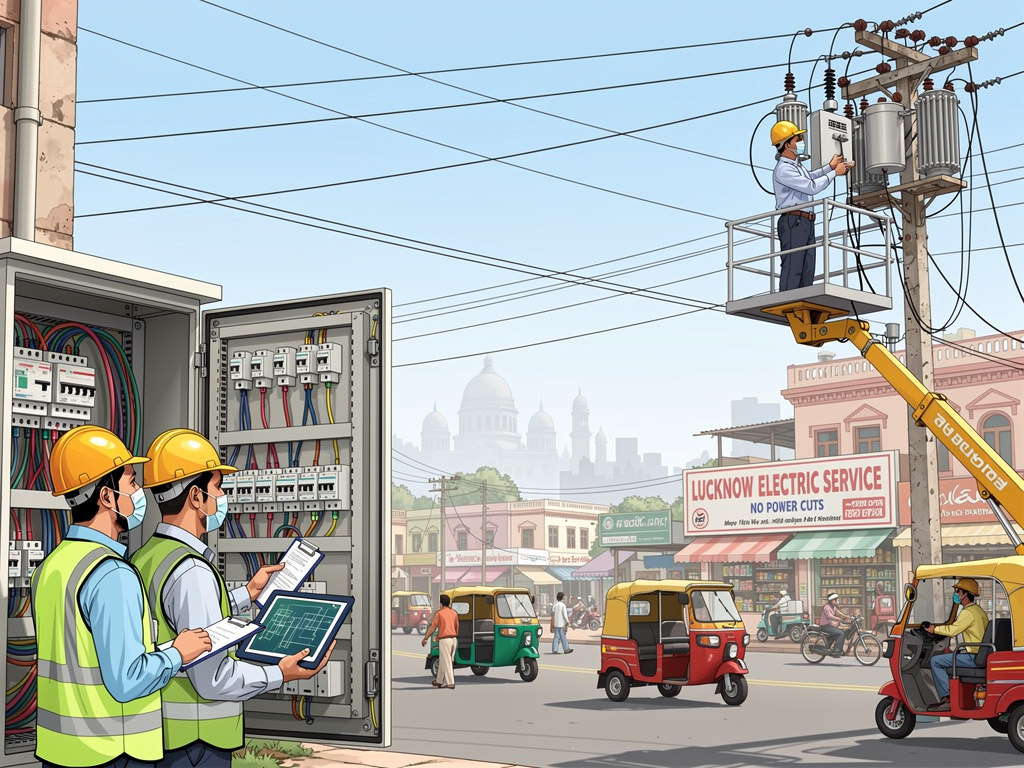
Lucknow: In a major push to modernise the electricity network in the state capital, the Uttar Pradesh Power Corporation Limited (UPPCL) has initiated preparations to develop Lucknow as a “No Tripping Zone”. The ambitious project, supported by the central government, aims to overhaul the city’s power infrastructure with an estimated investment of around ₹1,500 crore.
Under the plan, Lucknow’s electricity system will be strengthened keeping in view the projected demand for the year 2032. Officials have set a target to significantly upgrade the infrastructure by mid-2028, ensuring a more reliable and uninterrupted power supply for residents.

A three-member committee is currently being finalised by UPPCL to prepare a detailed feasibility report. The panel will include senior officials from the power corporation, the technical director of Madhyanchal Vidyut Vitran Nigam Limited, and the chief engineer of Lucknow Electricity Supply Administration (LESA). The committee will assess future electricity demand, expected consumer growth, and infrastructure requirements for 2032. The report is likely to be submitted to Shakti Bhawan by Diwali.
According to projections, Lucknow’s electricity demand is increasing by around 200–250 MVA annually, with nearly one lakh new consumers being added every year. This rapid growth has prompted authorities to redesign the city’s long-term power distribution strategy.

As part of the modernization plan, new power substations and transmission stations will be developed in expanding urban areas. In densely populated and older localities, additional transformers will be installed to strengthen supply capacity. Authorities are also identifying suitable land parcels to establish smaller, decentralised substations to improve efficiency.
To enhance reliability, emphasis will be placed on connecting substations with dual and triple power sources, reducing the risk of outages. In VIP and high-security zones, there is also a proposal to replace overhead low-tension lines with underground trench-based cabling systems.
Officials believe the initiative will significantly reduce power disruptions and prepare the capital’s electricity network for future urban and industrial growth.