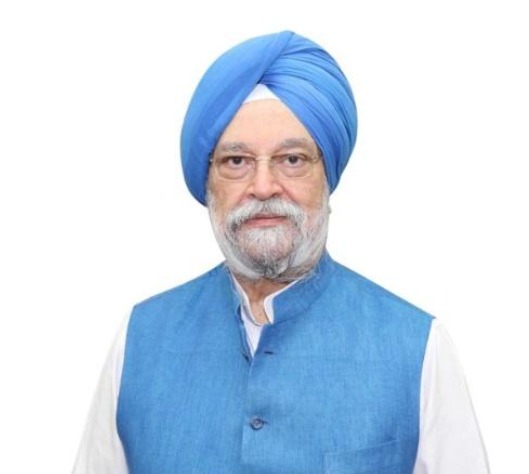
by Hardeep Singh Puri
Bengal, once the undisputed industrial and commercial powerhouse of Asia, is being described as a state in the midst of a dramatic political and economic correction. The editorial traces a long arc—from colonial-era prosperity to post-independence industrial dominance, followed by decades of decline and alleged institutional decay, and finally a decisive electoral shift in 2026.

There was a time when Howrah was called the “Sheffield of Asia.” The jute mills along the Hooghly River formed one of the most powerful industrial belts of the subcontinent. Kolkata—then Calcutta—functioned as India’s commercial capital, hosting the headquarters of major corporate and industrial giants such as ITC Limited, Britannia Industries, Coal India Limited, Hindustan Motors, and Garden Reach Shipbuilders & Engineers.
Institutions like IISCO at Burnpur (established in 1918) and the Durgapur Steel Plant—part of India’s Second Five-Year Plan—cemented Bengal’s central role in India’s industrial rise. In 1950–51, Bengal contributed nearly 27% of India’s total manufacturing output. The author recalls this era personally, having worked at Hindustan Lever in Calcutta before joining the foreign services. The city, then, represented certainty—lights never dimmed, trams ran continuously, and industry expanded steadily.
According to the editorial, this industrial legacy began to unravel after 1977, when the Left Front assumed power and governed the state for 34 years. What began as a pro-worker political movement, it argues, evolved into a deeply entrenched parallel system of governance. From housing to trade, transport to local governance, permissions were allegedly controlled through party networks where “fees” and “donations” became normalized instruments of power. Trade unionism, the editorial claims, gradually turned into coercive economic control, driving out capital and discouraging investment.
By the early 2000s, even attempts at industrial revival faced political resistance. The most notable example cited is the Tata Motors Nano project in Singur, which collapsed after intense protests led by the then-opposition, eventually shifting to Gujarat in 2008. The editorial argues that the system did not disappear—it merely changed form.
In 2011, the promise of “Parivartan” brought the Trinamool Congress under Mamata Banerjee to power. However, the editorial asserts that old patterns re-emerged in new forms. “Chanda” became “extortion,” cadres evolved into syndicates, and governance structures allegedly continued to function through informal networks of control. Over time, Bengal’s share in national manufacturing reportedly fell below 5%, while per capita income dropped from 127% of the national average to 84%. More than 6,000 companies are said to have moved their headquarters out of Kolkata.
The editorial further highlights a series of corruption scandals and institutional failures. It references large-scale recruitment scams in the education sector, including cash recoveries exceeding ₹50 crore. Senior political figures such as Partha Chatterjee were arrested in connection with alleged irregularities in school service commissions. In 2024, the Calcutta High Court cancelled 25,753 teaching and non-teaching appointments, a decision later upheld by the Supreme Court in 2025. The ration distribution scandal also allegedly implicated minister Jyotipriya Mallick, reinforcing claims of systemic governance failure.

Equally disturbing, the editorial highlights serious law-and-order concerns. The RG Kar Medical College case of August 2024—where a postgraduate trainee doctor was allegedly raped and murdered—sparked widespread protests and a 42-day strike by junior doctors. The Sandeshkhali incident in January 2024 is cited as another example, where women from a Sundarbans island protested against alleged local political exploitation, while law enforcement response was criticized as inadequate.
Against this backdrop, the editorial contrasts central welfare initiatives under the national government. Schemes such as large-scale housing provision, expanded rural water supply, and direct benefit transfer mechanisms are portrayed as structural reforms that reduced leakage and corruption. Leadership under Amit Shah and the broader BJP organization is credited with building an extensive grassroots network that worked under difficult and often hostile conditions in the state.
The 2026 electoral outcome, as described in the editorial, marks a decisive turning point. The BJP is said to have won 206 of 293 seats, ending nearly five decades of combined Left and Trinamool dominance. The victory is framed not just as political, but moral and structural. Symbolic candidates—including victims’ families and grassroots activists such as the mother of the RG Kar victim and women leaders from Sandeshkhali—are highlighted as representatives of public sentiment.
The editorial also addresses controversy surrounding voter list revisions, noting that 90 lakh ineligible names were removed. It argues that even in constituencies where deletions were highest, electoral outcomes did not uniformly favor or harm any single party, thereby defending the credibility of the electoral process. A reported turnout of 92.93% is presented as evidence of robust democratic participation.
Ultimately, the piece frames Bengal’s verdict as a demand for restoration—of peace, employment, industrial revival, and administrative integrity. It argues that voters have rejected coercion, corruption, and syndicate-based governance in favor of stability and development.
The concluding assertion is emphatic: Bengal, once India’s industrial pride and intellectual capital, is attempting to reclaim its past stature. Whether this “rediscovery” translates into sustained economic revival will depend on governance outcomes in the years ahead, not just electoral mandates.