New Delhi: A sudden pause in the escalating conflict in the Middle East has brought temporary relief to a tense global landscape, but it has also sparked intense debate over the role played by Pakistan in brokering the development. While the ceasefire announcement has halted immediate hostilities, analysts and policymakers are questioning whether Islamabad acted as a genuine mediator or pursued strategic self-interest.

The dramatic shift came after Donald Trump, who had issued stern warnings to Iran just hours earlier, agreed to a two-week halt in potential military escalation. The key condition attached to the decision was the immediate reopening of the Strait of Hormuz, a vital oil transit route critical to global energy supplies.
Diplomacy or Strategy? Pakistan in the Spotlight
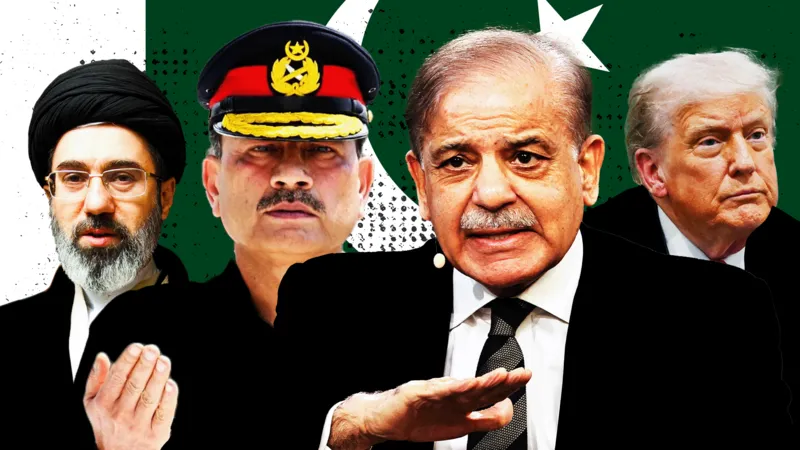
According to emerging details, the decision followed high-level engagements involving Pakistan’s Prime Minister Shehbaz Sharif and Army Chief Asim Munir. Reports suggest that Islamabad positioned itself as a central mediator, maintaining communication channels between Washington and Tehran during the peak of tensions.
Pakistan is believed to have urged restraint on both sides—encouraging the US to delay military action while persuading Iran to consider reopening the strategic waterway. Diplomatic contacts reportedly extended to US Vice President JD Vance and other envoys, highlighting the scale of backchannel negotiations.
However, this proactive involvement has led to skepticism. Critics argue that Pakistan may have sought to reassert its global relevance at a time when its geopolitical influence has been under scrutiny. Its dual positioning—as a long-time US security partner and a neighboring country with deep ties to Iran—has raised concerns about whether its mediation was neutral or opportunistic.
America’s Calculated Retreat
Despite Pakistan’s visible role, many experts believe the primary driver behind Washington’s decision was mounting domestic and economic pressure. The closure of the Strait of Hormuz had begun to impact oil supply chains, triggering sharp increases in global crude prices and unsettling financial markets.
For United States, the timing was particularly sensitive. Rising fuel costs and inflation posed political risks amid an election cycle, making prolonged military engagement less viable. Additionally, growing international criticism risked portraying the US not as a stabilizing force but as a catalyst for conflict.
Under these circumstances, Trump’s decision to step back appears less a diplomatic victory for intermediaries and more a strategic pause to contain broader fallout.

Iran’s Conditional Acceptance
From Tehran’s perspective, the ceasefire is not a concession but a calculated move tied to broader demands. Iran has signaled willingness to reopen the Strait of Hormuz but insists on long-term assurances, including sanctions relief, reconstruction support, and guarantees against future attacks.
Iran’s initial reluctance to accept a temporary truce underscores its intent to secure structural outcomes rather than short-term relief. Analysts also point to the quiet but influential role of China in shaping the diplomatic environment, suggesting that the crisis reflects shifting global power dynamics rather than a bilateral standoff alone.
Global Economic Stakes and Regional Risks
The potential reopening of the Strait has already eased pressure on global oil markets, offering relief to import-dependent economies like India. A prolonged disruption could have triggered sharp increases in fuel and food prices, amplifying economic stress worldwide.
Yet, the situation remains fragile. Regional tensions involving Israel, Lebanon, and groups such as Hezbollah continue to simmer, raising the risk of renewed escalation if negotiations falter.
A Pause, Not Peace
As diplomatic talks were scheduled in Islamabad on April 10, the world watched closely to see whether this ceasefire would evolve into a sustainable peace framework or merely delay further confrontation.
The central question persists: who truly engineered this pause? While Pakistan projects itself as a key peacemaker, many observers argue that it capitalized on circumstances shaped largely by US economic compulsions and Iran’s strategic leverage.
For now, the guns may have fallen silent, but uncertainty looms large. The coming days will determine whether this moment marks the beginning of meaningful de-escalation—or just a brief calm before another storm.