Artists Dr. Gopal Prasad and Ankit Prasad share techniques, heritage and contemporary experiments with students
Lucknow: The living legacy of the Banaras painting tradition, passed down through seven generations of artists, was explored during an art dialogue with sixth-generation painter Dr. Gopal Prasad and seventh-generation artist Ankit Prasad at a 115-year-old art college in Lucknow.

The programme began with a tribute to renowned artist and film actor Nana Patekar on his reported demise.
Two documentary films on the Banaras painting tradition and its practitioners were screened during the event. Produced by the Government of India’s Films Division in 1978 and Doordarshan in 2022, respectively, the documentaries traced the history of the artistic lineage, its successive generations and its distinctive painting practices.
Dr. Gopal Prasad explained the traditional miniature painting techniques of Banaras, the process of creating artworks and the contributions of artists across generations. Ankit Prasad discussed his contemporary experiments alongside the traditional Mughal style and shared his efforts to carry the artistic legacy forward.
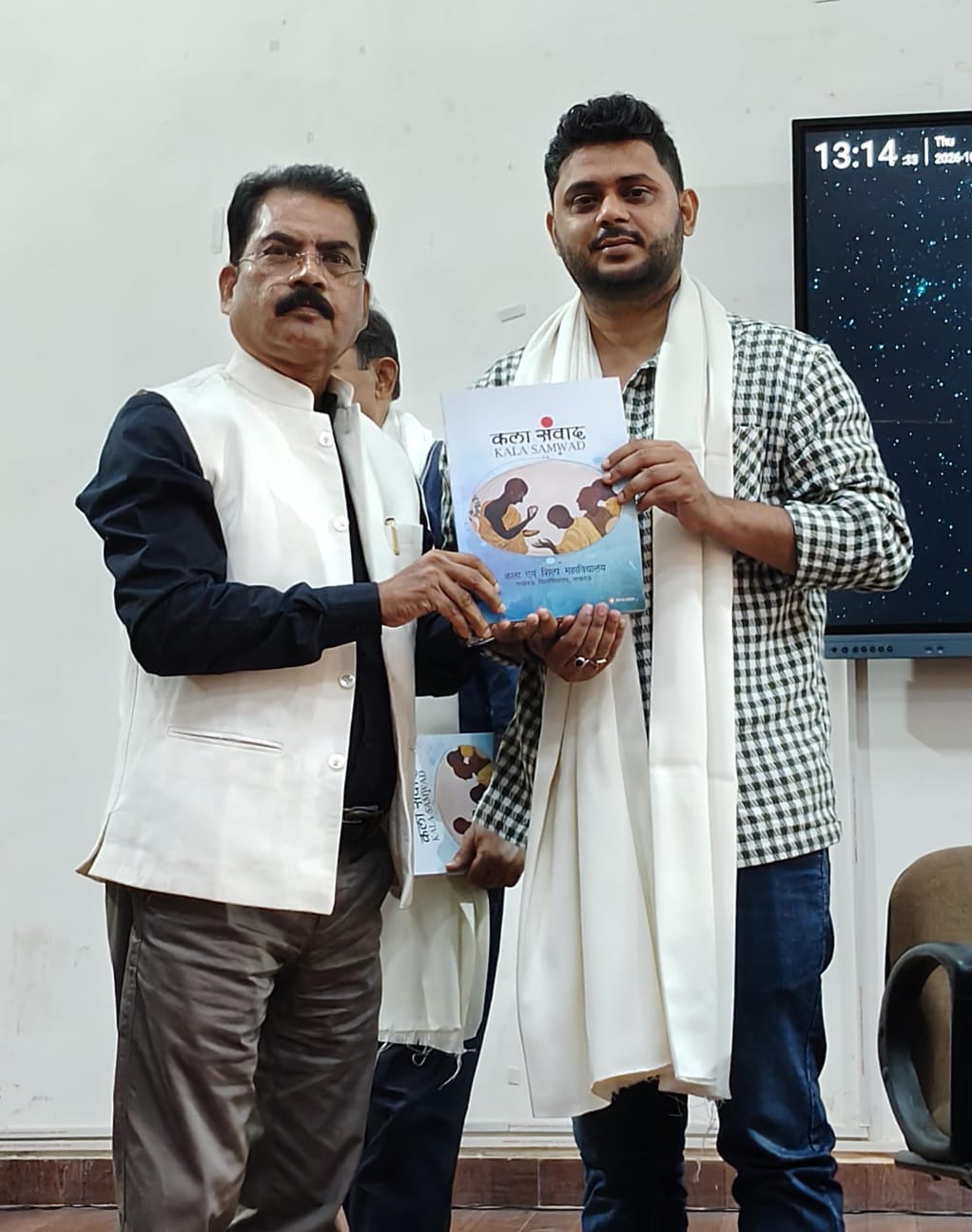
College Dean Dr. Ratan Kumar honoured the visiting artists and expressed gratitude for their interaction with students. He emphasised the importance of providing students with opportunities to engage directly with practitioners of traditional art forms. He added that the institution had been organising artist interactions, discussions and workshops for several years to connect students with artists working across diverse disciplines.

Art critic Bhupendra Kumar Asthana highlighted the historical significance of the Banaras painting tradition, which developed in the 18th century and has continued through successive generations. Influenced by Mughal miniature painting, the style is distinguished by its depiction of the life, culture and architecture of Banaras. He noted that artists from the lineage are working to preserve the tradition and introduce it to wider audiences and younger generations. He also acknowledged the contribution of woman artist Vansh Shri in this endeavour.
The artists explained that mastering the traditional style requires years of disciplined practice and dedication. Training begins in childhood under the guidance of the artist-father, who teaches drawing, colour preparation and brush handling. According to them, 15–20 years of sustained practice are required to gain complete control over intricate line work.
The tradition also includes a ritual known as Kamanadhana, in which the artist touches the brush to the forehead and remembers “Jai Ganpati Baba Ki” before beginning to paint.
The session was conducted by art teacher Pallavi Singh. Faculty members Ravi Kant Pandey, Dinesh Kumar, Sumit Kumar, Sanjay Raj, Poonam Jaiswal, Reena Gautam, Sandhya Yadav, Ajay Kumar, Amar Nath Gaur, Shreyanshi, Mahati Vashishtha and Khurshid Zehra were among those present, along with a large number of students.
Speakers stressed that preserving traditional art forms requires not only safeguarding the artworks but also documenting the artists, techniques, customs and oral knowledge associated with them. Such dialogues, they said, play an important role in ensuring that India’s artistic heritage continues to inspire future generations.