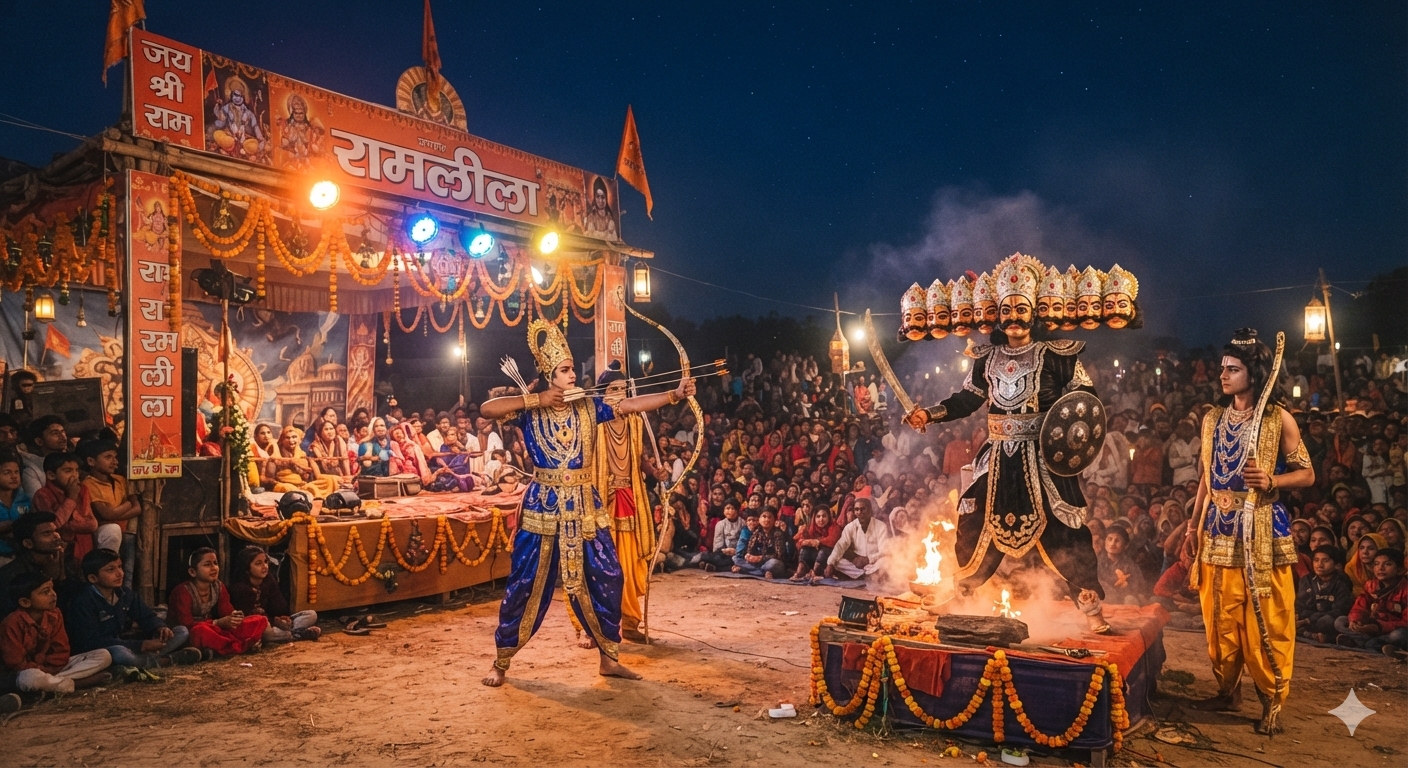
Inspired by Tulsidas and supported by Awadh’s Nawabs, the iconic Ramlila blends cultural heritage with digital innovation; a 70-foot Ravana effigy will be burnt on Dussehra
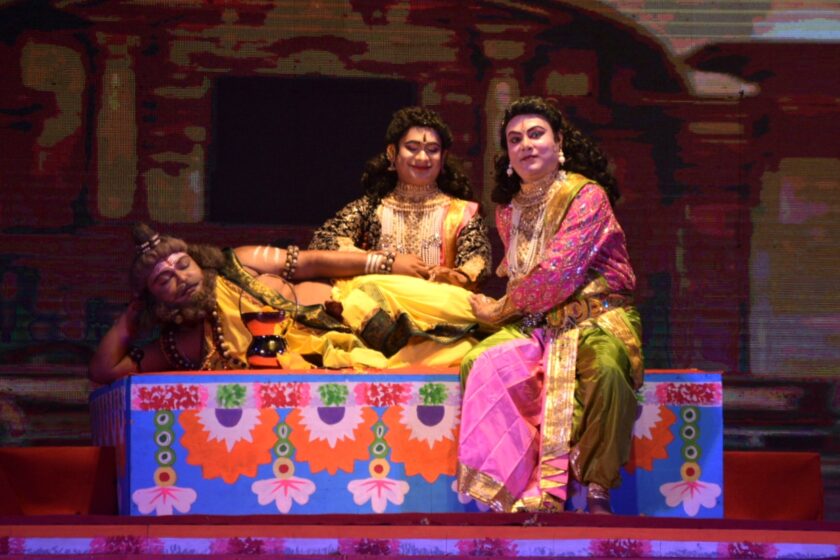
Lucknow: The historic Aishbagh Ramlila, a tradition dating back nearly four and a half centuries, has once again brought the story of Lord Ram to life in the Uttar Pradesh capital. Believed to have begun under the inspiration of Goswami Tulsidas, the annual event is regarded as a distinctive symbol of religious devotion, cultural heritage and Lucknow’s syncretic Ganga-Jamuni tehzeeb.

The Ramlila commenced on Sunday with the inauguration of Ramotsav by Avnish Awasthi, adviser to the Chief Minister, who lit the ceremonial lamp. Harishchandra Agrawal, president of the Ramlila Committee, and other office-bearers welcomed the chief guest.
While the performances retain the central themes and characters of the Ramcharitmanas, organisers are incorporating modern technology to make the presentation more engaging. Moving effigies, large LED screens, laser lighting, holograms, digital projections and artificial intelligence-based elements are among the attractions this year.
A legacy associated with Tulsidas
According to local tradition, Goswami Tulsidas, the author of the Ramcharitmanas, initiated the Ramlila in the 16th century to communicate the story and ideals of Lord Ram through dramatic performances. The objective was to make the epic accessible to ordinary people, including those who could not read.
Tradition holds that Tulsidas stayed in Aishbagh during the four-month monsoon period, known as chaumasa, when saints and ascetics also arrived from Ayodhya. With their assistance, he is believed to have organised performances based on the Ramayana, laying the foundation for the tradition that subsequently evolved into the Aishbagh Ramlila.
The event is also associated with the patronage of Nawab Asaf-ud-Daula, the ruler of Awadh. According to popular accounts, he provided approximately six-and-a-half acres each for the Ramlila and the adjoining Eidgah, besides extending financial support. Historical accounts also refer to assistance from the royal treasury during the reign of Awadh’s third king, Muhammad Ali Shah.
This association with the Nawabs is remembered as an example of the region’s shared cultural traditions.
Interrupted during the 1857 uprising
The Ramlila experienced a major disruption during the Revolt of 1857 and its aftermath. The event reportedly remained suspended from 1857 to 1859. In 1860, the Aishbagh Ramlila Committee was formed, helping organise the event more systematically and carry the tradition forward.
Over the decades, the Ramlila grew in scale and became an important part of Lucknow’s cultural identity, attracting devotees and spectators from the city and neighbouring districts.
Committee president Harishchandra Agrawal said the tradition of staging the Ramayana’s episodes expanded to Chitrakoot, Kashi and Lucknow under Tulsidas’s inspiration. He recalled that saints travelling from Ayodhya would stay in Aishbagh during the monsoon and stage episodes from the Ramayana around Dussehra.
Narendra Modi performed Ravana’s slaying in 2016
The Aishbagh Ramlila has also hosted prominent national leaders. Former Prime Minister and Bharat Ratna Atal Bihari Vajpayee attended the event on several occasions.

In 2016, Prime Minister Narendra Modi participated as a special guest and symbolically enacted Ravana’s slaying by shooting an arrow. His visit brought national attention to the historic celebration.
Tradition meets digital innovation
Organisers have increasingly used technology to connect younger audiences with the centuries-old tradition. Since 2007, the Ramlila has reportedly been streamed through digital platforms, including YouTube and Facebook, allowing devotees in India and abroad to watch the performances remotely.
Despite the technological additions, the committee continues to emphasise the original spirit of the Ramcharitmanas, its characters, dialogues and moral teachings.
A moving Ravana effigy measuring approximately 70 feet, along with LED displays, laser lighting and digital effects, is expected to be among the major attractions.
70-foot Ravana to be burnt on Dussehra
The festivities will culminate on Vijayadashami, when a Ravana effigy approximately 70 feet tall will be set ablaze, accompanied by fireworks. Organisers expect more than one lakh people to attend the Dussehra celebrations, including visitors from Lucknow and nearby districts.
Preserving Tulsidas’s literary legacy
Efforts have also been made to preserve the literary and cultural heritage associated with Tulsidas. The Tulsi Shodh Sansthan was established in 2003 with the aim of safeguarding his legacy. Local accounts associate the Aishbagh grounds with memories of the poet-saint and suggest that he composed portions of Vinay Patrika there.
Local social worker Ravi Gupta said attending the Aishbagh Ramlila was not merely a religious experience but also an opportunity to draw inspiration from Lord Ram’s character and ideals.
Another figure associated with the tradition is Pandit Benimadhav Kedarnath ‘Padya’, whose contribution helped strengthen the Ramlila’s place in Lucknow’s cultural life. A gateway on the grounds has been named the Pandit Benimadhav Kedarnath Padya Ji Dwar in his memory.
Dr Dinesh Sharma, Lieutenant Governor of the Andaman and Nicobar Islands, has long been associated with the Shri Ramlila Committee, Aishbagh, as its chief patron. During his public career as Lucknow mayor, Uttar Pradesh deputy chief minister and parliamentarian, he supported the promotion of the historic event.
The Aishbagh Ramlila continues to demonstrate how a centuries-old cultural tradition can adapt to changing times without losing its central message. The legacy attributed to Tulsidas, the patronage associated with Awadh’s Nawabs, the involvement of local communities and the use of modern presentation techniques have together sustained its place in Lucknow’s cultural heritage.