Lucknow: The latest developments within the Bahujan Samaj Party (BSP) have brought renewed attention to the party’s internal leadership questions and the future direction of its traditional Dalit support base in Uttar Pradesh ahead of the 2027 Assembly elections.
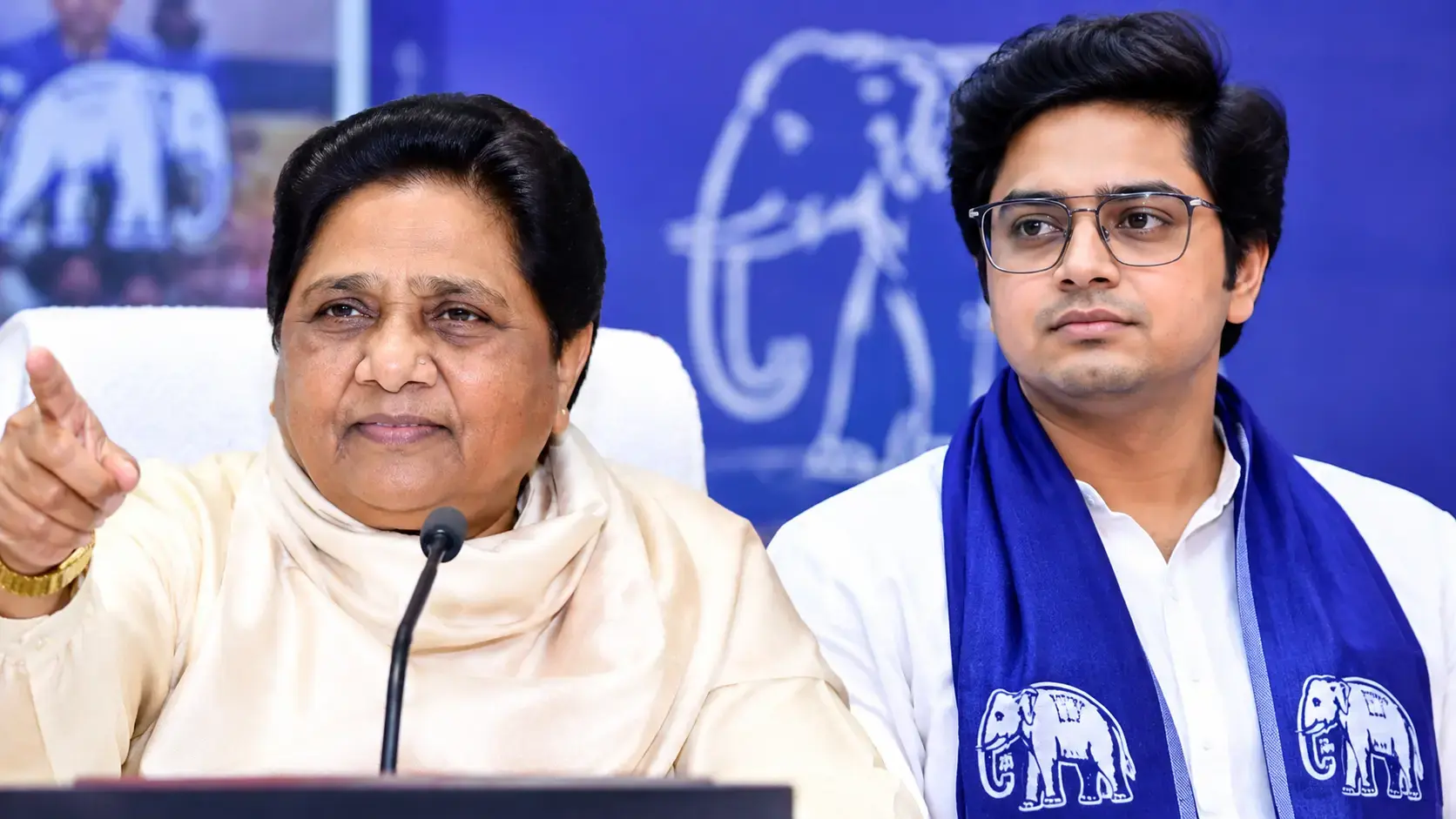
BSP chief Mayawati removed her nephew Akash Anand from the post of chief national coordinator on September 3, saying he needed greater maturity before being entrusted with major organisational responsibilities. A week later, on September 10, she announced that Anand had been “completely freed” from the party and its membership. The decision followed the retirement from active politics announced by Anand’s father-in-law and former BSP leader Ashok Siddharth.

Mayawati has also spoken publicly about the developments, including a controversy surrounding communication between Anand and the party leadership. The repeated changes in Anand’s position have intensified discussion about the BSP’s succession plans and organisational direction. Recent reports indicate that Mayawati has also ruled out political roles for her nephews Akash and Ishan Anand, while leaving open the possibility of a role for her niece Deepika Anand based on organisational work.
The developments have prompted political leaders from different parties to publicly reach out to Akash Anand. Nagina MP and Azad Samaj Party chief Chandrashekhar Azad described Anand as a younger brother and invited him to join his party, saying the two could work together on the mission associated with Dr B.R. Ambedkar and the broader Bahujan movement.
Samajwadi Party chief Akhilesh Yadav also indicated that his party would be open to Anand joining the SP. Responding to a question from journalists, Yadav said that if Anand were brought to him, the party would accept him, while also describing his removal from the BSP as an internal matter of that party.
The interest in Anand is significant because the BSP has historically drawn substantial support among Dalit voters, particularly Jatav voters, in Uttar Pradesh. The party’s electoral support has declined in recent election cycles, however. According to election data cited in recent reports, the BSP’s vote share fell from 22.23% in the 2017 Uttar Pradesh Assembly election to 12.88% in 2022, while its Lok Sabha vote share declined from 19.43% in 2019 to 9.39% in 2024.
The question now is whether the BSP’s weakened electoral position could lead to further fragmentation of its traditional support base. Different political formations have distinct social and organisational interests in attracting Dalit voters. The Samajwadi Party has sought to broaden its social coalition, while the Congress has attempted to strengthen its appeal among Dalit and other marginalised communities. The BJP, meanwhile, has expanded its support among several non-Jatav Dalit communities in recent election cycles.

For the Azad Samaj Party, an association with Anand would carry a different significance because Chandrashekhar Azad has built his political platform around Ambedkarite and Dalit politics. His invitation therefore places the two leaders in a potentially overlapping political space.
The situation is also being watched by other parties and leaders seeking a larger presence in Uttar Pradesh’s Dalit politics. Recent reports have highlighted attempts by several political actors to reach out to Anand following his exit from the BSP.
At the same time, there is no indication so far that Anand has formally joined any political party following his removal from the BSP. His next political move, therefore, remains a matter of speculation rather than an announced decision.
The larger issue extends beyond Anand himself. The BSP’s traditional voters are not a uniform bloc, and electoral choices can vary across communities, regions, constituencies and elections. Whether the party’s support base remains with Mayawati, shifts towards other political formations, or becomes divided among several parties will depend on organisational developments, alliances, local candidates and campaign issues in the run-up to the 2027 Uttar Pradesh Assembly elections.
For now, Akash Anand’s political future and the direction of the BSP’s Dalit support base remain among the closely watched developments in Uttar Pradesh politics.