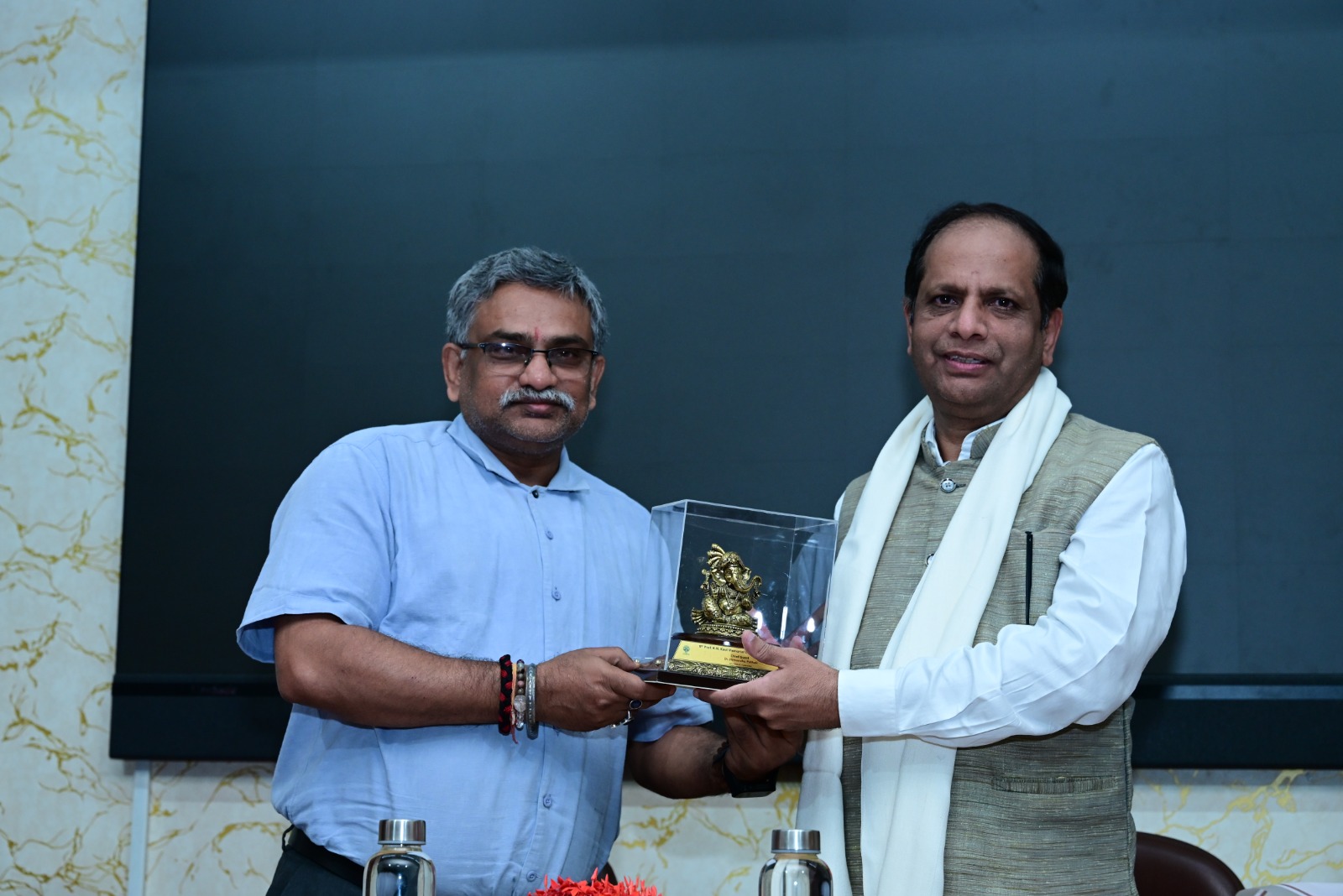
Lucknow: CSIR–National Botanical Research Institute (CSIR–NBRI), Lucknow organized the 9th Prof. K.N. Kaul Memorial Lecture on Saturday, 04 July 2026 at the Lotus Auditorium, K.N. Kaul Block, CSIR–NBRI, Lucknow. The lecture was delivered by Dr. Himanshu Pathak, Director General, International Crops Research Institute for the Semi-Arid Tropics (ICRISAT), Hyderabad, who graced the occasion as the Chief Guest.
The memorial lecture series commemorates the enduring legacy of Prof. Kailas Nath Kaul (1905–1983), Founder Director of the National Botanic Gardens (present-day CSIR–NBRI), an eminent botanist, horticulturist, agricultural scientist and environmental thinker whose visionary contributions to sustainable agriculture, biodiversity conservation and natural resource management continue to inspire generations of scientists.
while welcoming all, Dr. A.K. Shasany informed that the Prof. K.N. Kaul Memorial Lecture series is an important initiative of CSIR–NBRI to honour the remarkable legacy of Prof. Kaul, whose multidisciplinary vision seamlessly integrated plant sciences, agriculture, environmental stewardship and societal welfare.

Delivering the memorial lecture on the theme “Food to Nutrition, Income and Environment Security: Next-Generation Agriculture,” Dr. Himanshu Pathak stated that India, being predominantly an agrarian nation, supports a large section of its population through agriculture. He shared that the country, which grappled with food shortages in the 1950s, achieved food sufficiency by 2000 and attained a food-surplus status by 2010, enabling the Government to ensure food security for millions of people.
He highlighted that India’s food production has increased nearly sevenfold over the past seven decades despite little expansion in the cultivated area. Remarkable gains have also been achieved in milk, fisheries, fruit and vegetable production, transforming India from an importer to an exporter in several agricultural commodities.
Dr. Pathak, however, cautioned that Indian agriculture continues to face significant challenges arising from population growth, climate change, natural resource degradation and rapidly evolving socio-economic conditions. He emphasized that changing geopolitical dynamics have further underscored the need for resilient and future-ready agricultural systems.

Stresssing the importance of Next-Generation Agriculture, he underscored the need for a transformative framework that simultaneously enhances productivity, profitability and sustainability while ensuring energy and nutrient security. He noted that research, innovation and the adoption of advanced technologies would be central to achieving these objectives.
Dr. Pathak highlighted the transformative potential of cutting-edge technologies such as genome editing, artificial intelligence (AI), robotics, drones, remote sensing, big data analytics and precision agriculture in developing resilient agri-food systems capable of addressing climate change, resource constraints and evolving consumer demands. He remarked that future agricultural systems must be productive, protective, predictive, precise and profitable, thereby ensuring food, nutrition, income and environmental security for present and future generations.
He further emphasized the importance of climate-resilient crops, digital agriculture, smart agro-advisory services, strengthened extension mechanisms, value-chain development and collaborative partnerships among research institutions, industry and farming communities in realizing the vision of a developed and self-reliant India by 2047. On the occasion, Dr. Pathak also shared the major research initiatives, innovations and achievements of ICRISAT in advancing modern and sustainable agriculture.
Dr. Poonam C. Singh, Scientist F proposed the vote of thanks in the end.