By Dilip Kumar Pathak ( Translated from Ravivar Dilli )
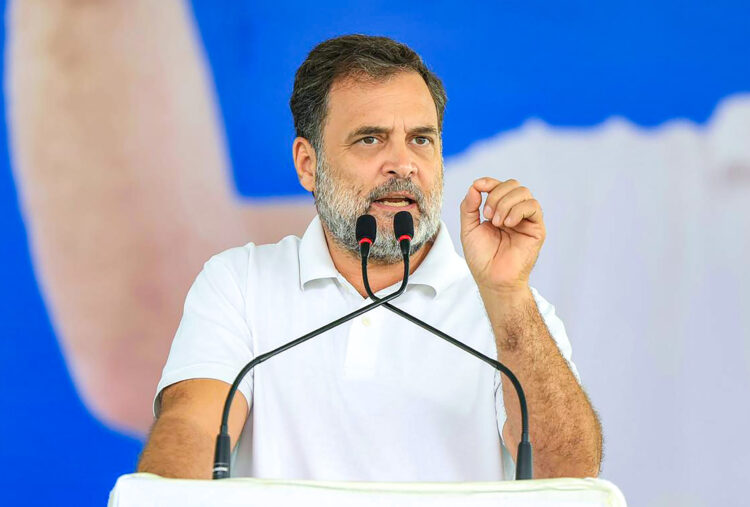
New Delhi | The making and unmaking of political images is hardly new. Yet, the scale and intensity of the campaign waged against Rahul Gandhi is without parallel in modern democratic history. For years, a formidable ecosystem—powered by vast financial resources, relentless social media amplification, and a compliant section of mainstream media—worked overtime to craft a singular narrative aimed at dismissing him outright. From dawn to dusk, the refrain remained the same: discredit, diminish, and deny.

Time, however, has a way of unsettling fixed narratives. As India’s political equations evolve, the change in the wind is unmistakable. Viewed impartially, it is striking that even after more than a decade of uninterrupted rule by the party in power, the primary target of political ire remains a leader from the opposition. In any healthy democracy, questions about unemployment, inflation, public health, and national security should be answered by those governing. Yet, here, every question is reflexively redirected toward Rahul Gandhi. If this is not political cruelty, what is?
Despite being compelled to prove himself at every turn—often under circumstances no public figure should have to endure—Rahul Gandhi has consistently retained dignity and restraint. Even when barbs were aimed at his family’s sacrifices, he chose composure over confrontation. One of the defining features of his political journey has been foresight. Whether warning about economic policy missteps, highlighting vulnerabilities during the pandemic, or raising concerns over border security, his interventions were initially mocked—only for time to vindicate them. In politics, the validation of one’s words by events is the truest measure of maturity. It is this credibility that has led people to listen to him more seriously today.
India’s youth and farmers, navigating profound distress, have found in him a voice that resonates. From the anguish of paper leaks ruining years of preparation to the despair of educated young people chasing scarce jobs, he has raised these concerns on the streets and in Parliament alike. Similarly, when farmers braved biting cold and searing heat at Delhi’s borders to demand justice, he stood with them—not as a photo-op, but as a committed ally. By foregrounding legal guarantees and minimum support price as core political demands, he signaled that agrarian distress was not an election-time slogan but a moral imperative.
In a political culture rife with opportunism, alliances often shift with convenience. Regional parties—from Delhi to Bengal to Uttar Pradesh—have at times undermined the Congress. Posters against Rahul Gandhi were put up; political bitterness was stoked. Yet, when these very leaders faced crises, he responded with magnanimity—facilitating legal support, setting aside past rancor, and prioritizing opposition unity. This is the paradox of his politics: even when confronted with betrayal, he persists with generosity.

Perhaps the most defining chapter of this journey was the Bharat Jodo Yatra. By abandoning closed-door politics and undertaking a grueling foot march from Kanyakumari to Kashmir, Rahul Gandhi reshaped political engagement. Through heat, rain, and snow, he met farmers, workers, and the marginalized—listening, embracing, and empathizing. The oft-quoted line about opening a “shop of love in a market of hate” was not a slogan but a lived ethic that touched millions.
That ethic was evident again when, after an electoral defeat, his fiercest rival was subjected to online abuse. Rahul Gandhi alone stepped forward to urge restraint and civility—proof that even amid deep ideological differences, basic human decency must endure.
The question, then, is no longer how much more Rahul Gandhi must prove. The real question is how long Indian democracy will tolerate a politics built on one-sided hostility and disinformation. If, despite immense expenditure and sustained vilification, a leader continues to command public trust, it points to a simple truth: falsehoods may delay the truth, but they cannot defeat it.
When will an impartial political assessment finally take place? Perhaps the answer lies not in the corridors of power or television studios, but in the quiet judgment of citizens who have begun to look beyond the noise—and see the person behind the narrative.