Lucknow: In a significant step toward strengthening allied and healthcare education in the state, the Government of Uttar Pradesh has formally constituted the Uttar Pradesh State Allied and Healthcare Council under the Medical Education Department. The council has been established in accordance with the National Commission for Allied and Healthcare Professions Act passed by Parliament on March 24, 2021, and officially notified in the Gazette on March 28, 2021.

Following the national legislation, the Uttar Pradesh government issued its state gazette notification on February 17, 2023. Dr. Kamal Pant was nominated as the first Chairman of the council on July 28, 2025, while the full committee was officially constituted on April 9, 2026.
Several distinguished professionals from different healthcare disciplines have been selected as members of the council. Representing Community Care, Behavioral Health Science and other professional sectors, former Supervising Officer of Sanjay Gandhi Postgraduate Institute of Medical Sciences Rajesh Pratap Singh has been nominated. In the field of Trauma, Burn Care Surgery and Anaesthesia-related Technology, Rajeev Saxena and Dheeraj Singh have been appointed as members. Dr. Shilpi Tripathi will represent Nutrition Science professionals, while former Chief Technical Officer of SGPGI, Vinay Pratap Singh, has been included as a representative for Medical Technologists and Physician Associates.
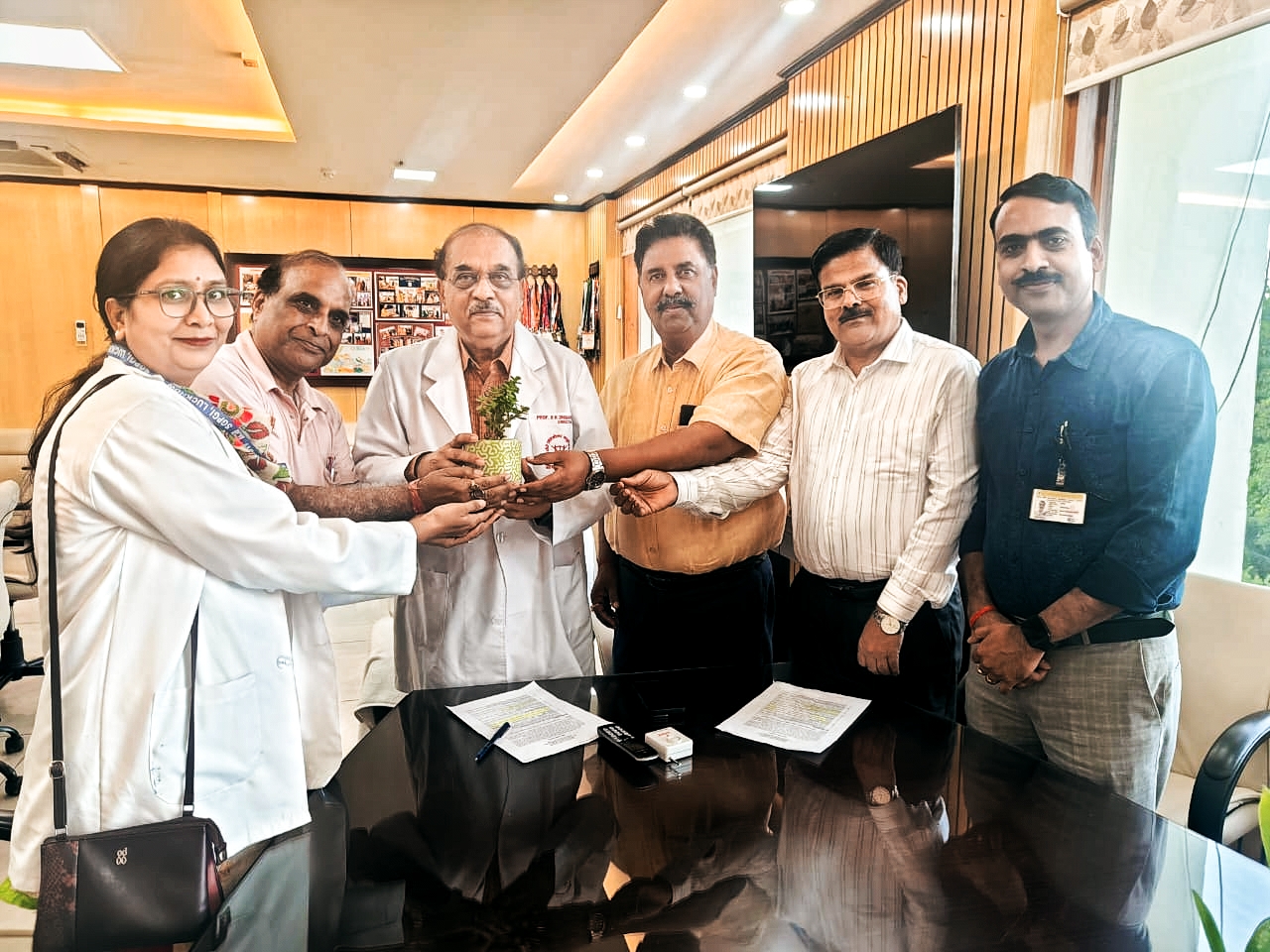
The newly appointed members recently paid a courtesy visit to Padma Shri awardee Director Dr. R.K. Dhiman and presented him with a sapling as a gesture of respect while seeking his guidance and blessings for the successful functioning of the council.
Officials associated with the council stated that the National Council has already detailed guidelines for 17 educational streams and nearly 57 allied healthcare courses, including bachelor’s degree programmes. Four courses have also been permitted to continue at the diploma level under special provisions of the National Council.
The council’s primary responsibility will be to ensure strict compliance with national academic standards, faculty availability, infrastructure norms, and quality training mechanisms in allied healthcare institutions across the state. Authorities believe the council will help regulate institutions that were allegedly operating courses without meeting prescribed standards, thereby protecting students from academic irregularities and safeguarding their future careers.

Experts associated with the council said the initiative would bring transparency, accountability, and professional excellence to allied healthcare education in the state, similar to the role played by nursing councils in regulating nursing education and practice.
The council also includes specialists from several districts of Uttar Pradesh who will provide professional guidance and policy support. Officials noted that Uttar Pradesh has emerged as one of the leading states in implementing the council framework, while nearly 17 states across the country, including Delhi and Chandigarh, are yet to issue complete notifications for the formation of such councils.
Healthcare experts believe the establishment of the council will play a vital role in improving healthcare education, strengthening skilled manpower, and ensuring better healthcare services for the public in the coming years.