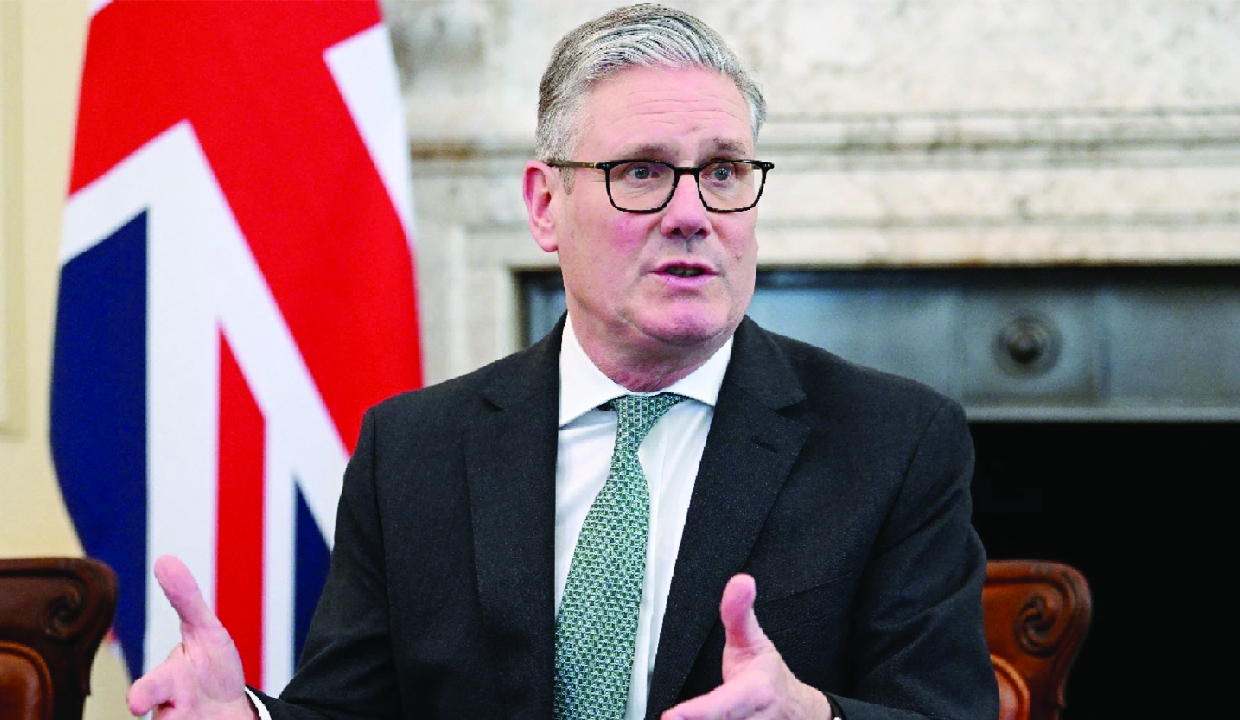
London: British Prime Minister Keir Starmer is facing mounting political pressure less than two years after leading the Labour Party to a sweeping victory in the 2024 general election, raising fresh questions about the continuing instability at the top of British politics.
A series of disappointing local election performances, internal party tensions, and growing criticism from Labour MPs have fuelled speculation over Starmer’s future as prime minister. While he has publicly dismissed calls for resignation and insisted he intends to continue in office, reports suggest unease is growing within sections of the party over his leadership style and electoral strategy.

The immediate political setback came after Labour underperformed in recent local and regional elections across England, Scotland, and Wales. Several lawmakers have reportedly questioned whether the party can maintain momentum under Starmer ahead of the next national election cycle.
Critics within Labour argue that the government has struggled to establish a strong political identity and has failed to energise voters with what many describe as a cautious and measured approach to governance. Controversies linked to senior appointments and continuing economic concerns have also contributed to declining public confidence in recent months.
Despite the pressure, Keir Starmer continues to enjoy support from key ministers and a significant section of Labour MPs, with more than 100 lawmakers reportedly backing him against any immediate leadership challenge.
The uncertainty surrounding Starmer reflects a broader pattern that has defined British politics over the past decade, during which the United Kingdom has witnessed an extraordinary turnover of prime ministers.
The period of political upheaval began in 2016 when former Prime Minister David Cameron resigned after the United Kingdom voted to leave the European Union in the Brexit referendum. Cameron, who had campaigned for Britain to remain in the EU, stepped down following the historic vote.

He was succeeded by Theresa May, whose tenure was dominated by Brexit negotiations. After repeated failures to secure parliamentary approval for her Brexit agreement, May resigned in 2019 amid growing rebellion within the Conservative Party.
Boris Johnson then took office but was forced to resign in 2022 following the “Partygate” controversy and a wave of ministerial resignations that severely weakened his authority.
His successor, Liz Truss, had the shortest tenure in British history, lasting just 49 days as prime minister before stepping down amid economic turmoil and backlash over her government’s fiscal policies.
Rishi Sunak later assumed leadership promising stability, but his government struggled with inflation, economic pressures, and immigration challenges before the Conservatives lost the 2024 general election to Labour.
Now, as questions intensify around Keir Starmer, political observers are once again debating whether Britain could witness yet another leadership change at 10 Downing Street — continuing a decade-long cycle of political uncertainty at the heart of UK governance.