New York: The 2026 edition of the iconic Met Gala 2026 arrived with extraordinary ambition, transforming the famous museum steps into a global stage where fashion, art, identity, and storytelling collided in spectacular fashion. Held on May 4 at the legendary Metropolitan Museum of Art, this year’s gala revolved around the Costume Institute’s groundbreaking spring exhibition, “Costume Art,” accompanied by the dress code “Fashion is Art.” More than just a glamorous celebrity gathering, the evening became a thoughtful exploration of how clothing interacts with the human body, memory, culture, and personal expression.
Co-chaired by Beyoncé, Nicole Kidman, Venus Williams, and Anna Wintour, the night blended artistic experimentation with celebrity spectacle. Yet beyond the dramatic gowns and headline-making arrivals, the 2026 Met Gala stood out because it encouraged attendees to think deeply about fashion as a form of living art rather than simply red-carpet dressing.

This year’s celebration pushed creative boundaries while opening conversations around beauty, identity, aging, vulnerability, craftsmanship, and cultural heritage. One of the most memorable aspects of the evening was the powerful representation from India, where celebrities and designers showcased heritage crafts, sculptural silhouettes, and artistic storytelling with remarkable confidence and originality.
A Theme That Elevated Fashion Beyond Glamour
The Costume Institute’s exhibition “Costume Art,” curated by renowned fashion historian Andrew Bolton, marked the opening of newly designed permanent galleries inside the museum. The exhibition explored the deep relationship between clothing and the body through artworks and garments spanning nearly five thousand years of history.
Instead of focusing solely on trends or historical silhouettes, the exhibition examined the body as both canvas and subject. Themes included anatomy, movement, vulnerability, aging, sensuality, and the emotional power of clothing. Guests were encouraged to interpret fashion not merely as decoration, but as sculpture, performance, storytelling, and emotional expression.
That intellectual framework gave the red carpet unusual depth. Some guests arrived in looks inspired by classical paintings and sculptures, while others used fabrics, tailoring, and illusion techniques to blur the line between garment and artwork. The result was one of the most visually layered and conceptually daring Met Galas in recent memory.
Unlike previous years that leaned heavily into fantasy or theatrical camp, 2026 invited introspection. Fashion became philosophical, personal, and emotional. Designers approached garments as wearable installations, and celebrities embraced artistic risk with surprising confidence.
Beyoncé’s Return Creates a Defining Moment
One of the evening’s biggest highlights was the return of Beyoncé after nearly a decade away from the Met Gala spotlight. Her arrival instantly became one of the most talked-about moments of the night. Accompanied by Jay-Z and daughter Blue Ivy Carter, Beyoncé’s appearance carried both emotional weight and commanding star power.
Her ensemble combined sculptural elegance with symbolic storytelling, perfectly aligning with the evening’s theme. Rather than simply wearing couture, she embodied the idea of fashion as performance and personal narrative. The look balanced strength and vulnerability, reminding audiences why she remains one of the most influential cultural figures in modern entertainment.
Family moments throughout the evening added warmth to the spectacle. Nicole Kidman’s appearance with daughter Sunday Rose Kidman Urban drew attention for its elegance and intimacy, while younger stars and first-time attendees brought fresh energy to the carpet.
Meanwhile, Madonna embraced theatrical surrealism with a dramatic ensemble inspired by avant-garde art, while Rihanna once again proved why her Met Gala appearances remain cultural events in themselves.
Indian Celebrities Command the Global Spotlight
While Hollywood glamour dominated headlines, Indian representation emerged as one of the evening’s most celebrated and artistically successful narratives. Indian celebrities, designers, and entrepreneurs embraced the “Fashion is Art” theme with remarkable sophistication, using traditional craftsmanship and contemporary interpretation to create unforgettable visual statements.
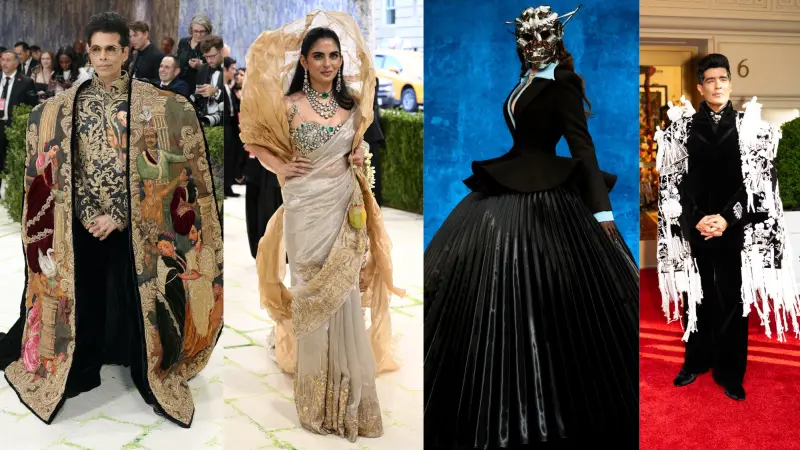
Isha Ambani delivered one of the night’s standout looks in a breathtaking gold-threaded sari-gown created by celebrated designer Gaurav Gupta. The ensemble combined sculptural draping with intricate embroidery inspired by Indian frescoes and Pichwai paintings. Rich detailing, paired with diamond jewelry and a striking bronze accessory inspired by artist Subodh Gupta, transformed the outfit into a wearable artwork rooted in Indian artistic traditions.
The look represented a masterful fusion of heritage and futurism. Instead of presenting the sari as purely traditional attire, the design reimagined it as modern sculpture, proving how Indian craftsmanship can thrive on contemporary global platforms.
Karan Johar made an impressive Met Gala debut in a spectacular ensemble by Manish Malhotra. Inspired by the paintings of legendary Indian artist Raja Ravi Varma, the outfit featured hand-painted detailing, lotus motifs, swan imagery, and extensive zardozi embroidery. The dramatic garment blurred the boundary between couture and classical Indian painting.
Manish Malhotra himself also drew admiration for his all-black handcrafted ensemble featuring an elaborate embroidered cape that reportedly required hundreds of hours of artisan work. Techniques including chikankari, kasab embroidery, dori work, and zardozi paid tribute to generations of Indian artisans whose work rarely receives global visibility on such a prestigious stage.
Ananya Birla made a bold statement in a striking couture look featuring a sculptural stainless-steel face piece inspired by contemporary Indian art. The dramatic styling explored themes of concealment, power, and identity while aligning perfectly with the evening’s artistic direction.
Royal heritage also found a place on the famous steps through the presence of Sawai Padmanabh Singh and Gauravi Kumari. Their ensembles celebrated Indian royal craftsmanship and heirloom traditions with elegance and restraint. Gauravi’s outfit incorporated elements connected to her grandmother, the iconic Gayatri Devi, creating an emotional bridge between generations.

Other Indian personalities, including Natasha Poonawalla and Sudha Reddy, added further depth through looks celebrating Indian textiles, embroidery, and artistic collaboration.
Collectively, the Indian contingent demonstrated that heritage craftsmanship and conceptual fashion are not opposing forces. Instead, they showed how traditional artistry can evolve into modern global storytelling.
Fashion Becomes Sculpture on the Red Carpet
Throughout the evening, the red carpet resembled a moving art exhibition. Sculptural silhouettes, illusion dressing, hand-painted fabrics, metallic structures, and body-inspired tailoring dominated the night.
Several celebrities referenced classical art and mythology through draped silhouettes reminiscent of Greek sculptures and Renaissance portraits. Others explored vulnerability and anatomy through sheer fabrics, exposed corsetry, and carefully engineered tailoring that highlighted the body’s natural structure.
Hunter Schafer impressed audiences with a floral-inspired couture creation that echoed portraiture and romantic painting traditions, while Heidi Klum embraced dramatic sculptural fashion with a highly architectural look.
Movement also played a major role throughout the evening. Flowing fringe, exaggerated draping, and layered fabrics transformed garments into living installations that shifted with every movement on the carpet.
The widespread use of illusion dressing and “naked dressing” reflected the exhibition’s focus on the body itself. Yet many designers approached the trend with artistry rather than shock value, using transparency and structure to explore themes of vulnerability, strength, and physical identity.
Cultural Impact Beyond Fashion
The 2026 Met Gala resonated far beyond celebrity culture because it opened meaningful conversations around representation and artistic storytelling. Themes of aging, anatomy, body diversity, and identity challenged traditional beauty standards often associated with luxury fashion.
The event also highlighted how fashion can function as cultural diplomacy. India’s strong presence demonstrated the growing global influence of South Asian design, craftsmanship, and artistic expression. By showcasing hand embroidery, heritage textiles, and indigenous artistry on one of fashion’s biggest stages, Indian attendees helped broaden international understanding of contemporary Indian luxury.
Social media amplified these conversations instantly. Millions of viewers discussed symbolism, craftsmanship, cultural references, and artistic inspiration rather than simply ranking celebrity outfits. For many audiences, this year’s gala felt intellectually engaging in a way few red-carpet events achieve.
At the same time, the gala continued its primary mission of raising funds for the Costume Institute, ensuring future preservation and celebration of fashion history.
Why the 2026 Met Gala Will Be Remembered
Several powerful factors combined to make the 2026 Met Gala unforgettable. The exhibition’s thoughtful theme encouraged genuine creativity rather than superficial spectacle. Beyoncé’s long-awaited return added emotional excitement and cultural weight. Diverse representation allowed global artistic traditions to shine. Most importantly, attendees embraced risk, transforming fashion into storytelling rather than mere glamour.
The strong Indian presence became one of the defining narratives of the evening. Through sculptural saris, heritage embroidery, painted couture, and artisan-focused storytelling, Indian celebrities and designers elevated the event’s artistic ambitions while proudly celebrating cultural identity.
In a fast-moving digital age dominated by fleeting trends, the 2026 Met Gala reminded audiences that fashion can still provoke thought, celebrate heritage, and inspire emotion. It proved that clothing is not just something people wear — it is history, identity, art, and imagination woven together.
As the “Costume Art” exhibition opens to the public, its influence will likely continue shaping global fashion conversations for years to come. The images from that unforgettable night — from sculptural gowns and artistic illusions to handcrafted Indian masterpieces — will remain lasting reminders of a moment when fashion truly became living art.






 ---------------------------------------------------------------------------------------------------