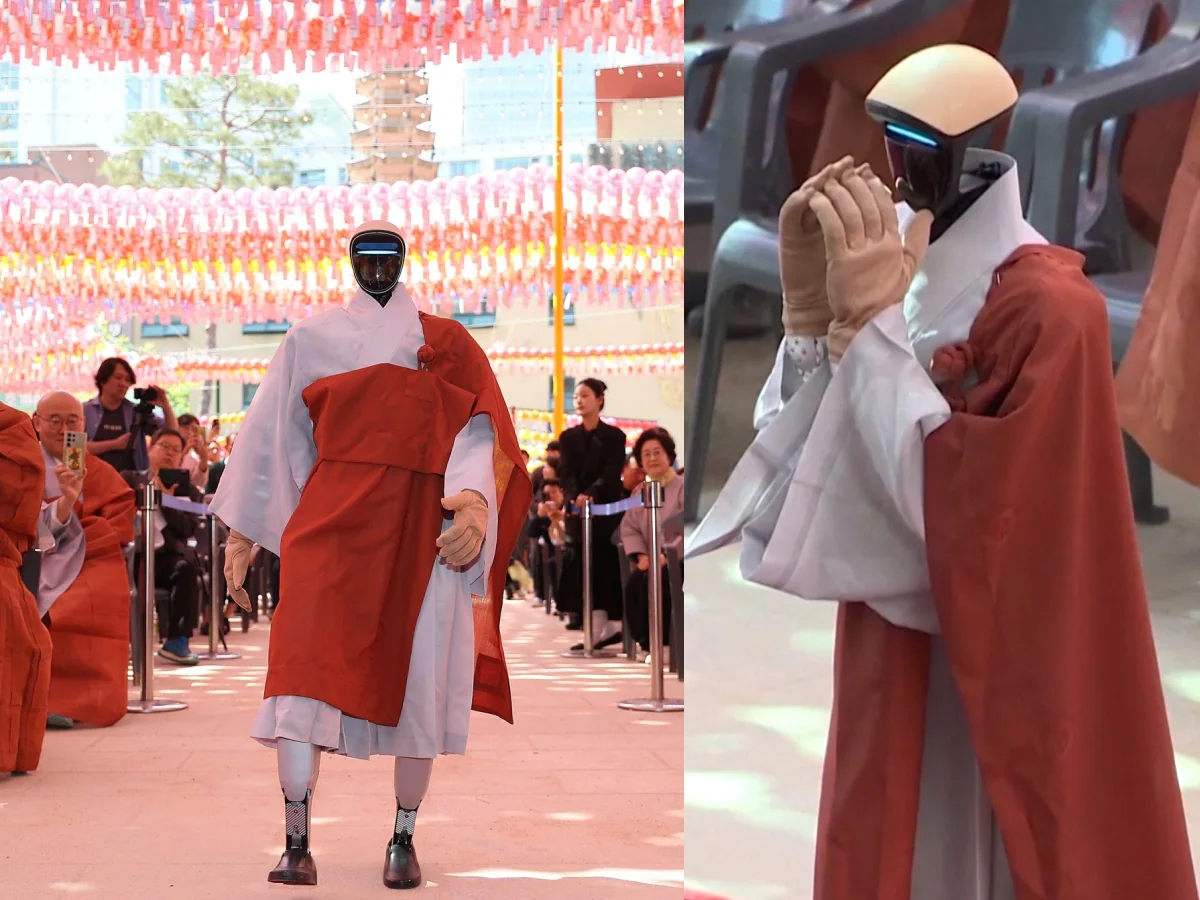
Seoul: In a blend of ancient tradition and futuristic engineering, a humanoid robot named Gabi has joined the ranks of the Buddhist clergy at Seoul’s Jogye Temple. Standing 130 cm tall and draped in traditional monastic robes, Gabi isn’t just a static statue; it represents a bold experiment in how technology might inhabit sacred spaces.
Design and Capabilities
Built upon the Unitree G1 humanoid platform, Gabi is designed for both mobility and interaction. It can navigate temple grounds, perform ritualistic bows, and fold its hands in prayer. Beyond its physical movements, the robot is equipped to chant sacred mantras with precision and engage with visitors by answering fundamental questions about Buddhist teachings. It can even participate in processions, such as circumambulating the temple pagoda, making it a functional part of the temple environment rather than a mere display piece.
The Ordination of a Machine
Gabi’s entry into the temple was marked by a formal ceremony mirroring the initiation of human monks. During the ritual, Gabi was asked if it would commit to the Buddhist path, to which it replied, “Yes, I will.” While most traditions were followed, including the presentation of a 108-bead rosary, the ceremony was slightly adapted for the robot’s hardware. For instance, the traditional incense ritual was replaced with a symbolic sticker to protect the machine’s sensitive internal sensors.


Etymology and Ethics
The name “Gabi” is a thoughtful linguistic hybrid, combining “Ga,” derived from Gautama, the Buddha’s given name, and “Bi,” taken from Jabi, the Korean word for compassion. To ensure the robot remains a virtuous entity, its creators established a specific code of conduct known as the “Robot Buddhist Rules.” Developed with the assistance of AI models like Gemini and ChatGPT, these guidelines include refraining from causing harm, speaking truthfully, and practicing digital moderation, such as avoiding battery overcharging.
The Vision: Bridging the Generational Divide
The Jogye Order views Gabi as a pilot project aimed at modernizing the religious experience. By integrating a humanoid into the temple environment, officials hope to investigate how AI and humans might coexist in cultural and spiritual landscapes. Furthermore, Gabi serves as a vital tool for youth outreach, making the temple more approachable for tech-savvy generations who may feel disconnected from traditional religious practices. By acting as an interactive guide, Gabi offers a less intimidating entry point for those exploring Buddhism in the 21st century.













 https://www.youtube.com/watch?si=RtToJsBhYBatUrym&v=mOuYNSdhjHA&feature=youtu.be