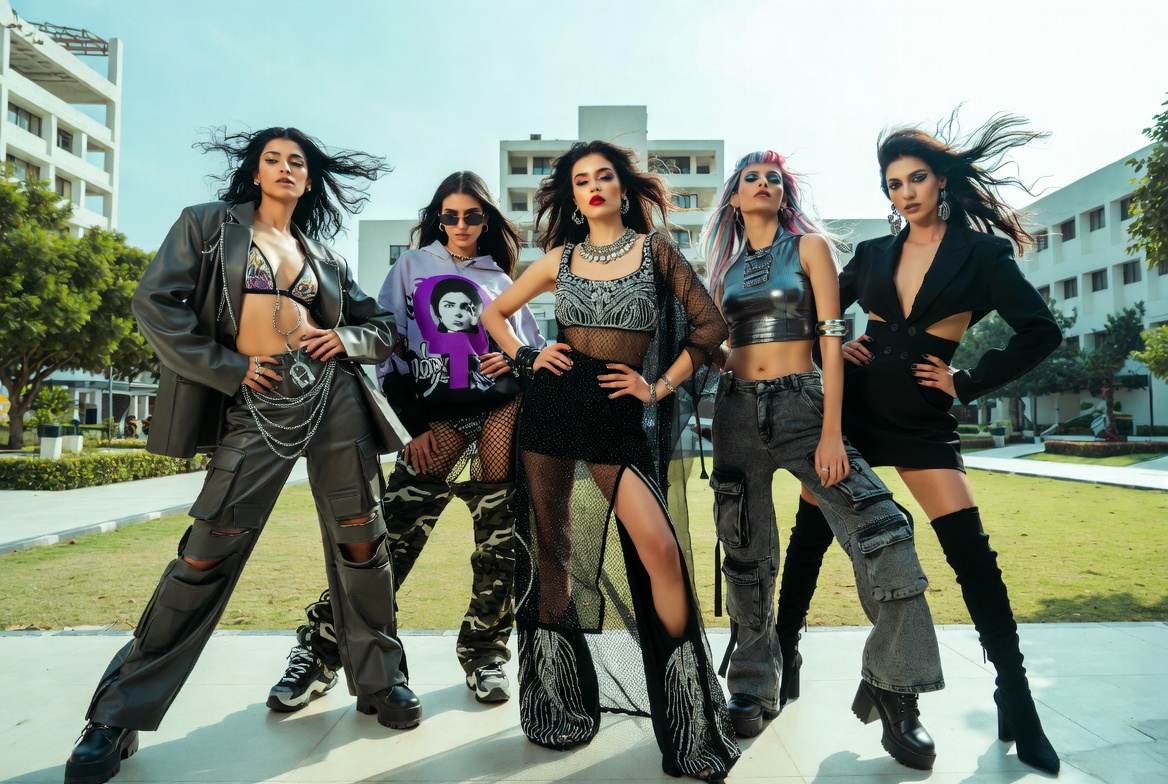
Lucknow / New Delhi: Fashion on college campuses has transformed into something far deeper than everyday dressing. For today’s young women, style is no longer limited to trends or labels—it has become a language of confidence, identity, and individuality. Across lecture halls, cafés, libraries, and college festivals, students are using fashion to express their beliefs, moods, ambitions, and cultural pride. The rise of New Age college fashion reflects a generation that values creativity, comfort, sustainability, and authenticity more than rigid fashion rules.

The modern college wardrobe is fluid, experimental, and fearless. Young women are blending global trends with regional influences, combining vintage pieces with streetwear, and mixing traditional silhouettes with contemporary cuts. Whether it is oversized jackets layered over kurtis, sneakers paired with sarees, or thrifted denim styled with statement jewelry, campus fashion today is about telling personal stories through clothing.
This transformation is strongly connected to the mindset of Gen Z. Unlike previous generations that often followed fixed style codes, today’s students embrace individuality over conformity. They dress not only to look good but also to feel empowered. Fashion has become a reflection of personality and purpose.
The Evolution of Campus Style
College fashion has changed dramatically over the decades. Earlier, practicality and modesty largely defined student wardrobes. In many Indian colleges, salwar suits, simple jeans, and plain tops were the norm. Western campuses similarly favored understated and conventional dressing. Over time, globalization, cinema, digital culture, and social media reshaped how students approached fashion.
By the late 2010s, fashion influences from Bollywood, Korean pop culture, international streetwear, and global fashion weeks began reaching young audiences instantly through Instagram, Pinterest, TikTok, and YouTube. Students no longer depended solely on magazines or celebrities for inspiration. Fashion became democratized. Anyone with creativity and confidence could influence trends.
This digital era gave rise to a more experimental campus culture. College girls started exploring styles that reflected their identities rather than societal expectations. A student could wear a handloom kurta with chunky boots one day and oversized cargo pants with crop tops the next. The idea of “fashion rules” slowly disappeared.
Today’s campus fashion is shaped by freedom of expression. Young women are redefining femininity and style on their own terms, balancing comfort with confidence and tradition with modernity.
Comfort Becomes the New Luxury
One of the biggest shifts in New Age college fashion is the dominance of comfort-first styling. Oversized silhouettes, relaxed denim, loose shirts, hoodies, co-ord sets, and wide-leg trousers have become everyday staples.
This trend reflects changing attitudes toward body image and practicality. Students spend long hours moving between classes, commuting, attending events, and participating in extracurricular activities. Fashion therefore needs to be functional as well as stylish.
Oversized clothing, once considered casual or unconventional, is now seen as fashionable and empowering. Baggy jeans paired with fitted tops, oversized blazers layered over dresses, or loose shirts styled with sneakers create effortless looks that combine comfort with confidence.
The popularity of comfort-driven fashion also reflects a larger cultural movement toward body positivity. Young women are rejecting restrictive beauty standards and embracing clothing that allows them to move freely and feel confident without pressure to fit into unrealistic ideals.
Sustainable Fashion Takes Center Stage
Another defining feature of modern college fashion is sustainability. Gen Z consumers are far more conscious about environmental impact than previous generations. Many college girls actively choose thrifted clothing, upcycled pieces, handmade accessories, and eco-friendly fabrics over fast fashion.
Thrifting has especially become a major trend. Students enjoy hunting for unique vintage jackets, oversized shirts, denim pieces, and retro accessories from flea markets, online thrift stores, and campus swaps. Wearing second-hand fashion is no longer viewed negatively. Instead, it signals individuality and environmental awareness.
Sustainable fashion also encourages creativity. Young women are customizing old jeans with embroidery, transforming oversized shirts into dresses, or styling family heirlooms in contemporary ways. These choices make outfits feel more personal and meaningful.
For many students, sustainability has become more than a trend—it is a statement about responsibility and conscious living.
The Rise of Fusion Fashion
One of the most exciting aspects of New Age college fashion is the rise of fusion styling. Young women are confidently blending traditional Indian elements with modern silhouettes to create fresh, unique looks.
Kurtis paired with cargo pants, sarees styled with sneakers, oxidized jewelry layered over western outfits, and ethnic jackets worn with denim are increasingly common across campuses. This fusion reflects a generation that embraces global influences while staying connected to cultural roots.
Fashion today allows students to celebrate heritage without appearing conventional. A handloom dupatta can become a statement accessory, while traditional prints can be styled with contemporary cuts for a modern look.
This blending of cultures has created a fashion identity that feels uniquely youthful and Indian. It also reflects pride in regional craftsmanship, textiles, and handmade artistry.
Accessories Become the Main Character
Accessories play a major role in modern campus fashion. Even the simplest outfit can become striking with the right styling choices. Chunky earrings, layered necklaces, rings, tote bags, sunglasses, scarves, and statement footwear now define many college looks.
Students are increasingly using accessories to personalize their outfits. A monochrome outfit may be elevated with colorful sneakers, while a casual jeans-and-tee combination can feel fashionable with stacked jewelry or a bold handbag.

Hair accessories, vintage belts, beaded jewelry, and handmade pieces have also returned strongly. Many students prefer artisanal or locally sourced accessories that add uniqueness to their wardrobe.
This focus on styling over expensive clothing reflects a smarter and more creative approach to fashion.
Social Media and the Digital Influence
Social media has completely transformed campus fashion culture. Platforms like Instagram and Pinterest function as virtual style diaries where students discover trends, share outfit inspirations, and experiment with aesthetics.
Micro-influencers and student creators now influence fashion just as much as celebrities. A viral campus outfit reel or “Get Ready With Me” video can inspire thousands of students across cities and countries.
However, unlike earlier eras dominated by perfection, today’s fashion content increasingly values authenticity. Young women openly share thrift hauls, outfit repeats, affordable styling hacks, and realistic fashion choices.
Digital platforms have also encouraged greater diversity in fashion representation. Students from different backgrounds, body types, and cultural identities are redefining beauty standards and making fashion more inclusive.
Bold Fashion as Self-Expression
Modern campus style is deeply tied to self-expression. Many students use fashion to communicate opinions, values, and emotions without saying a word.
Graphic tees with empowering slogans, gender-neutral clothing, experimental hairstyles, unconventional layering, and dramatic silhouettes all serve as forms of identity expression. Fashion has become political, emotional, and cultural at the same time.
For some, bold fashion represents independence. For others, it becomes a way to challenge stereotypes or celebrate individuality. A student wearing vibrant traditional prints with contemporary styling may be expressing pride in her roots, while another choosing minimalist monochrome outfits may be reflecting confidence through simplicity.
Fashion today allows young women to take ownership of their narratives.
Challenges Behind the Glamour
Despite its empowering nature, New Age college fashion also comes with pressures. Social media can sometimes create unrealistic expectations around appearance and constant trend updates. Many students feel pressure to maintain a fashionable image online.
Financial limitations also play a role. Not everyone can afford premium brands or frequent wardrobe changes. This is why affordable styling, DIY fashion, and thrifting have become increasingly popular among students seeking creativity without overspending.
Dress codes in certain colleges can also restrict self-expression. Many students navigate these limitations by styling outfits in ways that remain fashionable while respecting institutional norms.
The growing conversation around sustainability further highlights the tension between fast fashion consumption and ethical choices. Students are becoming more aware of balancing trends with responsible shopping habits.
The Future of Campus Fashion
The future of college fashion appears more inclusive, sustainable, and technology-driven than ever before. Digital styling tools, virtual try-ons, AI-based fashion recommendations, and smart fabrics are expected to become increasingly common.
At the same time, individuality will likely remain central to campus fashion culture. Rather than blindly following trends, students are becoming more interested in curating wardrobes that reflect personality and purpose.
Cultural storytelling through fashion is also expected to grow stronger. Young women are supporting regional artisans, handmade textiles, and local designers while incorporating them into contemporary styles.
As sustainability becomes more important globally, circular fashion, clothing swaps, and mindful shopping habits may define the next phase of student style.
Fashion With Purpose
New Age college fashion is far more than seasonal trends or social media aesthetics. It represents a generation redefining confidence, creativity, and self-expression through clothing. College girls today are using fashion not only to stand out but also to stand for something—whether it is sustainability, individuality, cultural pride, or empowerment.
From oversized streetwear and sustainable fashion to fusion styling and statement accessories, modern campus fashion reflects courage and authenticity. It celebrates freedom while encouraging conscious choices and personal storytelling.
In classrooms, college festivals, and everyday campus life, young women are proving that style is not about perfection or expensive labels. It is about confidence, originality, and the courage to express who they truly are.







 ---------------------------------------------------------------------------------------------------