Imphal: The Northeast of India is often described through its landscapes — mist-covered mountains, rolling valleys, dense forests, and winding rivers. Yet beyond its extraordinary natural beauty lies another powerful identity: music. Across the eight states of Arunachal Pradesh, Assam, Manipur, Meghalaya, Mizoram, Nagaland, Sikkim, and Tripura, music is not simply entertainment. It is memory, resistance, celebration, spirituality, and identity woven into everyday life.
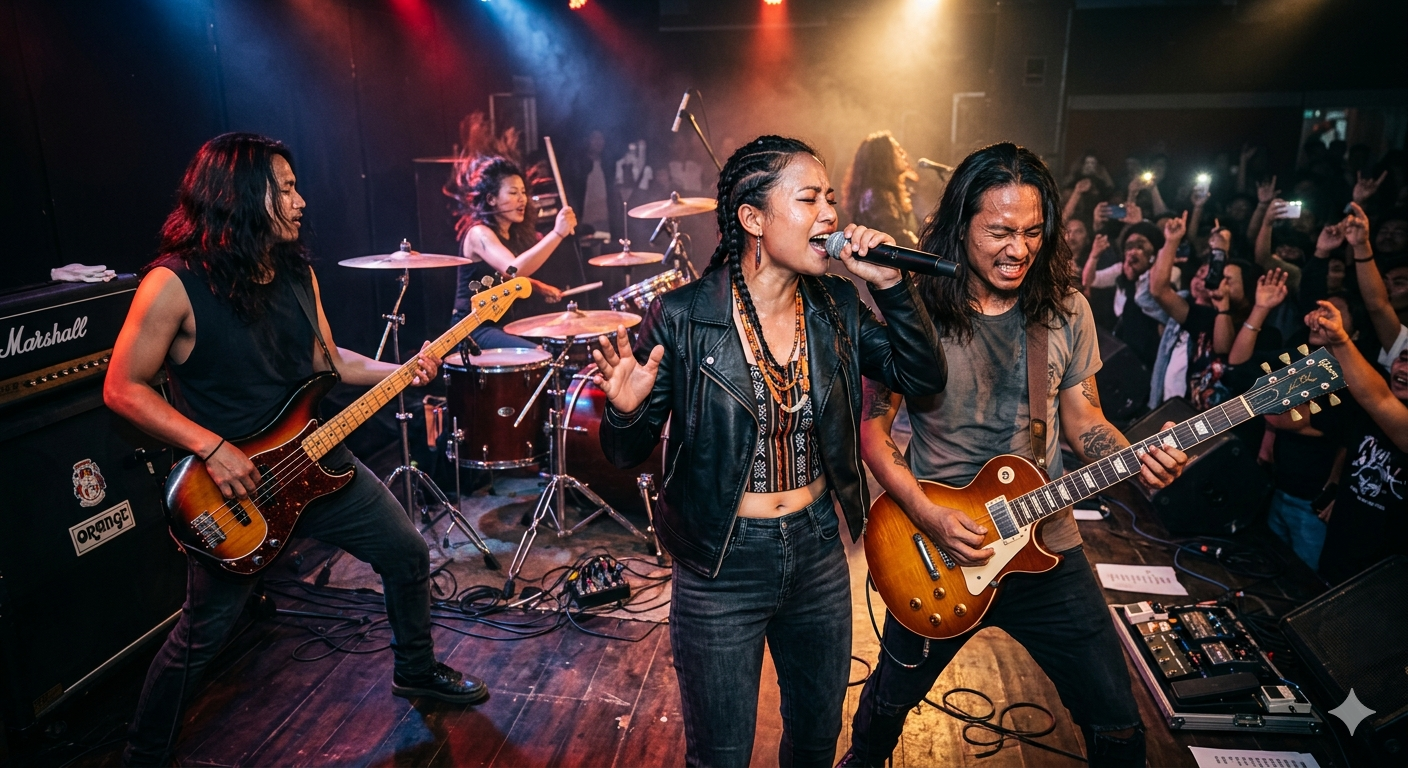
For decades, the region has quietly nurtured one of India’s most dynamic and original music cultures. From tribal folk traditions and church choirs to metal, blues, indie rock, hip-hop, and electronic fusion, the Northeast has created a soundscape unlike anywhere else in the country. While Shillong is widely known as the “Rock Capital of India,” the spirit of music resonates far beyond one city or one genre. It echoes through villages, cafés, festivals, and youth movements across the region.
What makes Northeast music remarkable is not only its diversity, but its emotional honesty. The songs emerging from these hills often carry stories of belonging, conflict, longing, pride, and resilience — deeply rooted in the realities of the land and its people.
Ancient Traditions and Musical Roots
Long before modern bands emerged, music already occupied a sacred place in the cultures of the Northeast. Indigenous communities across the region used songs as part of rituals, harvest celebrations, storytelling traditions, and communal gatherings. Music marked life’s transitions, accompanied spiritual practices, and strengthened collective identity.
Traditional instruments varied from tribe to tribe and state to state. In Meghalaya, Khasi communities used string instruments like the duitara, while Assam developed instruments such as the pepa and dhol that became central to Bihu celebrations. Nagaland’s massive log drums carried ceremonial importance, while Manipuri folk traditions integrated dance and rhythm into everyday cultural life.
The arrival of Christian missionaries during the nineteenth and twentieth centuries introduced Western hymns, choirs, and church music, particularly in hill states like Meghalaya, Mizoram, and Nagaland. This interaction created a unique musical foundation where indigenous traditions and Western harmonies gradually merged.
Unlike many other parts of India, Western music did not remain foreign in the Northeast. Over generations, it became localized, absorbed into community culture, and transformed into something entirely regional.
Shillong and the Rise of Rock Culture
The story of modern Northeast music cannot be told without Shillong. Often referred to as India’s rock capital, Shillong developed a strong live music culture from the 1960s onward. Its colonial history, educational institutions, and cosmopolitan environment exposed younger generations to Western rock, blues, and folk music.
Bands performing covers of artists like Pink Floyd, The Beatles, and Bob Dylan became common across cafés and local venues. Over time, however, Shillong’s musicians developed their own voice, blending global influences with local experiences.
One of the most iconic figures associated with this movement is Lou Majaw, often called the “Bob Dylan of Shillong.” His influence on generations of musicians helped shape the city’s enduring rock identity.
Music in Shillong evolved into more than nightlife entertainment. It became a cultural language for youth expression and artistic freedom. Even today, small cafés and live venues across the city continue to nurture emerging talent.
Bands That Redefined the Northeast Sound
Over the years, the Northeast has produced bands and artists who have reshaped India’s independent music scene.
From Meghalaya, Soulmate gained national recognition for their blues-rock sound and emotionally charged performances. Their music brought attention to Shillong’s thriving live circuit and demonstrated that independent bands from the Northeast could command audiences far beyond the region.
Another remarkable act is Dymbur, known for blending progressive metal with traditional Khasi instruments and tribal sounds. Their music represents a new generation unafraid to experiment with identity and genre simultaneously.
In Assam, bands like Lucid Recess helped establish the Northeast’s reputation in the metal scene through technical precision and energetic performances. Assam also nurtures folk-fusion artists who incorporate Bihu rhythms and Assamese lyrics into contemporary music.
Nagaland’s music scene remains deeply tied to cultural preservation and performance. Groups such as the Tetseo Sisters have become cultural ambassadors, preserving traditional Naga folk songs while presenting them to global audiences in accessible contemporary formats.
Meanwhile, Manipur’s independent scene reflects emotional intensity and social awareness. Bands like Imphal Talkies and the Howlers combine folk influences with political and social commentary, creating music deeply connected to the realities of the region.
Artists from Mizoram, Arunachal Pradesh, Tripura, and Sikkim continue to expand the scene further, experimenting with indie rock, alternative folk, dream pop, electronic sounds, and acoustic storytelling.
Fusion as a Form of Identity
One of the defining strengths of Northeast music is its fearless embrace of fusion. Rather than abandoning traditional roots in pursuit of modern genres, many bands integrate indigenous sounds directly into contemporary music.
Folk instruments blend with distorted guitars. Tribal chants meet electronic beats. Regional languages flow naturally into rock, hip-hop, and experimental music. This approach has allowed artists to preserve cultural identity while remaining globally relevant.
The use of local languages — Khasi, Assamese, Mizo, Manipuri, Ao, and many others — also adds emotional authenticity. Songs become expressions of belonging rather than simply performances for commercial consumption.
For younger musicians, fusion is not a marketing strategy. It is a reflection of lived identity — modern yet deeply rooted in heritage.


Music as Resistance and Expression
The Northeast has long experienced political tensions, social complexities, and feelings of isolation from mainland narratives. In many cases, music has become a medium through which artists express frustration, resilience, and hope.
Bands and singer-songwriters frequently address themes such as displacement, identity, social conflict, environmental change, and cultural survival. Music becomes both personal therapy and collective expression.
This emotional depth distinguishes much of the Northeast’s independent music scene. Even when songs are soft, melodic, or experimental, they often carry an undercurrent of lived experience shaped by geography and history.
Festivals That Bring the Scene Alive
Music festivals have played a major role in amplifying Northeast talent and connecting local artists with national and international audiences.
The Ziro Festival of Music has become one of India’s most celebrated independent music festivals. Set amid pine forests and rice fields in Arunachal Pradesh, it offers an intimate atmosphere where artists and audiences connect naturally through music and landscape.
Nagaland’s Hornbill Festival combines music with tribal heritage, while Meghalaya’s Cherry Blossom Festival has emerged as another major platform attracting artists and visitors from across the country.
These festivals are more than entertainment events. They function as cultural bridges, tourism drivers, and creative ecosystems where collaboration and artistic exchange flourish.
Women Shaping the Soundscape
Women musicians from the Northeast have also challenged stereotypes and expanded representation within India’s music industry. Bands such as all-female rock groups from Meghalaya and Mizoram have brought new perspectives to alternative music spaces traditionally dominated by men.
Artists continue to break barriers across genres, from blues and indie rock to hip-hop and folk fusion. Their growing visibility reflects the evolving inclusivity of the region’s music culture.
Challenges Behind the Creativity
Despite immense talent, musicians from the Northeast often face significant challenges. Limited infrastructure, lack of industry investment, insufficient media visibility, and geographical distance from major entertainment hubs create obstacles for emerging artists.
Many bands rely heavily on self-production, independent touring, and digital platforms to survive. Mainstream Indian media has historically underrepresented Northeast artists, contributing to a sense of cultural marginalization.
However, digital streaming platforms and social media have gradually changed this landscape. Artists can now reach audiences directly without depending entirely on traditional music industry structures.
A Future Filled with Possibility
The future of Northeast music appears increasingly promising. Younger artists are exploring electronic music, hip-hop, alternative pop, experimental fusion, and multilingual songwriting with remarkable confidence.
Cross-cultural collaborations are growing, and audiences across India are becoming more receptive to independent regional music. Increased investment in festivals, studios, music education, and artist development could further strengthen the ecosystem.
What remains undeniable is the originality of the Northeast’s voice. In an era where much commercial music risks sounding uniform, the region continues to produce sounds shaped by real landscapes, histories, and communities.
The Sound of a Region Finding Its Voice
Music in the Northeast is far more than performance. It is a living expression of identity, memory, and resilience. From Shillong’s rock cafés to folk gatherings in remote villages, from metal concerts to acoustic storytelling sessions under mountain skies, the region’s music reflects both diversity and unity.
Artists like Soulmate, Dymbur, Imphal Talkies and the Howlers, and the Tetseo Sisters are not simply making songs. They are carrying stories of their people, languages, and landscapes into the wider world.
To listen to Northeast music is to hear more than melodies. It is to hear mountains, migrations, celebrations, struggles, and hopes woven together into sound.
In many ways, the music of the Northeast represents the region itself — deeply rooted, endlessly evolving, and impossible to ignore once truly heard.













 https://www.youtube.com/watch?si=RtToJsBhYBatUrym&v=mOuYNSdhjHA&feature=youtu.be