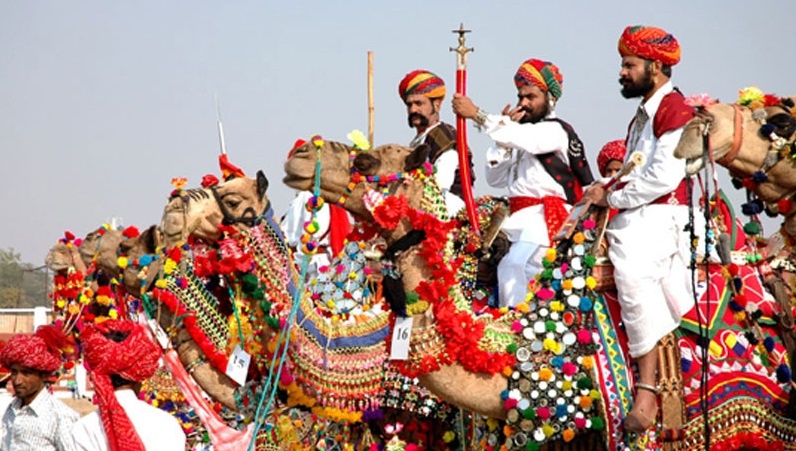
Jaipur: In the heart of Rajasthan’s Thar Desert, the quiet town of Pushkar transforms each year into one of India’s most extraordinary cultural gatherings. Known globally as the Pushkar Camel Fair, or Pushkar Mela, this annual event is far more than a livestock market. It is a living canvas of colour, tradition, devotion, and desert life unfolding against golden sands and endless skies.
For a few days every year, Pushkar becomes a meeting point for herders, traders, pilgrims, artists, travellers, and photographers. What emerges is a rare blend of commerce and celebration, where centuries-old traditions continue to thrive in a modern, global setting.
A Sacred Town with Deep Roots
Pushkar holds a special place in Hindu mythology and religious geography. It is home to the sacred Pushkar Lake, believed to have been formed by the drop of a lotus flower from Lord Brahma, the creator in Hindu tradition. The town is also known for the rare Brahma Temple, Pushkar, one of the very few temples in the world dedicated to him.
The fair is held during Kartik Purnima, the full moon of the Hindu month of Kartik, considered highly auspicious for spiritual cleansing. Pilgrims believe that a dip in the holy waters of Pushkar Lake during this time washes away sins and brings spiritual merit. This sacred backdrop gives the fair a unique identity where devotion and festivity coexist naturally.
From Livestock Market to Global Festival
Historically, the Pushkar Camel Fair began as a practical gathering for rural communities. Farmers and herders from across Rajasthan came together to trade camels, horses, and cattle before the winter season. It was a vital economic event in an otherwise harsh desert environment.
Over time, however, the fair evolved. While livestock trading remains at its core, tourism, culture, and performance have transformed it into an internationally recognized festival. Today, it stands as a symbol of Rajasthan’s heritage, drawing visitors from across the world who come not only to witness trade but to experience a living tradition.
Despite modernization, the essence of the fair remains intact. The dusty grounds still echo with the voices of traders, the low calls of camels, and the rhythm of rural life that has changed little over generations.
When the Desert Awakens
The Pushkar Camel Fair typically takes place in October or November, culminating around Kartik Purnima. During this period, the desert climate becomes surprisingly pleasant, with warm days and cool nights creating ideal conditions for outdoor gatherings.
As the fair approaches its peak, the town grows increasingly vibrant. Early days are dominated by livestock arrivals and trading activity, while the final days shift toward cultural performances and religious rituals. By the time the full moon rises over Pushkar Lake, the entire town feels transformed into a spiritual and festive amphitheatre.
The Journey into Pushkar
Reaching Pushkar is part of the experience itself. The nearest airport is in Jaipur, from where the journey continues by road through arid landscapes and the rocky Aravalli hills. The railway hub of Ajmer serves as the closest rail connection, just a short drive away from Pushkar.
As travellers approach the town, the scenery gradually shifts from semi-urban Rajasthan to open desert terrain. Dusty roads, scattered vegetation, and distant hills set the tone for what awaits—a festival deeply rooted in the land itself.
The Heart of the Fair: Camels and Trade
At the core of the Pushkar Camel Fair lies the vast livestock market. Thousands of camels arrive from surrounding villages, often decorated with vibrant textiles, beads, and traditional ornaments. Horses and cattle accompany them, forming a sprawling, animated marketplace.
The early mornings are especially striking. Against the soft desert light, herders negotiate deals, inspect animals, and gather in clusters under makeshift tents. The atmosphere is raw, authentic, and deeply rooted in rural economics, offering a rare glimpse into desert livelihoods that continue to depend on livestock trade.
A Carnival in the Desert
As the days progress, the fair expands into a full cultural celebration. The grounds come alive with competitions, performances, and public festivities. Camel races kick up clouds of dust as spectators cheer from the sidelines. Decorated camels compete in ornamentation contests, while traditional games like tug-of-war and pot-breaking races add playful energy to the event.
One of the most distinctive features of the fair is its sense of humour and spectacle. From moustache competitions to folk-inspired contests, the event blends seriousness with lighthearted celebration in a way that reflects Rajasthan’s spirited culture.
Ferris wheels, puppet shows, and street performers add another layer of carnival energy, turning the desert into a moving festival ground.
Evenings of Music and Movement
When the sun sets over Pushkar, the atmosphere changes dramatically. The open desert becomes a stage for music, dance, and storytelling. Folk artists from across Rajasthan perform traditional Ghoomar and Kalbeliya dances, their movements reflecting centuries of cultural expression.
Folk musicians fill the air with instruments that echo through the night, while fire dancers and acrobats captivate audiences under starlit skies. These performances are not just entertainment; they are living traditions passed through generations, preserved in rhythm and movement.

Pushkar Lake: The Spiritual Core
At the centre of all activity lies Pushkar Lake, a sacred water body surrounded by ghats and temples. Despite the energy of the fair, the lake remains a space of calm reflection.
During Kartik Purnima, thousands of pilgrims gather for ritual bathing, believing in its spiritual cleansing power. The evening Maha Aarti is a breathtaking experience, as lamps float across the water during the Deepdaan ceremony, illuminating the lake in golden light.
This spiritual dimension provides a powerful contrast to the surrounding festivities, reminding visitors that Pushkar is both a celebration and a pilgrimage site.
Flavours of Rajasthan
Food at the Pushkar Camel Fair reflects the rich culinary traditions of Rajasthan. Vegetarian cuisine dominates due to the town’s religious significance, offering hearty and flavourful dishes that suit desert life.
Traditional meals such as dal baati churma, ker sangri, and gatte ki sabzi are widely available, alongside street favourites like kachoris, samosas, and sweets such as malpua and rabri. Camel milk tea is a unique local specialty often tried by curious visitors.
Alongside traditional food, international stalls and cafés cater to global travellers, creating a culinary mix that mirrors the fair’s diverse audience.
Living Traditions and Desert Culture
Beyond the spectacle, the fair is deeply rooted in Rajasthan’s cultural identity. Colourful turbans, embroidered skirts, and folk songs define the visual and auditory landscape. The warmth of desert communities is evident in the way locals welcome visitors into their traditions.
For many travellers, the fair becomes an immersive cultural experience rather than just a visual attraction. Conversations with traders, shared meals, and participation in rituals create lasting memories that go beyond observation.
Practical Experience of the Fair
Staying at Pushkar during the fair ranges from luxury desert camps to modest guesthouses and tented accommodations. Many visitors choose desert camps on the outskirts of town, where cultural evenings under the stars extend the experience beyond the fairgrounds.
Given the popularity of the event, early booking is essential. The town becomes extremely crowded during peak days, and accommodation fills quickly.
Visitors are advised to dress comfortably for dusty conditions, stay hydrated, and respect local customs, especially around religious sites. Cash is often preferred in market areas, and bargaining is part of the local trading culture, usually conducted in a friendly manner.
A Festival Beyond Time
The Pushkar Camel Fair is not merely an annual event—it is a living expression of Rajasthan’s desert heritage. It captures the rhythm of rural life, the depth of spiritual tradition, and the vibrancy of cultural celebration in a single landscape.
From sunrise camel markets to moonlit rituals on Pushkar Lake, every moment carries a sense of continuity between past and present. It is a place where ancient traditions are not remembered—they are lived.
For travellers, the fair offers more than sights and sounds. It offers immersion into a world where desert winds carry stories, where faith shapes daily life, and where celebration becomes a way of existing in harmony with the land.
In the end, the Pushkar Camel Fair remains one of India’s most unforgettable cultural experiences—a desert symphony of devotion, trade, and timeless human connection.

 ---------------------------------------------------------------------------------------------------