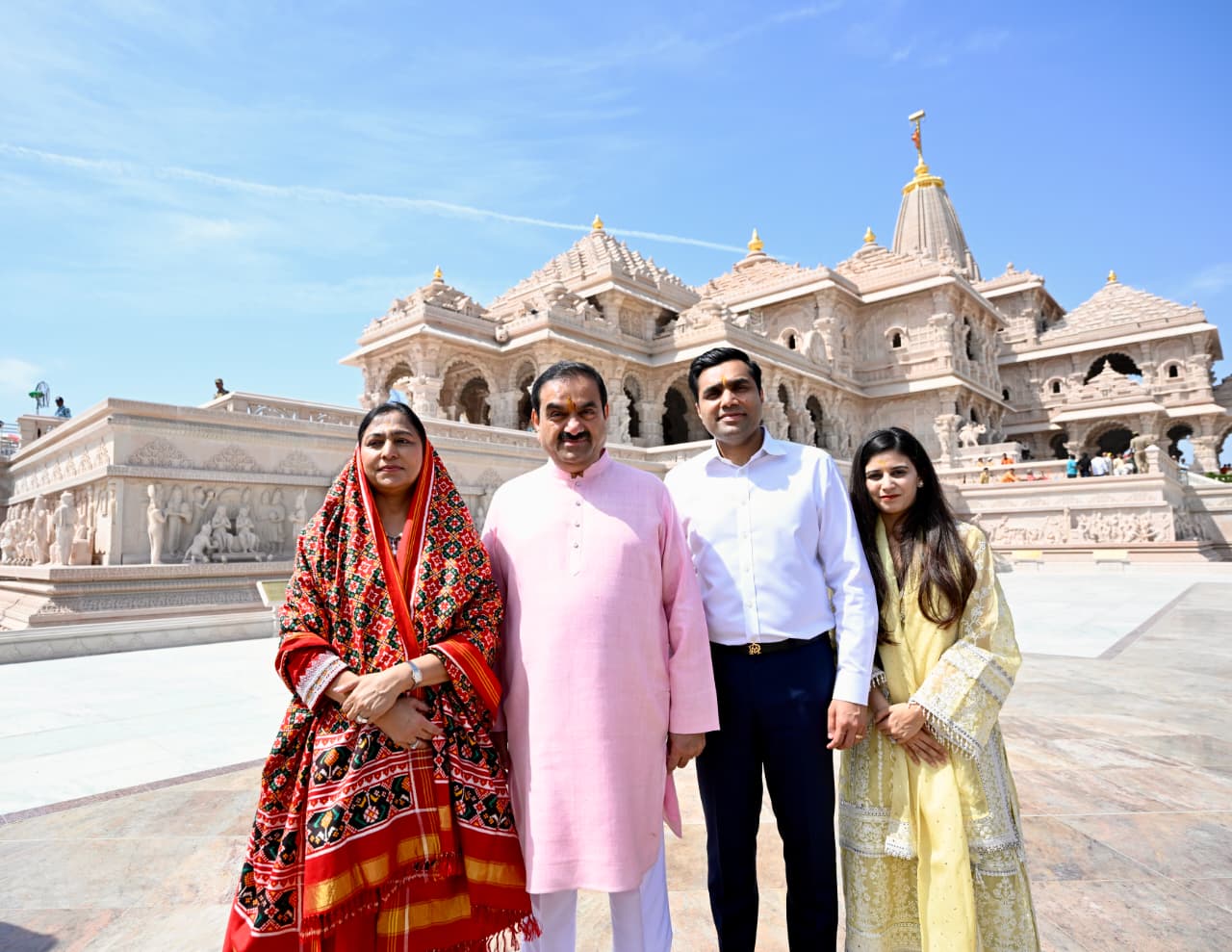
Ayodhya: Gautam Adani, Chairman of the Adani Group, visited Ayodhya with his family, reaffirming the values of faith, service, and India’s rich cultural traditions.
Accompanied by his wife Dr Priti Adani, son Karan Adani, and daughter-in-law Paridhi Adani, he offered prayers at the Shri Ram Janmabhoomi Temple, one of the most significant religious landmarks in India.

Describing the visit on the occasion of Hanuman Jayanti as deeply emotional, Adani said he experienced a profound sense of pride and devotion during the दर्शन (worship) at the temple. He подчеркed that the Ram Temple is not merely a place of worship but a powerful symbol of India’s cultural identity, unity, and growing national confidence.
“Lord Ram’s ideals of truth, duty, and service continue to inspire the nation,” he noted, highlighting their relevance in contemporary India.
Visit to Gurukul Highlights Value-Based Education
Following his temple visit, Adani travelled to the nearby Shri Nishulk Gurukul Mahavidyalaya, located a short distance away. Established in 1935 by Swami Tyaganand, the institution follows the principles of the Arya Samaj, promoting Vedic education, social reform, and inclusive learning.
The Gurukul operates on a traditional residential model where students live on campus and study under the guidance of their teachers, combining academics with discipline and moral values.
Interacting with students and faculty, Adani observed how education at the institution extends beyond textbooks to include life skills and संस्कार (values). “When education is rooted in values, it shapes not just individuals but the future of the nation,” he said, stressing the importance of preserving such traditions.

Bridging Tradition with Technology
Acknowledging the rapid global shift toward artificial intelligence, Adani emphasised the need to safeguard and strengthen India’s knowledge systems. He announced that the Adani Foundation will support the Gurukul by helping establish an AI-based laboratory, aiming to blend traditional wisdom with modern technology.
The Gurukul currently educates around 200 students free of cost and also houses a गौशाला (cow shelter) with over 50 cattle. The institution has historical significance, having been visited by leaders such as Mahatma Gandhi and Subhas Chandra Bose in the past.
During the visit, the campus resonated with Vedic chants as students recited Sanskrit shlokas in unison. Adani spent time among them, listening closely and engaging with teachers, noting that the institution imparts not just knowledge but a holistic way of life.
A Message Rooted in Faith and Progress
The visit underscored a broader message of harmonising India’s spiritual heritage with modern progress. By supporting institutions like the Gurukul while advocating technological advancement, Adani highlighted a vision where tradition and innovation move forward together.
His Ayodhya visit, marked by devotion and dialogue, reflected a continued emphasis on service, cultural pride, and nation-building rooted in enduring values.







 ---------------------------------------------------------------------------------------------------