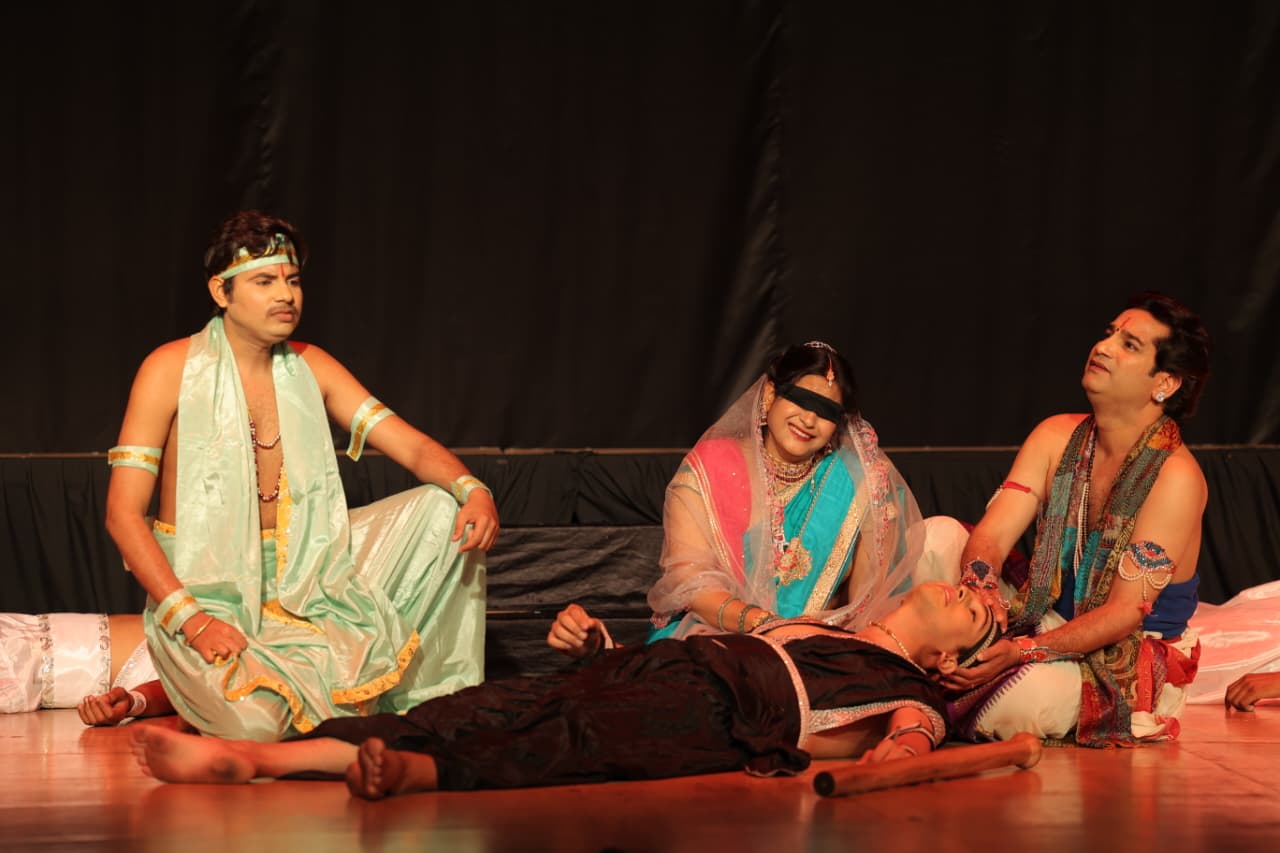
Bareilly: A powerful theatrical performance of Komal Gandhar, a play written by Shankar Shesh and directed by Vinayak Srivastava, was staged at the auditorium of SRMS Riddhima.
Set against the backdrop of the Mahabharata, the play presents a nuanced and introspective portrayal of Gandhari, going beyond her traditional depiction as an ideal पत्नी and mother. Instead, it delves into her inner turmoil, emotional struggle, and intellectual strength, raising broader social and moral questions.
The narrative begins with Bhishma bringing Gandhari from Gandhara to Hastinapur for her marriage to Dhritarashtra, without disclosing his blindness. Upon discovering the truth, Gandhari chooses to blindfold herself for life, symbolizing both sacrifice and silent protest. The play intricately explores strained relationships, सत्ता dynamics, and emotional distance between characters, especially Gandhari and Dhritarashtra.
Through various scenes—including the birth of Duryodhana, the growing tensions with the Pandavas, and the eventual devastation of the Mahabharata war—the play reflects on themes of power, motherhood, revenge, and destiny. The emotional climax unfolds as Gandhari and Dhritarashtra, after losing everything, leave the palace and walk into a forest fire, marking a tragic yet symbolic end.
The role of Gandhari was portrayed by Anmol Mishra, while Pankaj Kukreti played Dhritarashtra. Other notable performances included Vinayak Srivastava as Bhishma, Manesh Yadav as Sanjay, Shivam Yadav as Shakuni, Visha Gangwar as the maid, and Gaurav Karki as Duryodhana.

The production was enriched by live and recorded music, with instrumental support from Suryakant Chaudhary (violin), Rishabh Ashish Pathak (pakhawaj), Derrick (keyboard), and Vishesh Singh (guitar). Vocal support was provided by Satvik Mishra and Priyanka Gwal. Technical arrangements, including sound and lighting, were handled by Arun Saini, Zafar, and Jaswant Singh.
The event was attended by several distinguished guests, including Dev Murti, founder and chairman of the SRMS Trust, along with Asha Murti, Richa Murti, Devisha Murti, Usha Gupta, and other eminent personalities.
The performance received appreciation from the audience for its thought-provoking narrative and compelling performances, successfully encouraging viewers to reflect on gender identity, sacrifice, and ethical dilemmas in both historical and contemporary contexts.
Report by Akhilesh Chandra Saxena, Bareilly.