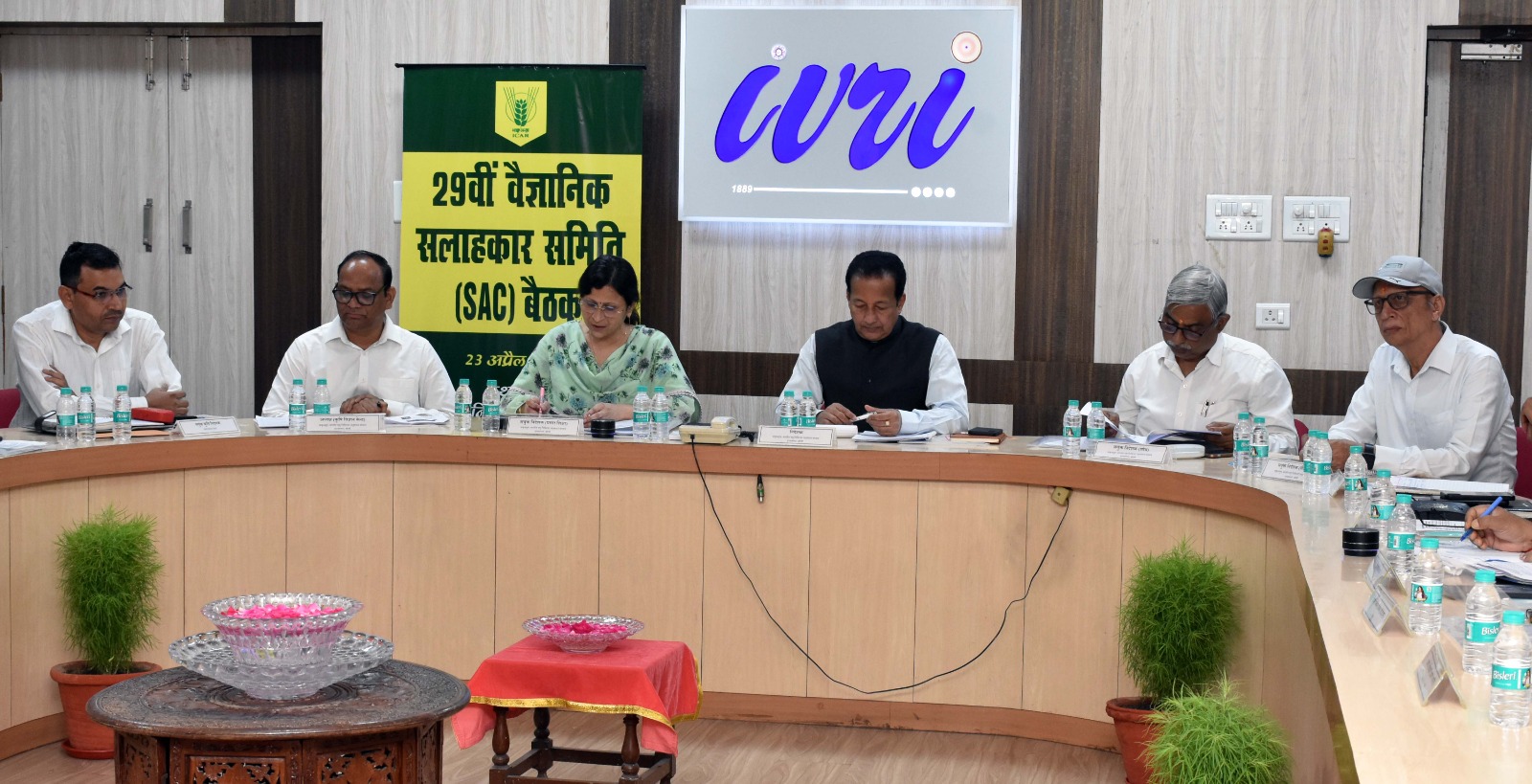
Bareilly: The 29th Scientific Advisory Committee (SAC) meeting of the Krishi Vigyan Kendra (KVK) was successfully held at the Indian Veterinary Research Institute, bringing together experts, policymakers, and stakeholders to review past activities and chart a roadmap for 2026.
The meeting reviewed the progress and compliance of the 2025 action plan and deliberated extensively on future strategies. Senior officials, including representatives from the Uttar Pradesh government and the Director of ATARI, participated in the discussions.
Addressing the inaugural session, IVRI Director Raghavendra Bhatta highlighted that the Bareilly KVK is recognized nationally for its effective functioning. He emphasized the need to address farmers’ challenges at the grassroots level while also documenting their traditional knowledge. He stressed wider dissemination of government schemes and advocated for integrated farming models combining agriculture and livestock to enhance income and reduce risks. He also underlined the importance of organic manure and soil health management.
Joint Director (Extension Education) Roopasi Tiwari elaborated on the history and achievements of KVK Bareilly, established with approval from the Indian Council of Agricultural Research in 1985–86. She detailed various demonstration units, including seed production, mushroom cultivation, beekeeping, vermicomposting, and integrated farming systems such as fish-duck and fish-dairy models.
She noted that the KVK conducts over 100 training programmes annually, along with 40–50 collaborative programmes with line departments, covering dairy, goat farming, piggery, and other agri-based enterprises. These initiatives, along with ICT-based advisory services like WhatsApp and mobile applications, have helped develop progressive farmers engaged in production and marketing beyond the state.

Raghavendra Singh praised the KVK’s inclusive approach, highlighting active participation from NABARD, progressive farmers, and women stakeholders. He stressed the importance of adapting to dynamic agricultural systems and prioritizing fertilizer management, green manuring, and waste-based integrated farming practices.
KVK Head H. R. Meena presented the annual report and outlined future plans, including programmes on crop production, horticulture, soil health, livestock management, fisheries, agricultural engineering, and women empowerment. Plans for farmer fairs and animal health camps were also announced.
The meeting concluded with a vote of thanks by Dr. Ranjit Singh, with participation from senior officials, scientists, NABARD representatives, and progressive farmers, marking a significant step toward strengthening agricultural extension and farmer-centric innovation.











 https://www.youtube.com/watch?si=RtToJsBhYBatUrym&v=mOuYNSdhjHA&feature=youtu.be