Lucknow, 16 July, 2026: There are very few brand assets that people can recognise with their eyes closed. No logo. No tagline. No celebrity. Just five notes.

Play them anywhere, in a crowded airport, a neighbourhood mobile shop, an office, or even at a wedding band performance, and chances are someone will instinctively say, “That’s Airtel.”
That is the kind of brand equity most marketers spend decades trying to build.
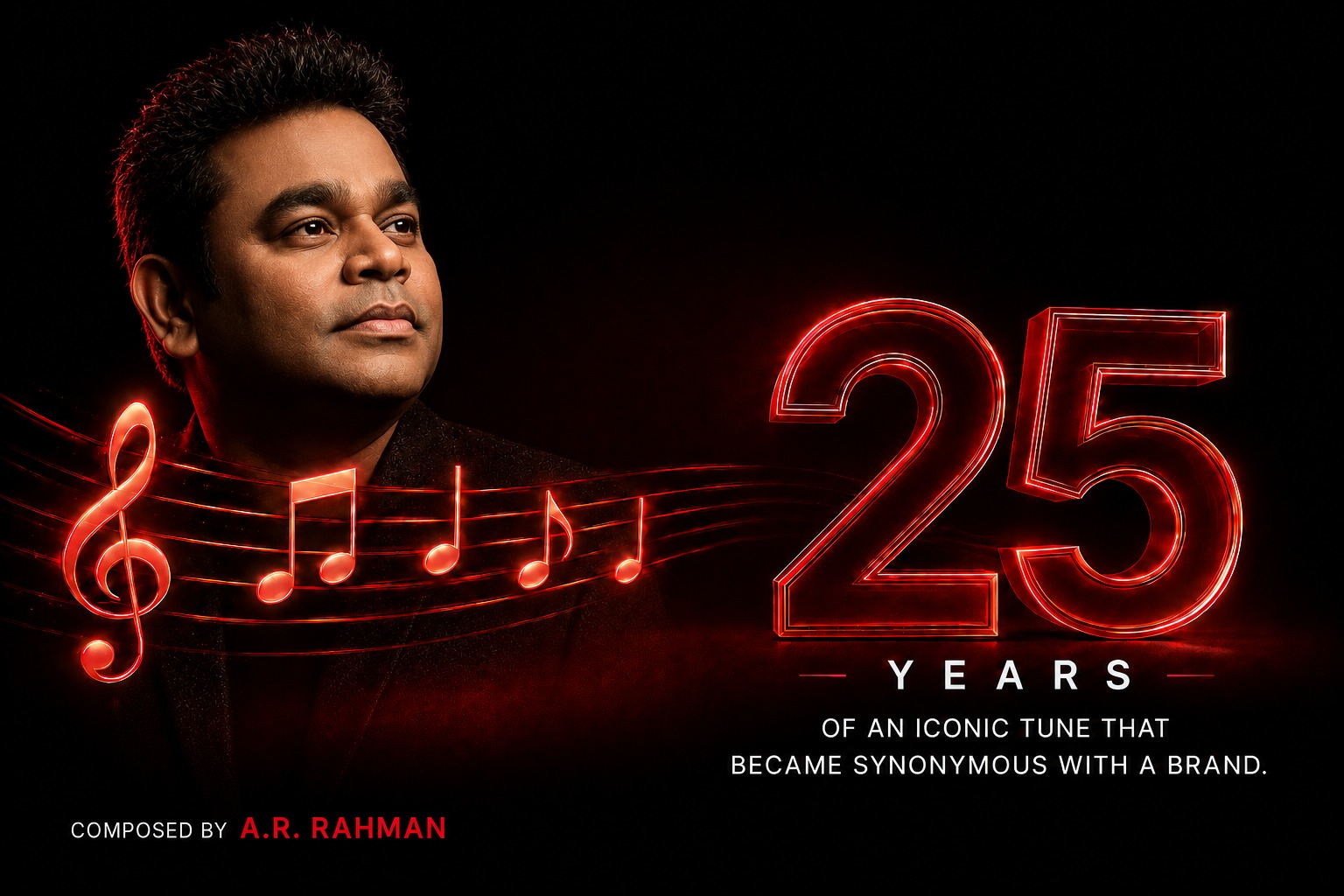
A.R. Rahman’s iconic Airtel signature tune completes 25 years in 2026. In that time, it has achieved something few brand assets ever do, it is no longer just associated with Airtel; it has become synonymous with the brand itself.
When Airtel commissioned the tune, India was only beginning its mobile revolution. The company wanted a distinct brand identity that could work across language, literacy and income barriers. The brief was simple: make India feel connected.
Instead of composing a conventional advertising jingle with lyrics, Rahman created a short, memorable five-note melody that could travel across the country without needing words.
It lasted only a few seconds, but those few seconds would go on to become one of the most recognisable pieces of commercial music India has ever heard.
The brilliance of the composition lay in what it left out. There were no lyrics to translate, no celebrity faces that would eventually change, and no campaign-specific message that would become dated. It was simple, emotional and universal.
That simplicity became its biggest strength. The tune did not need translation, an actor or a slogan to be understood. It could be used across recharge moments, customer care, Airtel stores, billboards and television commercials. In many ways, it became Airtel’s audio logo.
Soon, it was everywhere. It greeted customers through caller tunes, played in Airtel stores, accompanied television commercials and became the soundtrack of millions of Indians’ first mobile experiences. For an entire generation, hearing those five notes became part of everyday life.
Over the years, the tune has been heard at massive scale across different consumer touchpoints. That kind of repetition has made it part of India’s mobile culture.
Many people may not remember Airtel’s earliest campaigns or taglines. They remember the music.
That is the difference between campaign recall and brand memory.
What makes the Airtel tune powerful is not only nostalgia, but consistency. Airtel’s branding and market context changed over the years, but the core tune stayed. It was refreshed several times, including a 2013 re-recording with musicians from the Budapest Symphony Orchestra, a 2017 Carnatic interpretation for southern audiences, and newer adaptations featuring choirs, EDM and regional folk influences. Yet the identity of the original composition remained unchanged.
This is important because telecom is a category where brands constantly compete on plans, pricing, coverage and network speeds. Those messages evolve every few years.

A sonic identity, however, is built over decades.
Airtel’s anthem managed to stay relevant through every phase of India’s telecom journey—from the early mobile era to the smartphone revolution and now the 5G age.
That consistency is what turned the composition into one of India’s strongest examples of sonic branding.
The anthem also demonstrates how strong branding can outlive individual campaigns. Airtel’s advertising evolved, its services expanded and India’s telecom market transformed completely.
The five notes never needed reinvention. They simply evolved with the brand.
Perhaps the biggest compliment the tune has received is that it escaped advertising altogether. It became a ringtone, a caller tune and a part of popular culture. It found its way into everyday life, becoming one of the defining sounds of India’s mobile revolution.
In the 5G era, Airtel’s challenge is no longer just about network expansion. It is about standing apart in an increasingly digital ecosystem shaped by data, apps, payments and AI-powered services.
In that environment, familiar brand assets become even more valuable. They provide continuity in a category where almost everything else keeps changing.
Today, marketers speak about logos, typography and visual identity systems. Increasingly, they also talk about sonic branding. Airtel understood the power of a distinctive brand sound long before the term became part of marketing vocabulary.
Twenty-five years later, the technology has changed. Networks have changed. Consumer behaviour has changed.
But the five notes continue to do exactly what they were created to do, they make India feel connected.
More importantly, they make people think of Airtel before they think of anything else.
That is perhaps the greatest achievement of the Airtel anthem. It isn’t merely remembered. It has become the brand.
Twenty-five years on, the Airtel anthem is a reminder that while technology evolves at breakneck speed, enduring brand assets are built on consistency. Campaigns come and go, products change and categories evolve. But occasionally, a piece of branding becomes bigger than advertising itself. Airtel’s five-note anthem is one of those rare examples. Today, hearing those five notes doesn’t just remind people of Airtel, it is Airtel.