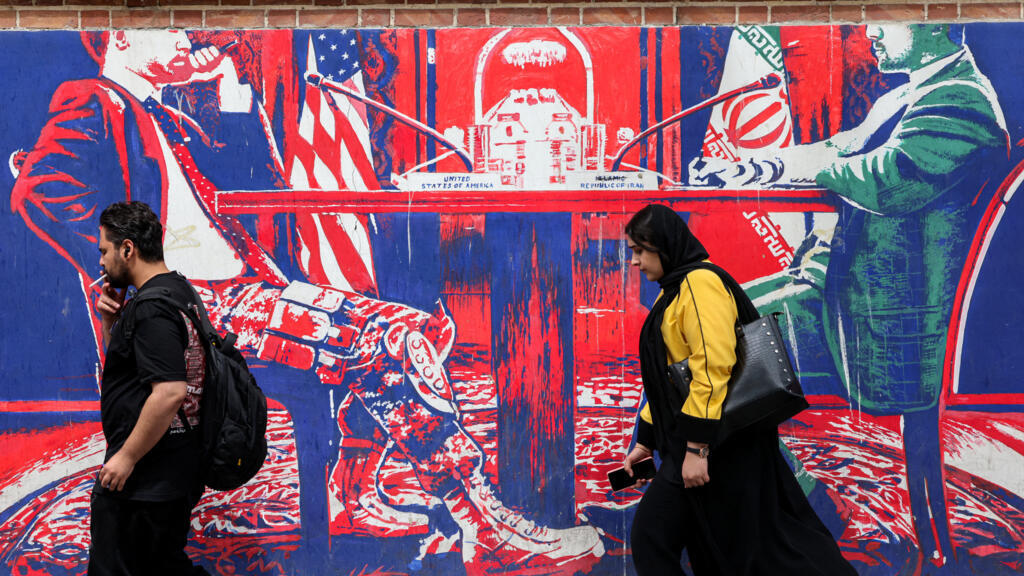
Tehran: As discussions over a possible agreement between the United States and Iran continue to gather momentum, Tehran is increasingly portraying the negotiations as a strategic and political success for the Islamic Republic.
Iranian leaders and state-linked media outlets are presenting the emerging diplomatic process as proof that the country resisted intense military, economic and political pressure without surrendering to demands from Washington or its regional allies.

Iran’s Foreign Ministry spokesperson Esmail Baghaei recently shared a message on social media referencing the fall of the myth of invincibility surrounding the ancient Roman Empire. The statement was widely interpreted as a symbolic comparison to the current geopolitical standoff involving Iran, the United States and Israel.
Tehran Framing Diplomacy as Resistance
Political analysts say Iran is attempting to shape domestic and regional opinion by arguing that negotiations were achieved through resilience rather than concession.
According to experts monitoring the talks, Tehran believes it has successfully demonstrated its ability to withstand coordinated pressure from two major military powers while still preserving its core strategic interests.
European Council on Foreign Relations analyst Ellie Geranmayeh noted that recent diplomatic developments represent a shift from earlier rhetoric that demanded unconditional capitulation from Iran. She observed that Washington now appears more focused on pursuing a negotiated framework rather than escalation.
Strategic Messaging and Regional Influence
Analysts also point to Iran’s repeated emphasis on its influence over the strategically vital Strait of Hormuz, a key global energy corridor. Tehran has frequently highlighted its capability to affect international energy flows during periods of heightened tension.
Observers say Iran’s leadership views the survival of its political system despite sanctions, military pressure and regional instability as another factor strengthening its narrative of resistance.

At the same time, no major indications have emerged suggesting that Iran’s ballistic missile programme or its network of allied regional groups would face sweeping new restrictions under a possible agreement — an outcome Iranian officials are likely to present domestically as a diplomatic achievement.
Economic Pressures Still Weigh Heavily
Despite the confident public messaging, analysts caution that Iran continues to face significant economic challenges. Years of sanctions and regional tensions have placed severe pressure on critical sectors including steel, petrochemicals and industrial manufacturing.
Experts believe that any agreement easing restrictions on oil exports or granting Iran greater access to frozen overseas financial assets could provide substantial economic relief to Tehran.
Such developments would likely be used by Iranian authorities to reinforce the narrative that strategic patience and negotiation helped secure concessions without abandoning national priorities.
Uncertainty Remains Over Final Outcome
While diplomatic engagement between the two sides appears to be progressing, the final structure and scope of any agreement remain unclear. International observers say the long-term geopolitical impact will ultimately depend on the specifics of enforcement mechanisms, sanctions relief and regional security arrangements.
For now, however, Tehran is working to ensure that both domestic audiences and regional allies view the negotiations not as a compromise forced by pressure, but as evidence of Iran’s endurance and strategic leverage on the global stage.