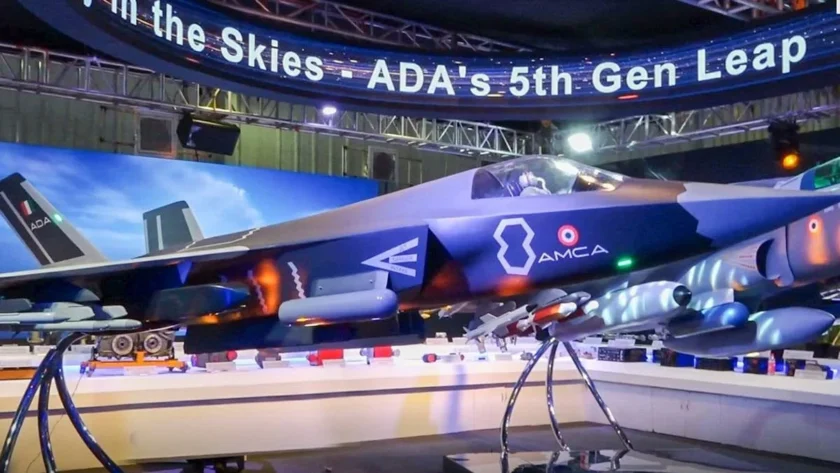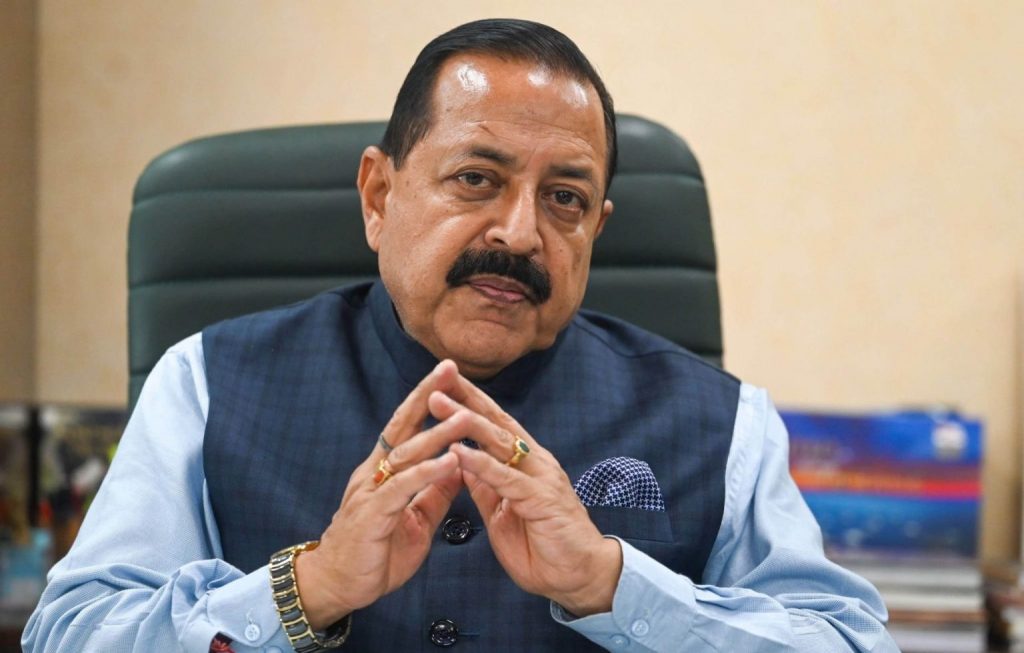
Prayagraj: India’s defence sector has undergone a major transformation over the past decade, with domestic production rising sharply by 174 per cent to ₹1.54 lakh crore, Union Minister of State for Science and Technology Jitendra Singh said on Tuesday.
Speaking at the North Tech Symposium 2026, the Minister said India has moved from being heavily dependent on defence imports to becoming an emerging exporter of military hardware and systems. Defence exports have surged nearly 34 times to ₹23,622 crore during the same period.

He noted that the private sector has played an increasingly important role in this growth story, contributing nearly ₹15,000 crore to total defence exports, signalling a shift towards more collaborative and diversified defence manufacturing in the country.
According to him, India is now entering a new phase where technology, indigenous innovation, and industry participation are reshaping its defence ecosystem. Modern warfare, he said, is no longer defined by physical strength alone but increasingly depends on advanced technologies, real-time data, automation, and networked systems.
Highlighting India’s expanding technological capabilities, Singh pointed to progress in areas such as space technology, nuclear science, artificial intelligence, and quantum technologies, all of which are becoming integral to national security preparedness. He also noted significant advances in quantum-secure communication systems, which are expected to play a crucial role in future defence operations.
The Minister also underlined the government’s continued focus on strengthening the sector, citing a defence allocation of ₹6.81 lakh crore in the 2026–27 Budget, reflecting a 9.5 per cent increase over the previous year.

He said ongoing reforms are enabling greater industry participation, faster innovation cycles, and improved scaling of indigenous technologies. Government-backed funding and policy support, he added, are helping build a stronger ecosystem for research, development, and deployment of defence solutions.
Emphasising the need for closer coordination, Singh called for better alignment between the operational needs of the Armed Forces, scientific research institutions, and industry capabilities. He stressed the importance of faster transition from design to deployment, along with a strong focus on reliability and long-term sustainability.
He also highlighted the evolving role of the Armed Forces, noting their increasing involvement in disaster response and humanitarian assistance alongside national security duties.
The three-day symposium, being held from May 4 to 6, has brought together over 280 industry partners, along with representatives from the Armed Forces, academia, and start-ups. Discussions are focused on emerging defence technologies such as artificial intelligence, unmanned systems, counter-drone capabilities, robotics, cyber warfare, electronic warfare, and advanced mobility platforms.
Officials said the event aims to promote mission-oriented innovation and strengthen India’s push for self-reliance in critical defence technologies through collaboration between government, industry, and research institutions.