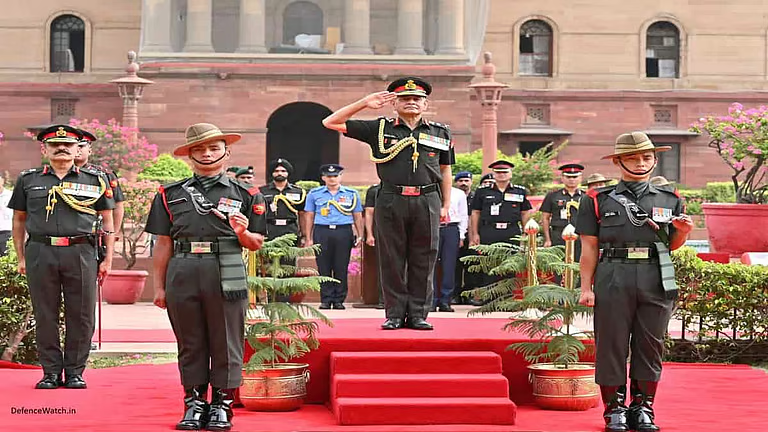
New Delhi: General Upendra Dwivedi formally retired as Chief of the Army Staff after more than four decades of distinguished military service, concluding a tenure marked by operational preparedness, modernization initiatives, and a strong push toward greater integration among India’s armed forces.
Speaking during a ceremonial farewell at South Block, General Dwivedi reflected on his military journey and emphasized that the future of warfare will increasingly depend on joint, integrated, and theatre-oriented operations involving seamless coordination between the Army, Navy, and Air Force.
“Future conflicts will demand closer integration and collective decision-making. The direction for the armed forces is clear—to see together, decide together, and act together,” he said.
Four Decades of Service to the Nation
General Dwivedi, who assumed office as the 30th Chief of the Army Staff in June 2024, described his military career as the greatest privilege of his life.
An alumnus of Sainik School Rewa, he was commissioned into the Jammu and Kashmir Rifles in 1984 and went on to serve in a variety of operational and leadership roles across India’s northern, eastern, and western theatres.
Expressing gratitude at the end of his tenure, he said the strength of the Indian Army lies not in any individual but in its soldiers, commanders, veterans, military families, and the trust reposed in it by the people of India.
He also paid tribute to soldiers who made the supreme sacrifice in service of the nation.
Tribute at National War Memorial
Before the farewell ceremony, General Dwivedi visited the National War Memorial, where he laid a wreath in honour of the country’s fallen heroes.
The ceremonial farewell included a Guard of Honour, recognizing his contribution to the Indian Army and national security during a career spanning over 40 years.
Focus on Operational Readiness
Throughout his tenure, General Dwivedi placed significant emphasis on maintaining operational preparedness across all strategic fronts.
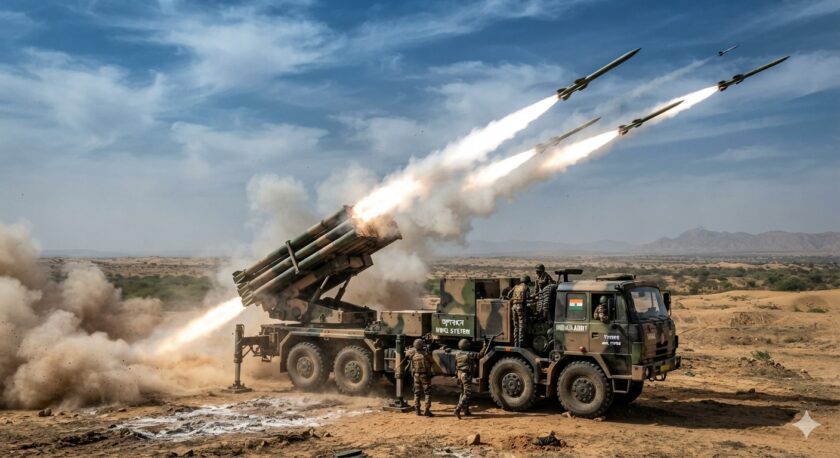
He noted that the Army remained vigilant along the northern borders under Operation Snow Leopard, while continuing to discharge its responsibilities along the western front with professionalism and restraint.
According to defence officials, operational readiness remained a key priority during a period marked by evolving security challenges and changing geopolitical dynamics.
Operation Sindoor and Joint Military Operations
One of the defining moments of General Dwivedi’s tenure was Operation Sindoor, which showcased the growing integration of India’s three armed services.
The operation demonstrated enhanced coordination among the Army, Navy, and Air Force, reinforcing the importance of joint planning and execution in modern military operations.
Reflecting on the experience, General Dwivedi said the operation highlighted the effectiveness of unified action and strengthened cooperation among the services.

He added that the armed forces have increasingly adopted a collaborative approach to national security, helping establish what he described as a “new normal” in defence preparedness.
Driving Military Transformation
General Dwivedi also played a central role in advancing the Army’s ongoing modernization and transformation agenda.
Under his leadership, efforts were accelerated in areas such as force restructuring, technology adoption, systems reform, human resource management, and modernization of military capabilities.
A major focus was placed on enhancing interoperability among the armed forces and preparing for future battlefield environments that demand integrated command structures and rapid decision-making.
Defence officials noted that his tenure witnessed continued efforts to strengthen operational effectiveness through the use of emerging technologies and institutional reforms.
Recognising the Role of Soldiers
In his farewell remarks, the outgoing Army Chief reiterated that the true strength of the Army lies in its personnel.
He praised soldiers serving in some of the country’s most challenging terrains, including mountains, deserts, glaciers, jungles, and remote border regions, describing their dedication and discipline as the defining characteristics of the Indian Army.
He also acknowledged the contributions of troops involved in counter-terrorism and national security operations, emphasizing that their courage and professionalism continue to safeguard the nation.
Leadership Transition
General Dwivedi formally handed over command to Dhiraj Seth, who has assumed charge as the new Chief of the Army Staff.
Expressing confidence in his successor, General Dwivedi described him as an experienced military leader capable of guiding the Army through future challenges while upholding its traditions of professionalism and excellence.
“I am confident that under his leadership, the Indian Army will continue to achieve new milestones and strengthen its role in safeguarding the nation,” he said.
A Lasting Legacy
As he stepped down from office, tributes poured in from across the defence establishment, with military officials highlighting his role in strengthening operational readiness, promoting military reforms, and advancing jointness among the armed forces.
His career, spanning more than 40 years, leaves behind a legacy of dedicated service, strategic leadership, and commitment to modernizing the Indian Army for future challenges.
With India increasingly focusing on integrated theatre commands and multi-domain operations, many of the initiatives championed during General Dwivedi’s tenure are expected to continue shaping the future direction of the country’s armed forces.













 https://www.youtube.com/watch?si=RtToJsBhYBatUrym&v=mOuYNSdhjHA&feature=youtu.be