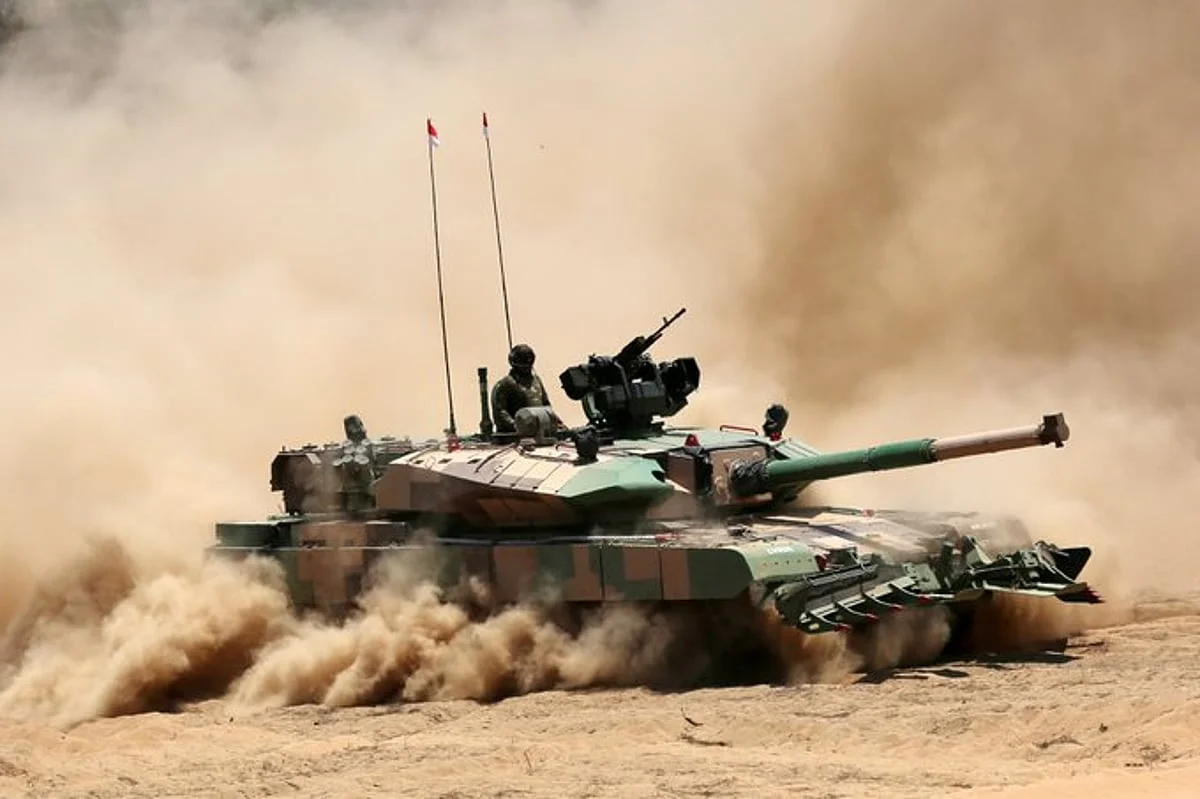
New Delhi: The Indian Army has initiated a long-awaited comprehensive overhaul of its indigenous Arjun Mk-1 main battle tank fleet, with a pilot refurbishment programme now underway at the Heavy Vehicles Factory (HVF) in Avadi, Chennai.
The project comes years after the tanks were originally expected to undergo their first major overhaul. Under the pilot phase, two Arjun Mk-1 tanks will be completely dismantled, refurbished and rebuilt. The vehicles will also receive 26 upgrades derived from the more advanced Arjun Mk-1A configuration.

The pilot programme is intended to establish standardised overhaul procedures, assembly practices and technical repair documentation. These protocols are expected to provide a framework for the subsequent refurbishment of the remaining 124 Arjun Mk-1 tanks currently operated by the Army.
First Comprehensive Rebuild Since Induction
The Arjun Mk-1 entered Indian Army service in 2004, but the fleet has not previously undergone a complete hull-and-turret overhaul. Earlier maintenance efforts included work on individual systems and powerpacks, including overhauls undertaken by Engine Factory Avadi and the Combat Vehicles Research and Development Establishment (CVRDE).
The new programme is different in scope, as the pilot tanks will undergo a complete teardown before being rebuilt.
One of the major challenges is the limited availability of detailed documentation for such an extensive refurbishment. Engineers will therefore have to assess individual components during disassembly and develop or refine repair procedures based on their condition.
26 Upgrades to Improve Combat Capability
Of the 26 upgrades planned for the two pilot tanks, six are focused on enhancing core combat and mobility capabilities.
These include a new commander’s panoramic sight, an upgraded Mk-II gunner’s main sight, an automatic target-tracking system, an improved muzzle-reference system, redesigned tracks with greater horn height and an upgraded running-gear arrangement.
The remaining modifications are aimed at improving reliability, safety, environmental protection and crew support. They include an 8-kilowatt auxiliary power unit, an enhanced fire-detection and suppression system, LED lighting, heated periscopes and improved dust sealing for operations in harsh desert environments.
Multiple Agencies Involved in Refurbishment
The overhaul will involve several organisations across India’s defence-industrial ecosystem.
The main diesel engine is scheduled to be sent to Engine Factory Avadi, while the transmission and final-drive assemblies will be handled by the Indian arm of RENK. The tank’s 120mm rifled main gun and cradle will undergo work at Advanced Weapons and Equipment India Limited (AWEIL), while the gun-control system will be serviced by Bosch Rexroth.
Other components, including batteries, gyroscopes, tracks and the panoramic sight, are expected to be sourced from Indian defence manufacturers.

The diversified supply chain reflects the complexity of maintaining the Arjun, which has historically depended significantly on imported components.
Spare Parts and Logistics Have Been Long-Standing Challenges
Previous audits by the Comptroller and Auditor General of India highlighted several difficulties associated with maintaining the Arjun fleet. A 2017 audit had reported that the tank contained a substantial proportion of imported components, with parts sourced from countries including Germany, Belgium, Israel, France and the United Kingdom.
Some suppliers have subsequently exited the market, making replacement parts more difficult to obtain. Earlier concerns also included delays in localising components and inadequate availability of spares.
The 58.5-tonne Arjun Mk-1 is powered by a German-made 1,400-horsepower MTU MB 838 Ka-501 V10 diesel engine paired with a RENK transmission. Its powerpack is designed for a specified operating period before requiring a major overhaul.
The tank’s considerable weight has also created transportation challenges. Moving Arjun units requires specialised railway wagons or heavy-duty road transporters, both of which can be difficult and expensive to deploy.
Extensive Testing After Rebuild
The two pilot tanks will undergo a series of evaluations after refurbishment. These are expected to include hull and turret stand tests, stability assessments and mobility trials.
The tanks will subsequently undergo limited validation firing at the Pokhran ranges in Rajasthan. Following successful completion of the testing programme, the refurbished vehicles are expected to receive a renewed warranty of 24 months or 150 engine hours, whichever comes first.
Mk-1A Deliveries Also Face Delays
Separately, the Army is awaiting delivery of 118 Arjun Mk-1A tanks ordered from HVF under a contract worth approximately ₹7,523 crore, signed in September 2021.
The Mk-1A is a significantly upgraded version of the Arjun and weighs around 68 tonnes. Its deliveries have faced delays, reportedly linked largely to global supply-chain difficulties involving its German-origin engines.
Meanwhile, the existing fleet of 124 Arjun Mk-1 tanks continues to serve with the Army’s 43 and 75 Armoured Regiments in Rajasthan’s strategically important desert sector.
The new overhaul programme is therefore significant not only for extending the operational life of the existing Arjun fleet but also for developing a structured maintenance model that could improve the tank’s long-term availability and reduce some of the challenges associated with its complex supply chain.