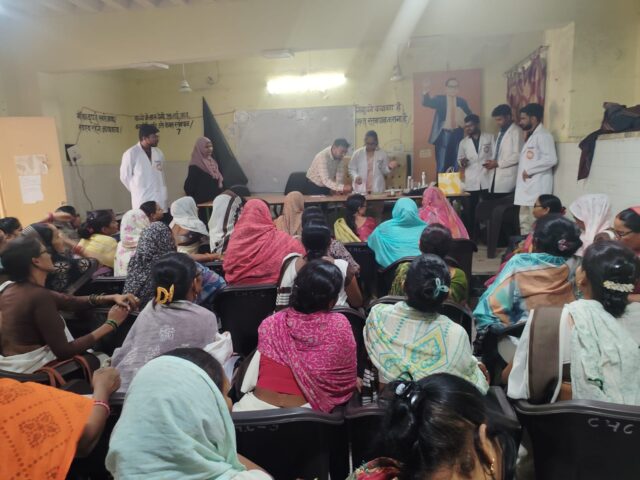
Salon (Raebareli): Marking World Food Safety Day 2026, the Centre for Rural Health at All India Institute of Medical Sciences Raebareli organized a special training programme for ASHA workers in Salon, aimed at enhancing awareness and detection of food adulteration at the community level.
The initiative focused on equipping frontline health workers with practical skills to identify common food adulterants and educate local communities about food safety and health risks associated with contaminated food products.

During the training session, participants were introduced to simple household testing methods developed by the Food Safety and Standards Authority of India for detecting adulteration in nearly 50 commonly used food items. The programme included hands-on demonstrations that enabled ASHA workers to identify various forms of adulteration in everyday food products and understand their potential impact on human health.
The training was conducted under the guidance of Executive Director of AIIMS Raebareli, Amita Jain, and under the supervision of Prof. (Dr.) Bhola Nath, Head of the Department of Community Medicine and Public Health.
The programme was led by Dr. Mukesh Shukla, Additional Professor and In-Charge of the Centre for Rural Health Activities (CRHA), along with Dr. Swaleha, Senior Resident, and Junior Residents Dr. Shaivya Chauhan and Dr. Hisham from the Department of Community Medicine and Public Health.

Experts explained the importance of food safety, highlighted the health hazards posed by adulterated food products, and demonstrated practical techniques for detecting impurities and contaminants using simple methods that can be applied at the household level.
The participating ASHA workers actively engaged in the training sessions and pledged to spread awareness about food safety and adulteration prevention in their respective communities. Organizers emphasized that early detection of food adulteration can help prevent numerous health problems and protect consumers from unsafe food practices.
Speakers noted that ASHA workers serve as a vital link between healthcare institutions and local communities, making them effective ambassadors for public health awareness. They stressed that practical training programmes of this nature play an important role in strengthening community health systems and promoting safer food consumption practices.
The initiative reflects AIIMS Raebareli’s continued commitment to public health education and community outreach, while supporting national efforts to improve food safety awareness and prevent food-borne health risks at the grassroots level.