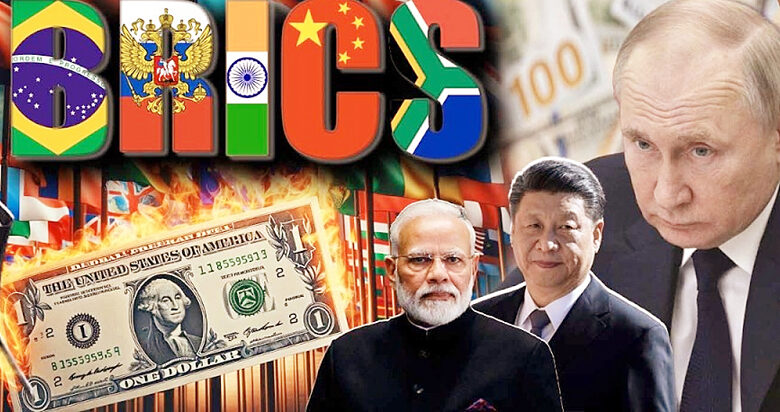
New Delhi: The debate over BRICS and the future of the US dollar has increasingly moved away from the idea of creating a single BRICS currency and towards a more practical question: can member countries reduce their dependence on the dollar by expanding the use of national currencies and alternative payment systems?
The distinction is important. A common BRICS currency would require extensive coordination on monetary policy, exchange rates, foreign-exchange reserves, central banking and fiscal frameworks among countries with very different economic structures. By contrast, increasing the use of national currencies for trade and developing interoperable payment systems can be pursued without creating a new currency.

Recent developments suggest that this is where BRICS cooperation is increasingly focused.
At the September 12-13 BRICS summit in New Delhi, members backed efforts to promote trade and investment in local currencies and improve interoperability between central bank digital currencies (CBDCs). India has also been pushing for greater connectivity between member countries’ digital currencies to make cross-border payments faster and more efficient.
From a Common Currency to Alternative Payment Channels
Talk of a common BRICS currency has attracted considerable attention in recent years, but the idea has faced significant practical obstacles. The economic diversity of the expanded grouping makes the creation of a single currency particularly complicated.
The current approach is more incremental. BRICS countries are exploring mechanisms that could allow businesses and financial institutions to conduct more transactions in national currencies while reducing dependence on dollar-based banking channels.
BRICS finance ministers and central bank governors have called for greater interoperability of payment systems and practical solutions for cross-border transactions that are faster, cheaper, accessible, efficient and secure.
This does not mean that the dollar is being removed from international trade. Rather, it creates additional channels through which transactions can potentially take place.
The ‘Silent’ De-dollarisation Debate
The phrase “silent de-dollarisation” is better understood as an analytical description than an official BRICS policy term.
The underlying idea is that the dollar’s role could gradually be reduced in particular areas without BRICS formally declaring a campaign to replace it.
For example, if two countries increasingly settle bilateral trade in their own currencies, or if payment systems allow cross-border transactions without routing every transaction through dollar-based institutions, the need for dollars in those specific transactions can decline.
However, this should not be confused with the disappearance of the dollar from the international financial system. The US currency remains deeply embedded in global trade, financial markets and foreign-exchange transactions.
There are also major obstacles to the BRICS approach. Member economies have different monetary systems, geopolitical priorities and levels of financial integration. India and China, for example, have significant strategic and economic differences, while other BRICS members face their own financial and political constraints.
India Pushes Digital Payment Connectivity
India’s current BRICS agenda illustrates the more incremental approach.
According to Reuters, India has advocated linking central bank digital currencies among BRICS members to facilitate cross-border payments. The proposal builds on earlier efforts to improve interoperability between national payment systems.
The initiative is not being presented by India as a plan to replace the US dollar as the world’s reserve currency. Instead, the emphasis has been on making international payments easier, faster and potentially less expensive.
The approach nevertheless has wider implications. If digital payment networks and local-currency settlement mechanisms become sufficiently reliable and widely used, countries could gain more options when conducting cross-border commerce.
Trump and the BRICS Currency Debate
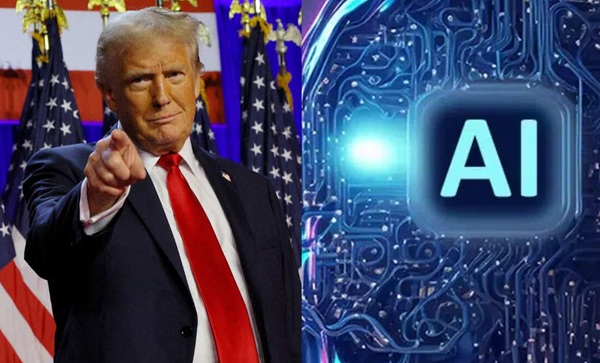
The issue has also drawn attention from Washington. US President Donald Trump has previously warned BRICS countries against efforts to establish a new currency or promote an alternative to the dollar, including threats of tariffs.
The possibility of higher US tariffs has become particularly relevant to India as Washington applies pressure over Russian energy imports. On September 16, the US House of Representatives passed legislation that could allow the president to impose tariffs of up to 100% on countries including India and China that continue importing Russian energy, although the legislation’s implementation depends on subsequent action.
Against this backdrop, the development of alternative payment mechanisms could acquire greater significance for countries seeking to preserve flexibility in their trade relationships.

At the same time, Russia has publicly sought to avoid describing its approach as a campaign of “de-dollarisation.” Kremlin spokesperson Dmitry Peskov said on September 8 that Russia was open to all acceptable payment methods.
India-Russia Trade and the Currency Question
India-Russia economic relations provide one of the clearest examples of the broader debate.
Energy has become a major component of bilateral trade, while both countries have explored mechanisms to facilitate transactions despite sanctions and changes in international financial arrangements.
India has maintained that its energy policy is guided by energy security and market considerations. New Delhi has also warned that US measures targeting countries buying Russian energy could affect bilateral relations.
The broader significance lies not in whether India or Russia abandons the dollar altogether, but in whether alternative settlement mechanisms become sufficiently practical for a larger share of bilateral trade.
China, Russia and India Have Different Interests
The BRICS financial agenda should not be viewed as a unified campaign directed entirely by one or two countries.
Russia and China have generally supported greater diversification of the international financial system, while India and Brazil have often placed stronger emphasis on economic cooperation and reform of global institutions. The expansion of BRICS has further increased the diversity of interests within the group.
These differences make a single BRICS monetary system difficult to establish.
They also explain why payment-system interoperability and local-currency transactions may be easier areas for incremental cooperation than the creation of a common currency.
The Real Test Is Usability
The long-term significance of BRICS financial initiatives will ultimately depend on whether the alternatives work at scale.
Businesses and financial institutions will require systems that are reliable, inexpensive, liquid, secure and capable of handling large volumes of international transactions. Currency-conversion risks and trade imbalances would also need to be managed.
Reuters has reported that experts view local-currency trade and linked payment systems as more achievable than a common BRICS currency, while noting that such initiatives are unlikely in the near term to displace the dollar’s dominant position in global finance.
For the moment, therefore, the BRICS strategy is less about replacing the dollar overnight and more about expanding the number of available financial channels.
A Gradual Shift Rather Than a Currency Revolution
The emerging picture is one of incremental change rather than a sudden monetary revolution.
A common BRICS currency remains difficult to implement, while local-currency settlement, payment-system interoperability and CBDC connectivity offer more immediate avenues for cooperation.
If these systems expand successfully, they could reduce dollar dependence in selected areas of trade and finance without eliminating the dollar itself.
That distinction is central to understanding the current BRICS debate. The question is not simply whether the dollar will remain the world’s leading international currency. It is also whether countries will have more practical alternatives for conducting trade, investment and payments.
For now, the evidence points towards a gradual diversification of the international payments landscape rather than an imminent replacement of the dollar. The September 2026 BRICS summit has nevertheless demonstrated that local-currency settlement and payment connectivity are moving from broad policy discussions towards more concrete areas of cooperation.