New Delhi: With the national capital preparing to host the BRICS Summit from September 11 to 13, the Delhi Police convened an interstate coordination meeting on Friday to strengthen security cooperation and ensure seamless coordination among law-enforcement agencies across the National Capital Region and neighbouring states.
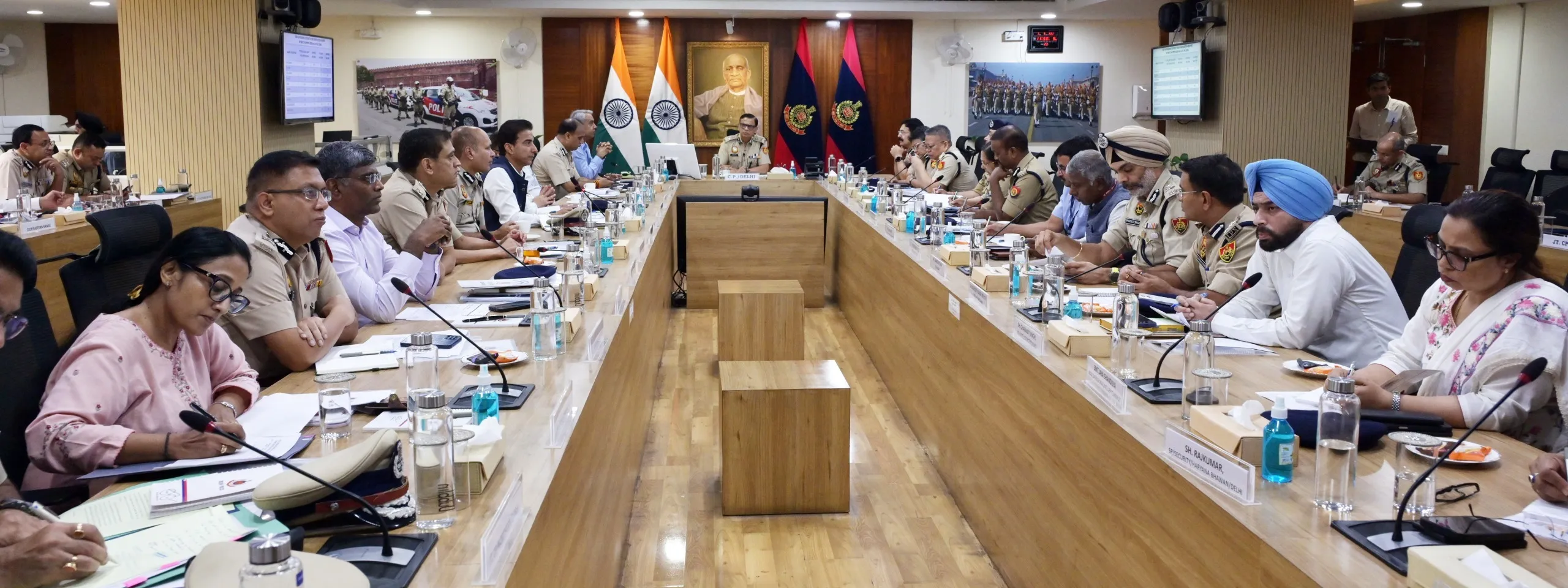
The meeting was held at Delhi Police Headquarters and chaired by the Commissioner of Police, Delhi. Senior police officers from Haryana, Punjab, Uttar Pradesh, Rajasthan and Chandigarh participated in the meeting, which focused on preventing security incidents and ensuring coordinated preparedness during the high-profile international summit.

The meeting brought together senior officials handling law and order, security, traffic, intelligence, crime, special operations and transport. Special Commissioners of Police overseeing Law & Order, Special Cell, Traffic, Security, Crime, Transport and Intelligence attended, along with senior officers from the State Intelligence Bureau, Delhi.
Joint and Additional Commissioners of Police from various ranges and specialised units, along with Deputy Commissioners of Police from districts, the Crime Branch, Indira Gandhi International Airport, PCR and other important formations, also participated.
Border Security and Intelligence Sharing
During the meeting, officers exchanged intelligence inputs and discussed arrangements for intensified checking at interstate borders. Verification of suspicious individuals and vehicles, traffic regulation and advance sharing of information were identified as key components of the security strategy.
Particular attention was given to the movement of drones and other flying objects from open areas around Delhi. Officers discussed the need for close monitoring and rapid information-sharing to identify and respond to any unauthorised aerial activity during the summit.
The participating agencies were also advised to share advance information about the movement of suspicious persons, vehicles or other potential security threats. Measures to prevent unauthorised entry into Delhi through border areas were discussed and coordinated with police authorities of neighbouring states.
Traffic Management to Remain a Priority
Traffic management emerged as another major focus of the meeting, with restrictions expected to be imposed in parts of the capital during the summit period.
Delhi Police officials shared the planned traffic arrangements with officers from neighbouring states and sought their cooperation in ensuring that vehicles not destined for Delhi or restricted areas are properly regulated.

The authorities also emphasised that alternative routes for the general public should remain free from encroachments and unauthorised parking to minimise disruption to daily commuters.
The Delhi Police Commissioner stressed that while security arrangements must remain stringent, the movement of ordinary citizens should face the least possible inconvenience.
Public Awareness Campaign Planned
The Delhi Police plans to use multiple communication channels to inform residents and commuters about traffic restrictions and alternative routes during the summit.
Officials said information should be disseminated widely through print and electronic media, social media platforms and FM radio. Police authorities in NCR districts have also been requested to issue traffic advisories for their respective jurisdictions so that commuters receive timely information before travelling.
The strategy is aimed at preventing confusion and congestion by ensuring that commuters are aware of restrictions, diversions and alternate routes in advance.
The Commissioner of Police also appreciated the cooperation extended by neighbouring states and Union Territories during previous major events and expressed confidence that similar coordination would continue during the BRICS Summit.
The participating officers assured Delhi Police of their full cooperation and committed to maintaining close communication throughout the summit period.
With several senior international delegations expected in the capital, the coordinated approach is intended to create a secure environment while ensuring that security and traffic arrangements cause minimum disruption to the city’s residents and visitors.




 ---------------------------------------------------------------------------------------------------