Former PM rules out any back-channel talks with the BNP government over her return
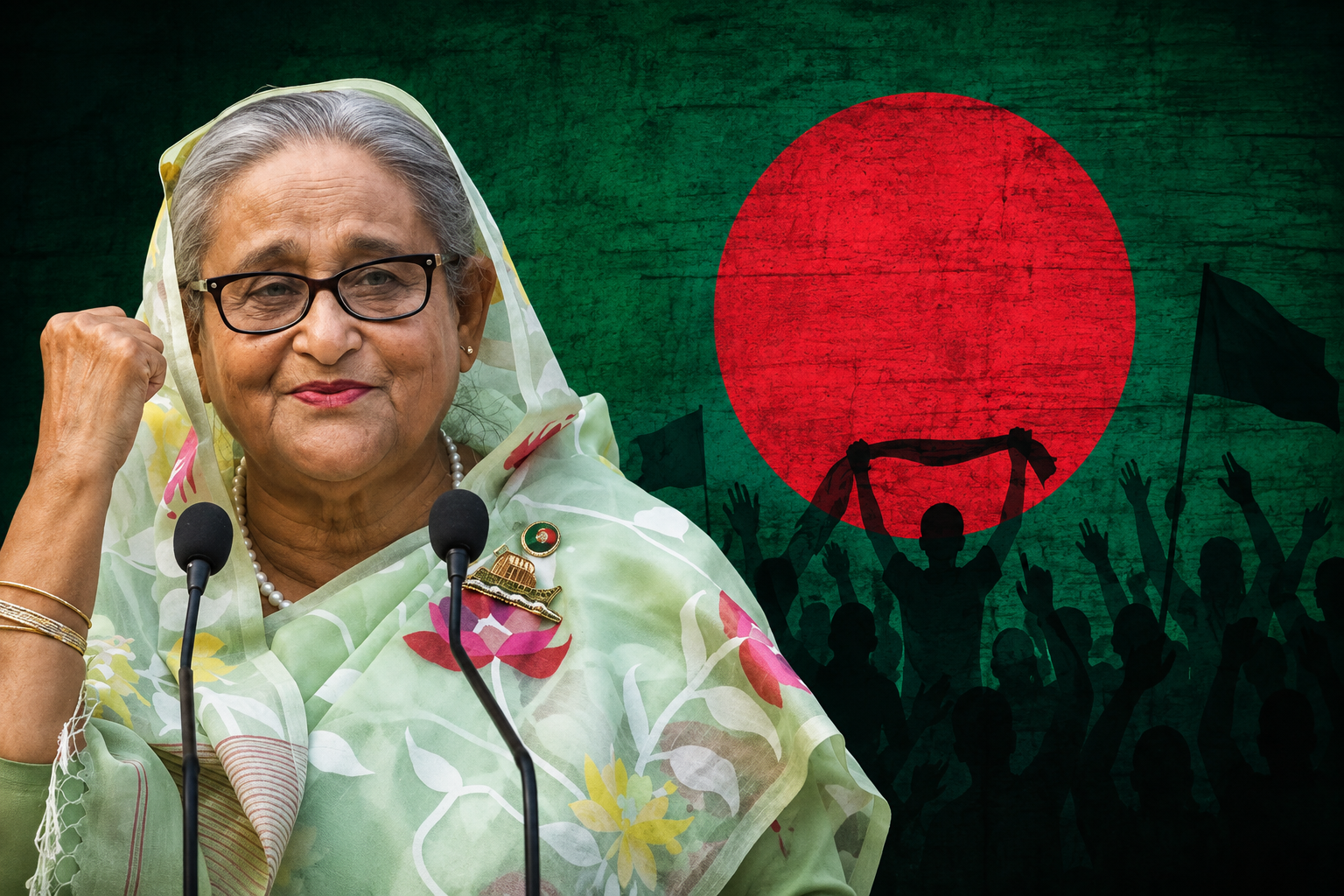
New Delhi: Former Bangladesh Prime Minister Sheikh Hasina declared that she intends to return home in December to put the country back on a democratic path, even at the risk of imprisonment or execution.

She made the remarks during an audio-only virtual press conference — her first public media appearance since fleeing to India on August 5, 2024, amid mass protests. Those attending could only hear her voice, not see her.
Hasina also called for the ban on the Awami League to be lifted and for political prisoners to be released, and urged the international community to stand with the people of Bangladesh in their fight for democracy and justice.
Bangladesh’s foreign ministry reacted sharply, saying the country was “outraged” that the event had gone ahead despite Dhaka having flagged concerns to New Delhi about its potential impact on bilateral relations.
“I will go back home to be with my people”
Hasina said she was aware of the risks but was determined to return regardless, describing India as a steadfast friend that has stood by Bangladesh through difficult times. She insisted her return wasn’t about reclaiming power, but about restoring development, secularism and stability to the country.
Speaking at the event, hosted by the Foreign Correspondents’ Club, she said she could not stay away while her fellow citizens were suffering, and that she was prepared to face detention, imprisonment, or what she called fabricated court verdicts. She recalled losing her family in 1975, spending six years in exile, and later resisting military rule, assassination attempts and political conspiracies after returning home.
She ruled out any behind-the-scenes negotiations with the current BNP-led government over the terms of her return, saying her focus was not on her own future but on ensuring security, development and peace for Bangladesh.
Hasina said that although she had been forced out of the country, she had never felt disconnected from its people, who she said deserved a state that protects them, an economy that gives them opportunity, and genuine democratic rights.
Death sentence and extradition request
Last November, a special tribunal in Dhaka sentenced Hasina to death in absentia over her government’s crackdown on student-led protests in 2024. Since then, Dhaka has repeatedly pressed New Delhi to extradite her.
Describing the current situation in Bangladesh as deeply troubling, Hasina said fear had spread into homes, workplaces and educational institutions, and argued that instability there could have wider implications for regional peace, trade and security — not just a domestic matter. She called on the international community and Bangladesh’s allies to support the country’s democratic struggle, arguing that a stable Bangladesh mattered for the wider South Asia region and the Bay of Bengal.

She reiterated her demand that the ban on the Awami League be lifted, along with the release of political prisoners, the dropping of what she called false cases, and the restoration of press freedom and judicial independence.
Disputes the “spontaneous” nature of the 2024 protests
Hasina alleged that the protests which led to her government’s fall in mid-2024 were not a genuine, spontaneous student movement, but were steered by organised groups that turned it into what she called a political tool to seize power outside the ballot box.
Asked whether she was in contact with the current Dhaka administration, she said that was a matter for them to decide, adding simply that she had made up her mind to return.
This marked her first live media interaction since taking shelter in India, though she had previously given a series of email interviews.
Family and party leaders also speak
Her son, Sajeeb Wazed Joy, alleged that political killings had effectively been legalised in Bangladesh since August 2024, describing the country as lacking law and order and warning that it risked becoming, in his words, “another Pakistan” on India’s eastern border. Several senior Awami League leaders also addressed the press conference.
Hasina also appealed directly to Bangladesh’s youth, urging them to question injustice and protest peacefully, while cautioning against letting their energy be turned into a tool for destruction. She said the country needed reconciliation and healing — but stressed that this could not come at the cost of accountability, and that those responsible for crimes and conspiracies against the country must face justice through proper legal process.
Dhaka’s sharp response
Bangladesh’s foreign ministry said it was outraged that Hasina had been allowed to interact live with the media from New Delhi, accusing her and her associates of leveling harsh attacks against Bangladesh and its people. It called the interaction on Indian soil an affront to Bangladesh’s sovereignty.
The ministry said Bangladesh wants a constructive, forward-looking relationship with India built on sovereign equality, mutual respect and non-interference — but noted that its repeated requests for Hasina’s extradition under the 2013 India-Bangladesh Extradition Treaty had so far gone unanswered.